
Control Room LED Display Guide: Fine-Pitch COB for Command Centers
A control room LED display is a fixed indoor video wall used to show operational data, maps, camera feeds, and alerts in a command center. For close-viewing control room environments, a fine-pitch COB LED display is specified when the project needs a seamless image, front service access, and a display surface that can support long operating hours. The DDW Display ECOB Series is an indoor fine-pitch COB LED display family with pixel pitches from P0.625 to P1.87 and two panel sizes: 600 × 337.5 × 39.5 mm and 600 × 675 × 39.5 mm.
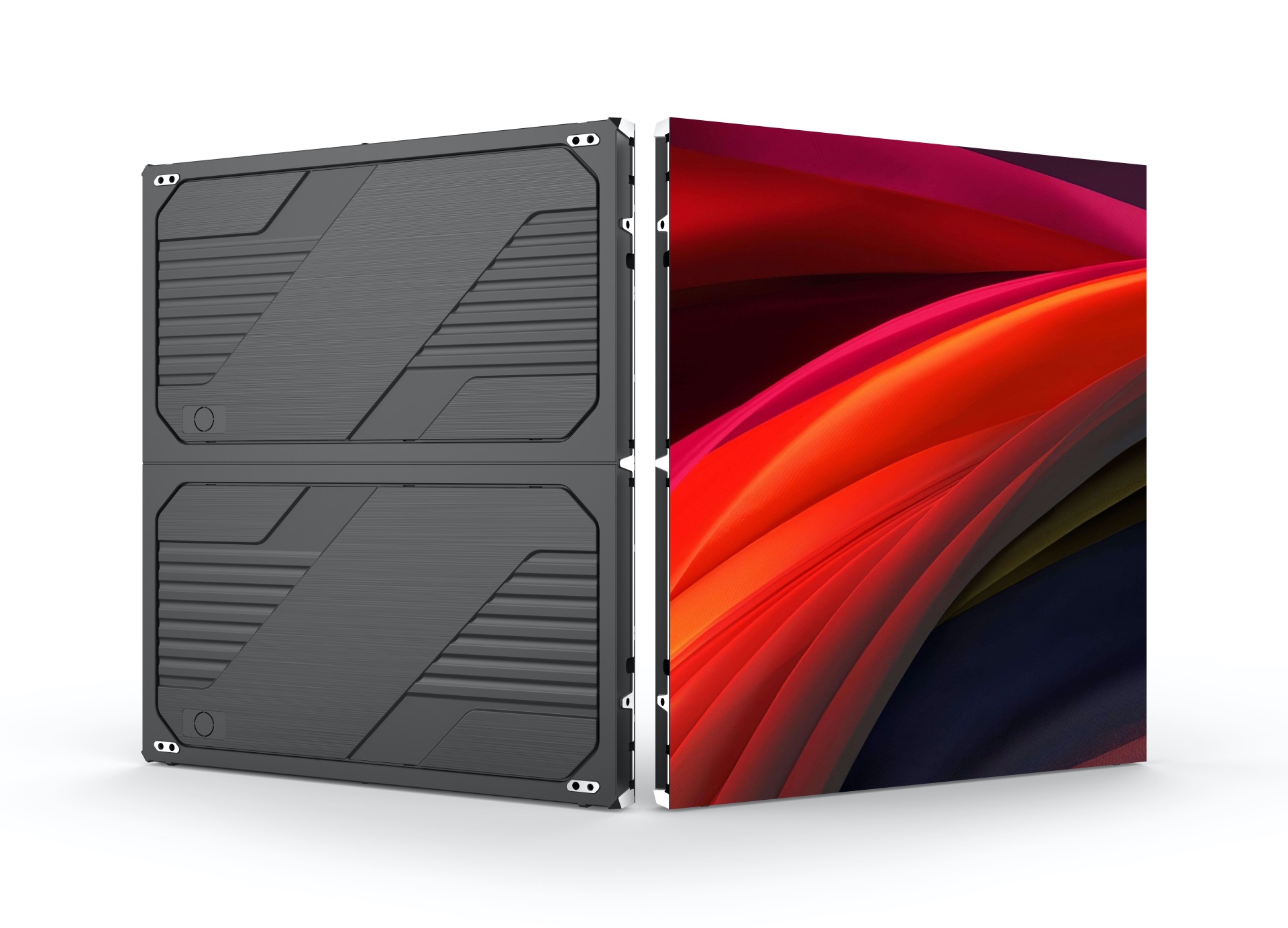
ECOB Series die-cast aluminum cabinet in the 600 × 675 × 39.5 mm panel size for control room LED video walls. Image: DDW Display.
What Is a Fine-Pitch COB LED Display for a Control Room?
A fine-pitch COB LED display is an indoor LED video wall that uses a chip-on-board LED packaging approach and a small pixel pitch to support close viewing. In a control room or command center, the display is not used like a presentation screen. It is part of the operational environment: operators read small text, monitor multiple data windows, compare map layers, and watch video feeds for long periods.
The DDW Display ECOB Series is described as a Mini Flip-Chip COB LED Display, an energy-saving indoor LED video wall, and a front-service fine-pitch LED display. Its stated applications include control rooms and command centers, as well as conference and meeting rooms, education, showrooms, and commercial display. That combination matters because control room buyers usually compare the display against three requirements: close-viewing image quality, continuous indoor operation, and service access that does not disrupt the room.
Why Control Rooms Need a Different LED Display Specification
The main problem in a control room is not simply brightness. It is sustained visual clarity under controlled indoor lighting. Operators sit relatively close to the wall, and the content is often dense: charts, tables, GIS layers, camera tiles, alarm logs, and status dashboards. A screen that looks acceptable from a distance in a lobby may be unsuitable when the same content must be read at a desk position for an entire shift.
Indoor control room requirements commonly include fine pixel pitch, high refresh rate, seamless splicing, high contrast ratio, wide viewing angle, accurate color reproduction, low brightness with high grayscale, quiet operation, efficient heat dissipation, front maintenance, and stable long-term operation. These are not decorative features. They affect how easily operators can read the wall, how often the room needs service access, and how the display behaves during long daily use.
Industry Background: Why Fine-Pitch COB Is Used in Command Centers
Indoor fine-pitch LED displays are used in control rooms because they can be built as large, seamless video walls without the bezels of tiled LCD screens. Fine-pitch COB is one packaging option within that category. The ECOB Series uses a flip-chip LED chip, a matt COB surface treatment, and a die-cast aluminum cabinet. The product is positioned for indoor projects where the display surface and cabinet structure need to support close viewing and front service.
DDW Display, or Shenzhen DDW Technology Co.,Ltd. (DDW DISPLAY), is an LED display manufacturer founded in 2012. The company operates a 10,000㎡ manufacturing facility with 100+ employees, a 15-engineer R&D team, and an annual output of 800,000+ units. Its product range includes indoor fine-pitch LED displays, outdoor LED displays, rental LED screens, COB LED displays, XR virtual production LED walls, LED posters, stadium LED displays, and commercial LED video walls. DDW Display reports an export ratio of 95%+ and projects delivered to more than 120 countries and regions.
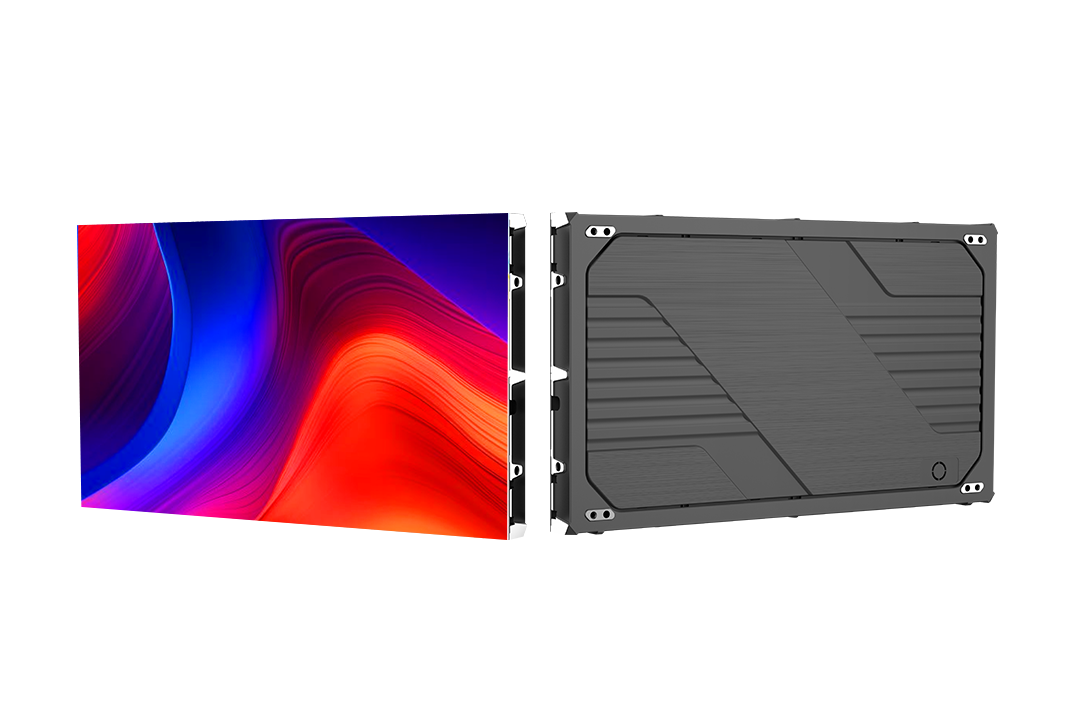
ECOB Series indoor fine-pitch COB LED display. The series is available in P0.625, P0.78, P0.93, P1.25, P1.56, and P1.87. Image: DDW Display.
Detailed Solution: ECOB Series for Control Room and Command Center Projects
The ECOB Series is the relevant DDW Display product for a control room COB LED display project. It is an indoor fine-pitch COB LED display with a module size of 150 × 168.75 mm, a die-cast aluminum cabinet, and front-service maintenance. The series supports common cathode and common anode circuit designs. The standard brightness is 600 nits, with a 1000-nit option. The refresh rate is 3840 Hz, the contrast ratio is 10000:1, and the viewing angle is 160° horizontal and 160° vertical.
For control room planning, the most important specification is the pixel pitch range. The ECOB Series covers P0.625, P0.78, P0.93, P1.25, P1.56, and P1.87. A smaller pixel pitch provides higher pixel density for closer viewing, while a larger pixel pitch can suit applications where the viewing position is farther from the wall or where the screen is very large. The correct choice is the pitch that gives sufficient image detail for the actual room, not automatically the smallest available pitch.
Pixel Pitch Options and Planning Logic
The pixel pitch list gives the project team a practical range for different control room sizes. P0.625, P0.78, and P0.93 sit at the fine-pitch end of the range. They are relevant when the wall is viewed from close positions and when the content includes small text, detailed maps, or dense dashboards. P1.25 is also a fine-pitch option and is commonly considered for close-viewing indoor applications such as conference rooms and control rooms. P1.56 and P1.87 extend the range for larger rooms or installations where the viewing distance is longer and the required pixel density is lower.
This is a planning rule, not a fixed formula. The final pixel pitch should be checked against the room layout, the nearest operator position, the farthest viewing position, the screen dimensions, the content type, and the project budget. A control room with a shallow viewing distance and dense data content will usually need a different pitch from a large command center where the wall is viewed across a wider floor area.
Panel Sizes and Cabinet Weight
The ECOB Series offers two panel sizes: 600 × 337.5 × 39.5 mm and 600 × 675 × 39.5 mm. Both share the same 600 mm width, which helps with horizontal planning. The 600 × 675 mm panel provides a taller building block for projects that need to reach a given height with fewer horizontal seams or a different cabinet count. Panel weights are listed as 4 kg and 7.9 kg across the two sizes.
The cabinet is die-cast aluminum. The panel thickness is 39.5 mm. These details matter in a control room because the wall may be integrated into a finished room with limited depth, and the installation team needs to plan the mounting structure, service clearance, and cable routes before the wall is built.
Display Performance and Service Access
The ECOB Series uses a matt COB surface treatment and a flip-chip LED chip. The module size is 150 × 168.75 mm. The surface hardness is 4H, and the PCB surface protection is rated IP54. These are product-level specifications; they should be read as part of the indoor display design, not as an outdoor weatherproofing claim.
Front service is a major planning point for control rooms. In a command center, the display wall may be installed close to a finished wall or within a restricted equipment room. Front-service maintenance allows the LED modules, power supply, and receiving card to be accessed from the front, which can reduce the need for rear service space. The ECOB Series is specified with front service, so the project team can plan service access from the viewing side.
Power, Lifetime, and 24/7 Planning
The ECOB Series input voltage is AC 100–240V, 50/60Hz. The lifetime at 50% brightness is 100,000 hours. The operating temperature range is -10°C to +40°C. These details are useful for control room planning because the display may be scheduled for continuous or near-continuous indoor operation. The 100,000-hour figure is a lifetime specification at 50% brightness, not a warranty period and not a guarantee of a specific calendar service life.
Control room applications commonly involve 24/7 operation. The display should therefore be planned with the room's power distribution, heat load, ventilation, and service schedule in mind. The ECOB Series also lists efficient heat dissipation as a control-room-relevant requirement in the broader indoor application data. The project team should confirm the final power configuration, control system, and ventilation design with the display supplier before installation.
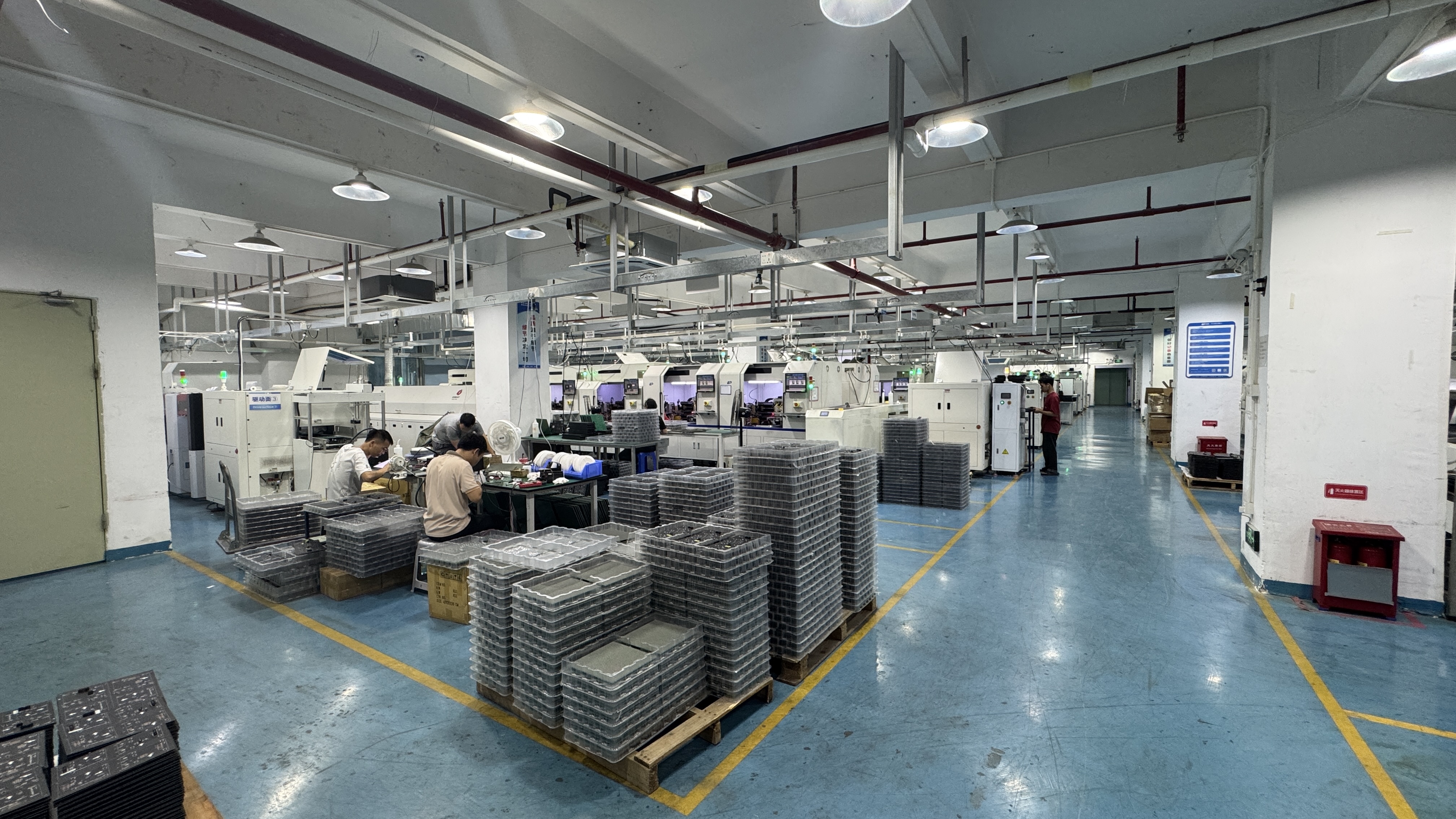
SMT workshop at DDW Display. The ECOB Series is produced with module testing, aging test, brightness and color calibration, and performance inspection before shipment. Image: DDW Display.
Step-by-Step Breakdown: Planning an ECOB Control Room Display
- Define the room and viewing positions. Record the nearest and farthest operator positions, the available wall width and height, the ceiling height, the service access zone, and the room lighting. A control room LED display should be specified from the operator's viewing position outward, not from a catalogue page inward.
- Select the pixel pitch band. Use P0.625, P0.78, or P0.93 when the wall is viewed closely and the content is dense. Consider P1.25 for close-viewing indoor control room and conference applications. Consider P1.56 or P1.87 when the viewing distance is longer or the screen is large enough that the higher pitch still meets the required detail. Confirm the final pitch with the supplier using the actual room dimensions.
- Choose the panel size. Compare the 600 × 337.5 × 39.5 mm panel and the 600 × 675 × 39.5 mm panel against the target wall dimensions. Check the cabinet count, seam plan, weight loading, and mounting structure. The larger panel is not automatically better; it should fit the wall geometry and installation plan.
- Confirm brightness and power. The ECOB Series has a 600-nit standard brightness and a 1000-nit optional brightness. Confirm the input voltage is AC 100–240V, 50/60Hz and plan the power distribution, cabling, and control cabinet accordingly. For a 24/7 control room, the power and heat plan should be reviewed with the supplier.
- Plan the signal chain. A control room LED video wall typically uses an LED control system, video processor, sending box, receiving card, media player or control computer, and content management system. The signal chain should match the number of sources, the windowing requirements, and the room's operating workflow.
- Plan front service access. Because the ECOB Series is front-service, confirm that the installed wall height, surrounding furniture, and room layout allow safe access to the front of the display. Plan spare modules and receiving cards so that service can be carried out without removing the entire wall.
- Review compliance and project documentation. Certification requirements depend on the destination market and the specific model configuration. Buyers commonly evaluate CE, FCC, RoHS, ETL, and EMC requirements for international LED display projects. Request the applicable certificates or test reports for the model and market before ordering.
- Inspect and hand over. DDW Display quality control includes 100% product inspection, aging test, module testing, brightness and color calibration, waterproof test, power safety test, and performance inspection before shipment. At handover, check the screen for signal loss, abnormal modules, flicker, color uniformity, and control system stability.
Use Cases for the ECOB Series
The ECOB Series is listed for control rooms and command centers, as well as corporate, conference and meeting, education, showroom, and commercial display applications. In a control room, the display may show maps, camera feeds, incident dashboards, and alert status. In a command center, the same platform may be used for multi-source monitoring and coordinated response. In a conference or meeting room, the fine pixel pitch supports presentations and video conferencing. In an education or showroom environment, the display can present detailed visual content at close viewing distance.
The series is not the same as a rental LED screen. Rental LED displays are designed for temporary installation, frequent transportation, and fast assembly and dismantling at live events. The ECOB Series is an indoor fixed-installation fine-pitch COB display for control rooms and similar permanent indoor spaces. For live events and rental applications, DDW Display offers separate rental LED display series such as the A Series and D Series.
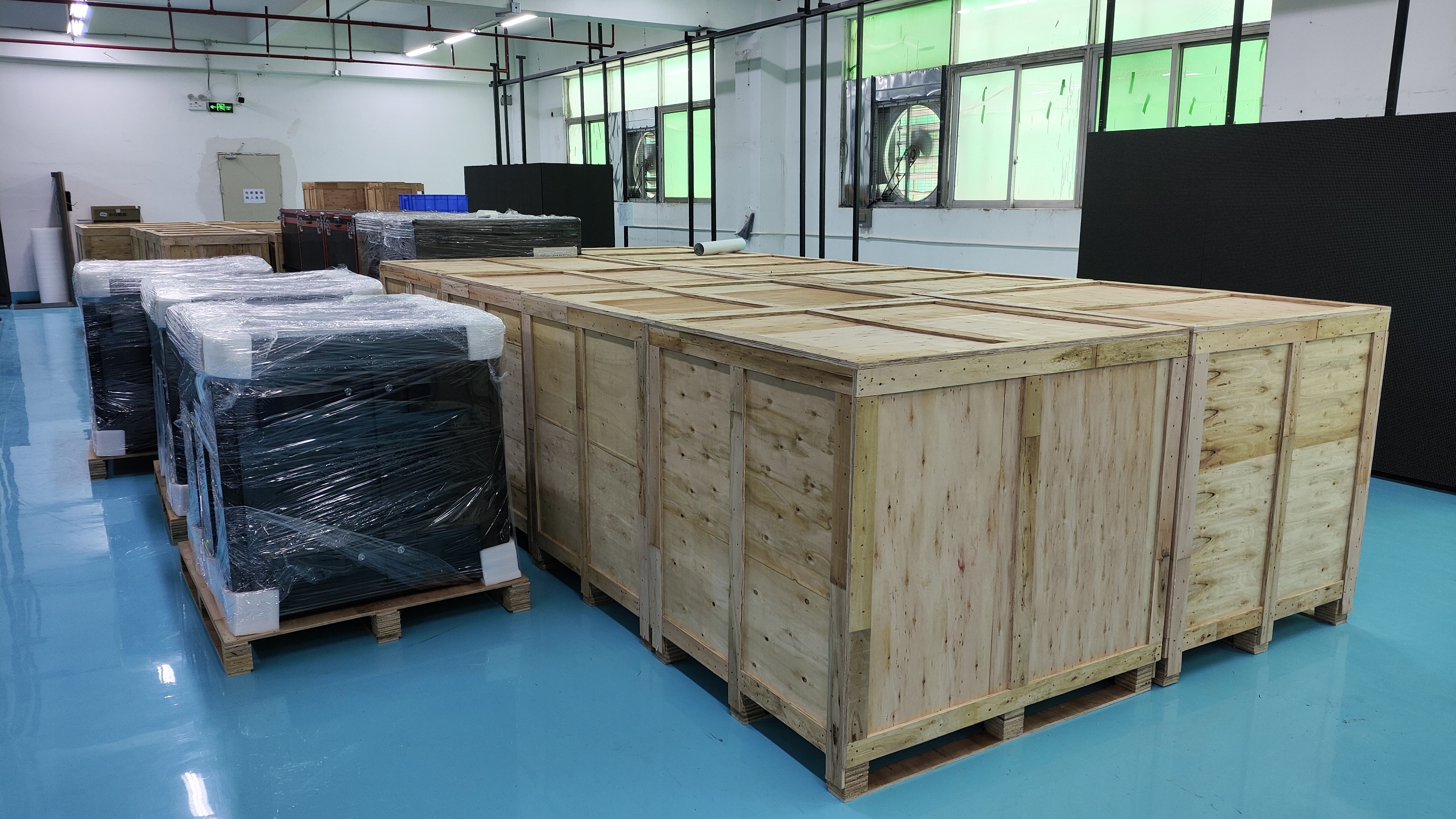
Warehouse and dispatch area at DDW Display. Project-based LED display orders are supported with a MOQ of 1 unit and standard lead times of 15–30 days. Image: DDW Display.
Comparison Table: ECOB Series Panel Options
| Specification | ECOB Series Panel Option A | ECOB Series Panel Option B |
|---|---|---|
| Panel Size | 600 × 337.5 × 39.5 mm | 600 × 675 × 39.5 mm |
| Panel Weight | 4 kg | 7.9 kg |
| Module Size | 150 × 168.75 mm | 150 × 168.75 mm |
| Pixel Pitch Options | P0.625 / P0.78 / P0.93 / P1.25 / P1.56 / P1.87 | P0.625 / P0.78 / P0.93 / P1.25 / P1.56 / P1.87 |
| Cabinet Material | Die-Cast Aluminum | Die-Cast Aluminum |
| Brightness | 600 nits standard / 1000 nits optional | 600 nits standard / 1000 nits optional |
| Refresh Rate | 3840 Hz | 3840 Hz |
| Contrast Ratio | 10000:1 | 10000:1 |
| Viewing Angle | 160° (H) / 160° (V) | 160° (H) / 160° (V) |
| Maintenance | Front Service | Front Service |
| Input Voltage | AC 100–240V, 50/60Hz | AC 100–240V, 50/60Hz |
| Lifetime at 50% Brightness | 100,000 hours | 100,000 hours |
The table shows that the two ECOB panel sizes share the same pixel pitch range, module size, brightness options, refresh rate, contrast ratio, viewing angle, maintenance method, input voltage, and lifetime specification. The main differences are panel height and panel weight. That makes the panel decision a geometry and installation decision rather than a display-performance decision.
FAQ
What compliance checks should buyers confirm for a control room COB LED display?
Compliance requirements depend on the destination market, the product configuration, and the project specification. For international LED display projects, buyers commonly evaluate CE, FCC, RoHS, ETL, and EMC requirements. Before ordering an ECOB Series control room display, confirm which certifications apply to the specific model and destination market, and request the corresponding certificates or test reports from the manufacturer. The ECOB Series input voltage is AC 100–240V, 50/60Hz, so the project power design should also be checked against the local supply.
Which ECOB pixel pitch is suitable for a control room?
The ECOB Series offers P0.625, P0.78, P0.93, P1.25, P1.56, and P1.87. For close-viewing control rooms with dense data, maps, and camera feeds, the finer pitches such as P0.625, P0.78, P0.93, and P1.25 are the relevant starting points. P1.56 and P1.87 can be considered when the viewing distance is longer or the screen is large enough that the lower pixel density still meets the required detail. The final choice should be checked against the actual room dimensions, nearest operator position, content type, and budget.
What drives the cost of a fine-pitch COB control room display?
The main cost drivers are pixel pitch, screen size, panel count, brightness option, cabinet configuration, control system, and project scope. A smaller pixel pitch usually requires higher pixel density and can increase project cost. The ECOB Series offers 600-nit standard brightness and 1000-nit optional brightness, so the brightness choice should be matched to the room rather than selected by default. The 600 × 337.5 mm and 600 × 675 mm panels also affect cabinet count and installation planning.
Can buyers request a sample or single-unit order, and what is the lead time?
DDW Display lists a MOQ of 1 unit or project-based order. Sample and project validation can include module testing, aging test, brightness and color calibration, and performance inspection before shipment. Standard product lead time is 15–30 days; customized projects depend on product design, quantity, and technical requirements. For a control room project, confirm the final pixel pitch, panel size, brightness option, control system, and service access plan before production.
Is the ECOB Series a rental LED display for live events?
No. The ECOB Series is an indoor fixed-installation fine-pitch COB LED display for control rooms, command centers, conference rooms, education, showrooms, and commercial display. Rental LED displays are a separate product category designed for temporary installation, frequent transportation, and fast assembly at live events. DDW Display manufactures rental LED display series such as the A Series and D Series for event and stage applications. Buyers planning a control room should specify the ECOB Series; buyers planning a live event should specify a rental series.
Conclusion
For a control room or command center, the ECOB Series provides a focused indoor fine-pitch COB LED display platform with pixel pitches from P0.625 to P1.87, two panel sizes, front service, 3840 Hz refresh rate, 10000:1 contrast ratio, and a 100,000-hour lifetime at 50% brightness. The specification should be selected from the room layout, viewing distance, content density, service access, power design, and operating schedule. DDW Display supports project-based orders with a MOQ of 1 unit, standard lead times of 15–30 days, and quality control that includes aging test, module testing, brightness and color calibration, and performance inspection before shipment.
Next step: Request an ECOB Series sample or project quote from DDW Display. Share your room dimensions, nearest viewing distance, target pixel pitch, panel size preference, brightness option, and control system requirements.
Contact: Steven | WhatsApp/WeChat/Mobile: +86 134 1755 8100 | Email: info@ddw.net | Website: www.ddw.net
Download the DDW LED Display catalog 2026: DDW LED Display catalog 2026
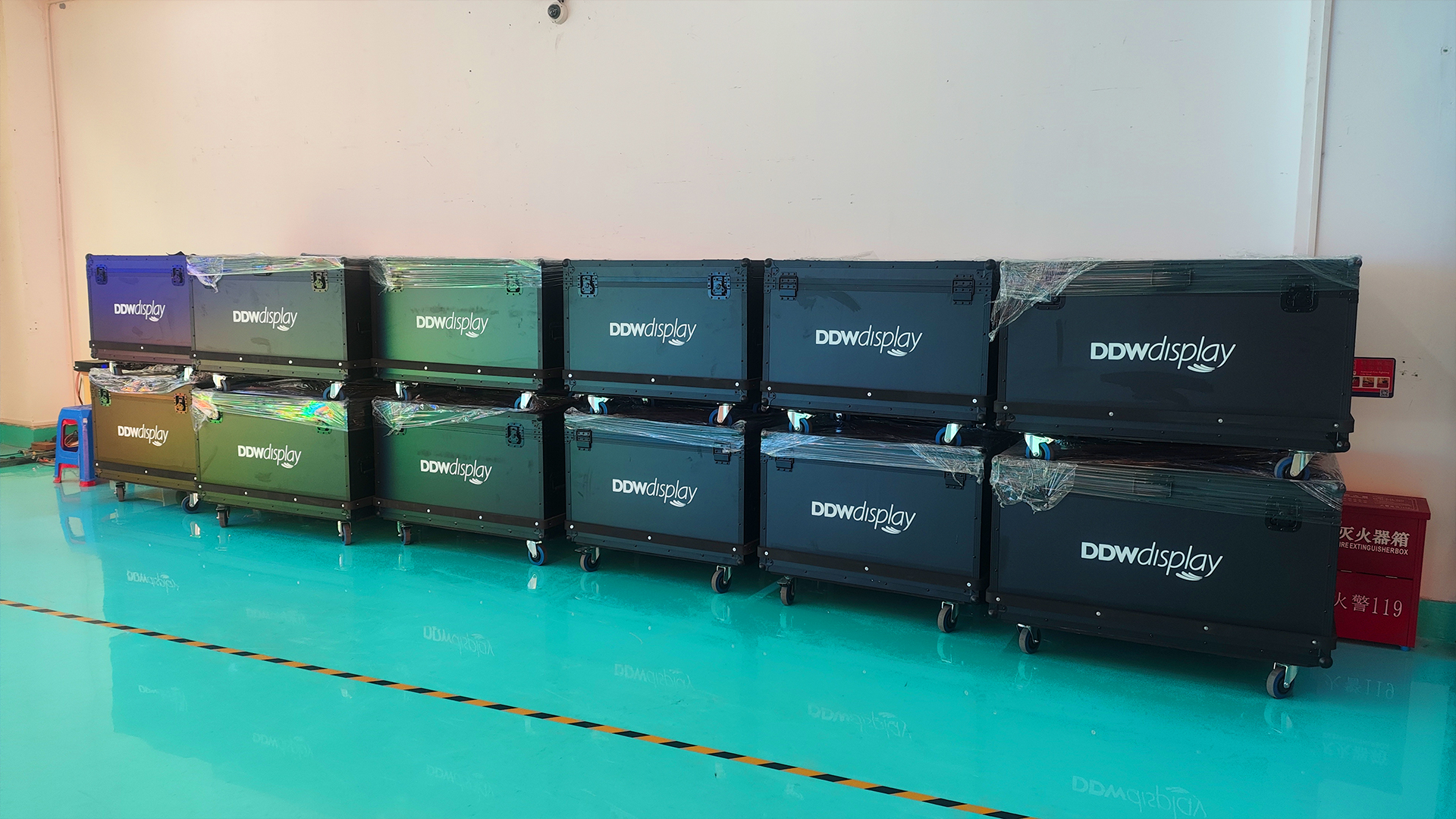
DDW Display warehouse and project support. Contact DDW Display for an ECOB Series sample, project quote, or catalog. Image: DDW Display.
Have Questions or Need More Details?
Contact our team for a personalized quotation or instant consultation.
Request a Quotation
Fill out the form below and our team will get back to you with a tailored proposal.
WhatsApp Direct Chat
Prefer to chat in real-time? Message us on WhatsApp for instant assistance & quick answers.
- Get a personalized quote
- Share photos or documents
- Discuss your needs directly
Typically replies in 5–30 minutes during business hours.