
Control Room Screen Glare and Service Access: Solving Two LED Display Problems with Fine-Pitch COB
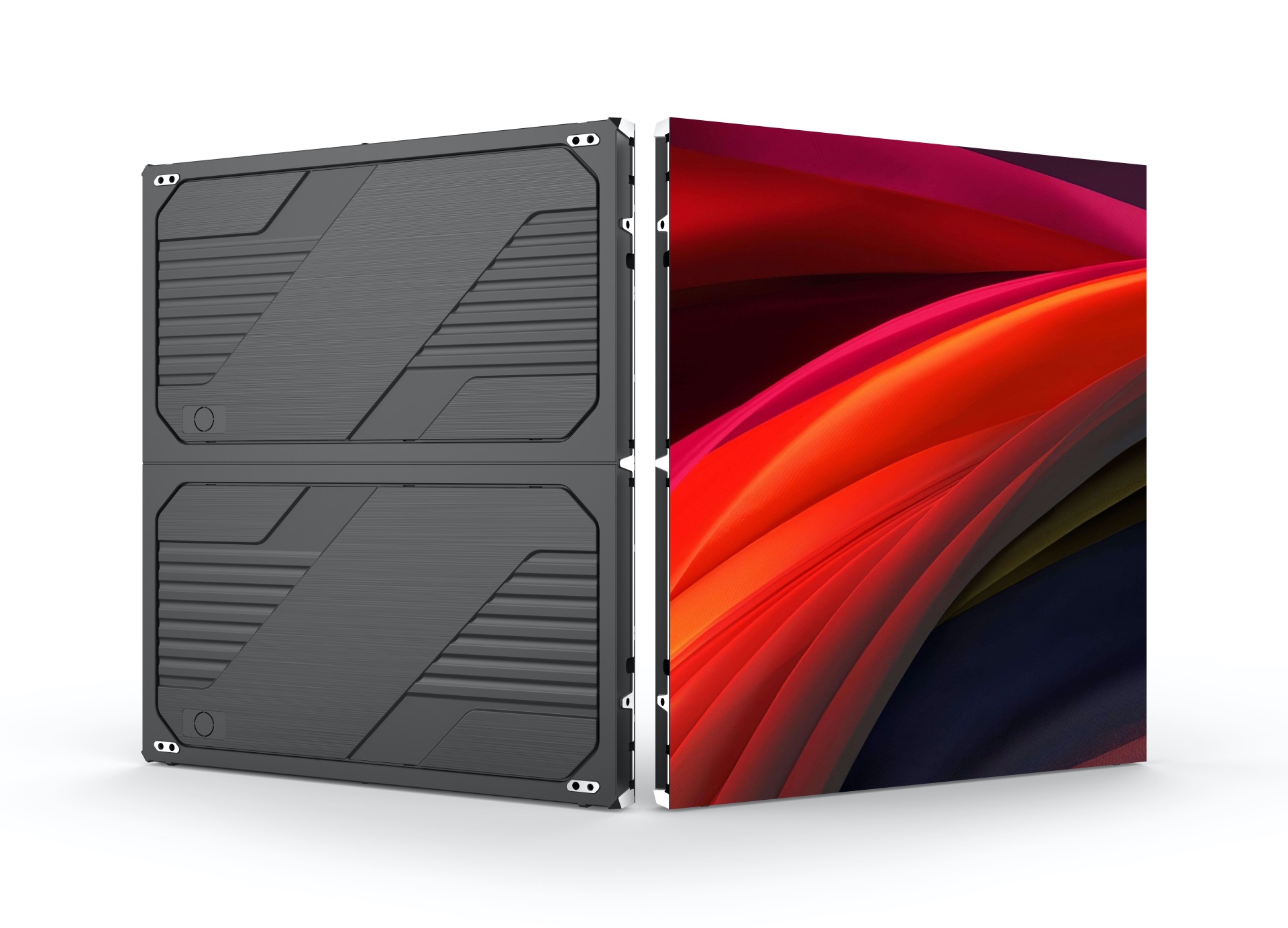
Two complaints appear again and again in control room and command center projects: the video wall reflects overhead lighting and becomes difficult to read, and a single service task turns into a shutdown because the wall has no practical rear access. Both problems are operational, not cosmetic. They affect how operators read alarm data, how long a wall stays available, and how much disruption a maintenance visit creates.
The indoor fine-pitch COB LED display is a practical answer to both issues when the specification is built around them. In the ECOB Series from DDW DISPLAY, a Matt COB surface treatment and Flip Chip COB construction address visible glare and image stability, while front service and a die-cast aluminum cabinet address access and downtime. DDW DISPLAY (Shenzhen DDW Technology Co.,Ltd.) is a Shenzhen-based LED display manufacturer founded in 2012, with a 10,000 ㎡ facility, 100+ employees, and LED display projects delivered to more than 120 countries and regions.
Problem Definition: Why Glare and Service Access Matter in a Control Room
Control rooms are not ordinary meeting rooms. They are visual work environments where people compare charts, maps, camera feeds, alarm lists, and status dashboards for long shifts. The LED video wall is part of the working surface, not a decorative backdrop. When the wall reflects a ceiling luminaire or another screen, the operator loses contrast exactly where attention is needed. When the wall is difficult to service, the room loses its main display during maintenance.
Problem 1: Reflected glare reduces readable contrast
Glare in a control room usually comes from three directions: overhead lighting, windows or glass partitions, and the light emitted by other displays. A screen surface that produces strong specular reflection can turn a dark dashboard into a bright patch of reflected light. The result is not a complete failure of the display. It is a local loss of contrast that makes small text, thin trend lines, and map labels harder to read.
This is why brightness alone is not the answer. Raising brightness can make the wall more powerful, but it can also increase the light output that contributes to reflections and operator fatigue. A control room display needs controlled brightness, high contrast, and a surface treatment that reduces visible reflection from the room.
Problem 2: Rear access turns service into a room-level event
Many control room walls are flush-mounted, built into cabinetry, or installed close to the wall to save floor space. In that layout, rear access may require removing adjacent equipment, opening a service corridor, or taking the entire wall offline. Even a routine module check can become a scheduled disruption. The cost is not only the replacement part. It is the loss of situational awareness while the wall is dark, plus the labor needed to reach the component.
For a 24/7 operation, service access should be designed before the wall is installed. Front service is not a minor convenience in a control room. It is a availability decision.
Industry Background: Fine-Pitch COB in Control Room Visualisation
Control room visualization has moved toward direct-view LED walls because they can provide seamless images, high contrast, and long operational life. Fine-pitch COB packaging is one route within that category. COB means chip-on-board packaging, where LED chips are bonded directly to the board and protected at the surface. In the ECOB Series, DDW DISPLAY pairs COB packaging with Flip Chip LEDs, a Matt COB surface, and a die-cast aluminum cabinet.
The broader LED display market provides context for why manufacturers continue to invest in fine-pitch indoor products. Mordor Intelligence projects the global LED display market at USD 20.73 billion in 2026, rising to USD 26.98 billion by 2031. That growth does not change the control room requirement, but it explains why buyers have more fine-pitch options to compare. The useful comparison is not the number of options. It is whether the display solves the room's glare and access constraints.
Control room applications commonly run in fixed installation, daily continuous operation, and 24/7 operation for command center use. They also require fine pixel pitch, high refresh rate, seamless splicing, high contrast, accurate color, low-brightness grayscale performance, quiet operation, efficient heat dissipation, front maintenance, and stable long-term operation. These requirements are consistent with the application profile of indoor control and command center displays.
Detailed Solution: How the ECOB Series Addresses Both Problems
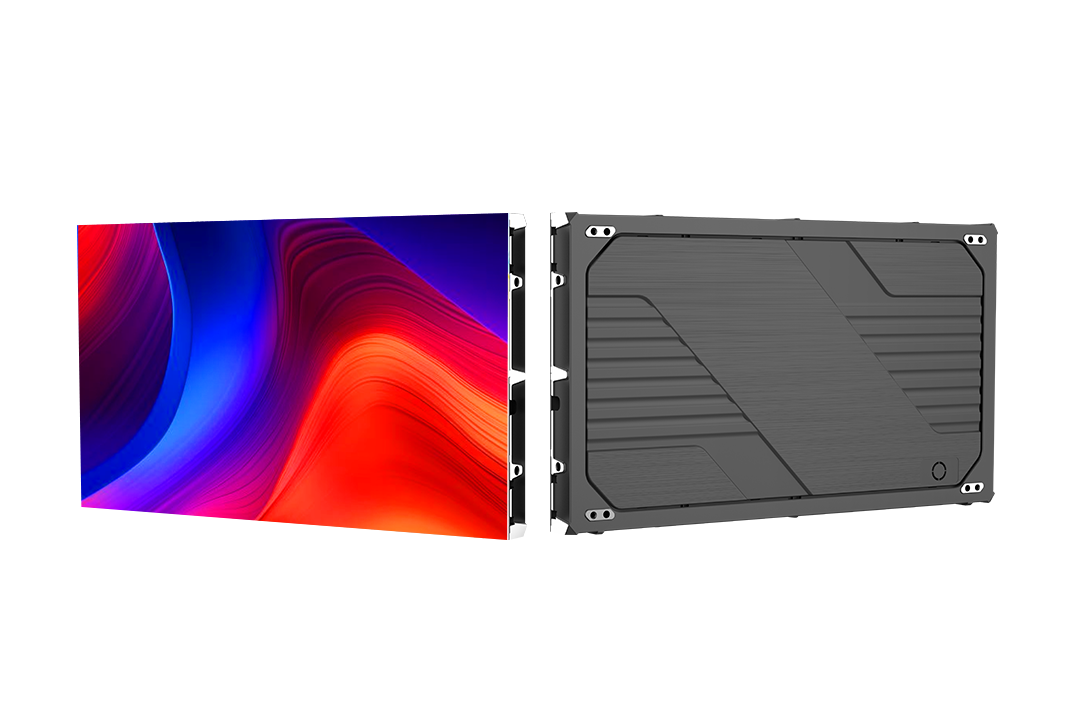
The ECOB Series is an indoor fine-pitch COB LED display from DDW DISPLAY. It is listed for corporate, control room, command center, conference and meeting, education, showroom, and commercial display applications. For this article, the relevant configuration points are the surface, the image engine, the cabinet, and the service method.
Matt COB surface treatment and controlled brightness
The ECOB Series uses a Matt COB surface treatment. In a control room, the purpose of a matt surface is to reduce the visible reflection of room lighting and nearby screens. A matt finish scatters reflected light instead of forming a sharp image of a luminaire on the wall. This supports readability in rooms where the wall faces ceiling lights or glass partitions.
Brightness is specified at 600 nits standard and 1000 nits optional. That range matters because a control room rarely needs outdoor-level brightness. A 600-nit wall can be matched to a dim room, while the 1000-nit option provides headroom where ambient light is higher or where the room is used for presentations. The series also lists a 10000:1 contrast ratio, which supports separation between dark backgrounds and bright data elements.
The same display lists a 160° horizontal and 160° vertical viewing angle. Wide viewing angles help operators at the edges of the room see consistent image quality rather than a narrow sweet spot. The specification does not claim that any display can eliminate all reflections. It does give the project team a matt surface, a controlled brightness range, and high contrast to work with during lighting design.
Flip Chip COB construction and image stability
The ECOB Series uses Flip Chip LEDs and COB packaging. The practical value in a control room is a protected display surface and stable image performance. The series lists a surface hardness of 4H and PCB surface protection of IP54. Those are indoor protection specifications, not outdoor waterproof ratings. They are relevant to daily cleaning, accidental contact, and dust control in an equipment room.
Refresh rate is listed at 3840 Hz. In a control room, high refresh supports smooth motion and reduces the risk of visible flicker when the wall appears on camera or in a video conference. The series also lists 16-bit grey level, which helps with low-brightness grayscale performance in dim control rooms. A wall that can hold detail at low brightness is easier to live with during night shifts than a wall that must be run at high output to maintain contrast.
Long-term operation is supported by a listed lifetime of 100,000 hours at 50% brightness. The ECOB Series offers common cathode and common anode circuit designs, which gives the project team a choice in power and heat configuration. The operating temperature range is -10°C to +40°C, and input voltage is AC 100–240V, 50/60Hz. These are project planning facts, not performance claims.
Front service and die-cast aluminum cabinet
The ECOB Series lists front service maintenance. That is the direct answer to the rear-access problem. When the wall is flush-mounted or built into a control room wall, front service allows the service task to be performed from the room side. The cabinet is die-cast aluminum, and the panel formats are 600 × 337.5 × 39.5 mm and 600 × 675 × 39.5 mm. Panel weights are 4 kg and 7.9 kg.
Those dimensions matter during installation planning. The 600 × 337.5 mm panel is a 16:9 format that can be combined into Full HD, 2K, 4K, and larger wall configurations. The 600 × 675 mm panel provides a larger cabinet option for projects where fewer joints or a different wall geometry is preferred. The die-cast aluminum cabinet gives the installer a rigid panel structure, and the front-service method means the service plan does not depend on a rear corridor.
Pixel pitch range for different control room layouts
The ECOB Series covers pixel pitches from P0.625 to P1.87, with options at P0.625, P0.78, P0.93, P1.25, P1.56, and P1.87. The module size is 150 × 168.75 mm. A smaller pitch provides higher pixel density for close viewing. A larger pitch within the range can be appropriate when operators sit farther from the wall or when the wall is used for large-format overview content rather than detailed text.
The correct choice is not automatically the smallest pitch. It is the pitch that matches the viewing distance, screen size, content type, and budget. A control room with workstations close to the wall may need a finer pitch to avoid visible pixel structure. A command center with a long viewing distance may use a different point in the range without losing the operational benefit.
Quality control before shipment
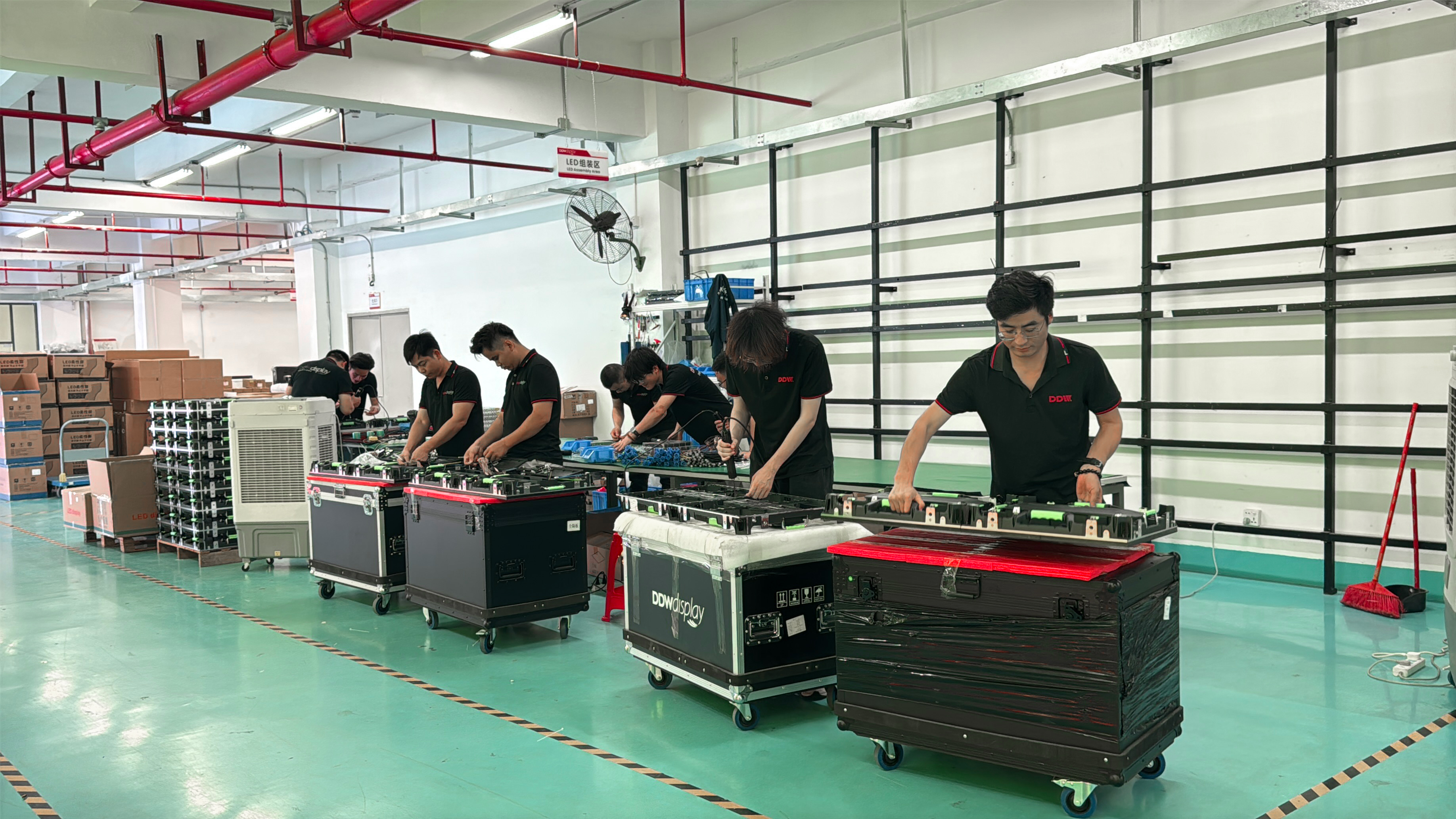
DDW DISPLAY lists 100% product inspection, aging test, module testing, brightness and color calibration, power safety test, and performance inspection before shipment. For a control room project, these checks matter because the wall is usually a fixed installation. A module that fails after installation creates more disruption than a module that is caught during aging. The company also provides remote technical support, installation guidance, troubleshooting support, product warranty service, spare parts supply, and professional engineering assistance.
Step-by-Step Breakdown: Specifying a Control Room COB Display
The following sequence turns the two complaints into a specification review. It is written for buyers, project engineers, and system integrators who are evaluating an indoor LED video wall for a control room or command center.
- Map the sightlines and light sources. Record where operators sit, where the wall will be viewed from, and where ceiling lights, windows, and glass partitions fall in relation to the screen. A matt COB surface helps, but the lighting plan should still avoid direct reflections into the main viewing positions.
- Set the brightness target for the room. Use 600 nits standard for a controlled dim environment, and consider the 1000-nit option where ambient light is higher. Do not specify maximum brightness as a default. Review the wall at the intended operating brightness, not only at full output.
- Confirm contrast and refresh requirements. The ECOB Series lists a 10000:1 contrast ratio and 3840 Hz refresh rate. These specifications support data separation and smooth motion. If the control room is used for broadcast, video conferencing, or camera-facing work, include the camera test in the review.
- Select the pixel pitch by viewing distance and content. Use the P0.625 to P1.87 range as the starting point. Confirm the smallest text size, map labels, and graph lines that operators must read. Then choose the pitch that meets that requirement without over-specifying the wall.
- Plan front service before installation. The ECOB Series lists front service. Confirm that the mounting structure, wall opening, and surrounding cabinetry allow the service access path to be used. Check the panel size and weight: 600 × 337.5 × 39.5 mm at 4 kg, and 600 × 675 × 39.5 mm at 7.9 kg.
- Verify power and environment. The input is AC 100–240V, 50/60Hz, and the operating range is -10°C to +40°C. The PCB surface protection is IP54 and surface hardness is 4H. These are indoor specifications. Confirm that the equipment room temperature and power distribution are within the project design.
- Review quality control and after-sales support. Ask for the inspection and aging process, the spare parts plan, and the remote support path. DDW DISPLAY lists 100% product inspection, aging test, module testing, brightness and color calibration, power safety test, and performance inspection before shipment, with remote technical support and installation guidance.
- Confirm commercial terms. The MOQ is 1 unit or project-based order. Standard product lead time is 15–30 days, while customized projects depend on product design, quantity, and technical requirements. The monthly capacity is listed at 8000 ㎡.
Use Cases: Where the Two Problems Appear
The ECOB Series is listed for corporate, control room, command center, conference and meeting, education, showroom, and commercial display applications. The following use cases show why glare and service access are not abstract concerns.
Transport and infrastructure operations centers
A transport operations center may combine maps, camera feeds, timetables, and incident logs on one wall. Operators need to read route labels and status changes under pressure. Reflected light from ceiling fixtures can wash out a section of the map. A matt COB surface and a controlled 600-nit brightness setting help the room team balance legibility against operator fatigue. If a module needs attention, front service allows the work to be planned from the room side rather than through a rear equipment corridor.
Utility and energy command centers
Energy and utility command rooms often run continuously. The wall may show grid status, alarms, and trend charts for long periods. A 10000:1 contrast ratio and 16-bit grey level support the separation of dark backgrounds and fine trend lines. The 3840 Hz refresh rate supports smooth display of moving data and camera feeds. The front-service design matters because a wall that is built into a control room console should not require a room shutdown for routine service.
Security operations centers
A security operations center may use the wall for camera mosaics, access-control status, and incident timelines. Camera-facing environments can show flicker or scan lines if the refresh rate is low. The ECOB Series lists 3840 Hz refresh. The Matt COB surface helps with reflections from desk monitors and room lighting. The panel formats allow the wall to be configured around the room geometry, and the front-service method supports maintenance without rear clearance.
Corporate control rooms and briefing centers
Corporate control rooms often combine operational monitoring with executive briefings. The room may be dim during monitoring and brighter during presentations. A display with 600 nits standard and 1000 nits optional gives the project team a brightness choice. The 160° viewing angle supports viewers at the side of the room. The die-cast aluminum cabinet and front service support a clean wall installation where the rear side is not accessible.
Comparison Table: Control Room Problems and ECOB Series Facts
The table below maps each operational problem to a verified ECOB Series specification. It does not compare brands. It compares the room requirement with the product fact that addresses it.
| Control room issue | ECOB Series design response | Verified specification |
|---|---|---|
| Reflected glare from ceiling lights and nearby screens | Matt COB surface treatment with a controlled brightness range | Matt COB; 600 nits standard / 1000 nits optional; 10000:1 contrast ratio |
| Flicker or scan lines when the wall appears on camera | High refresh rate and Flip Chip COB construction | 3840 Hz refresh rate; Flip Chip; 16-bit grey level |
| Rear access is blocked by cabinetry or wall structure | Front service maintenance with a die-cast aluminum cabinet | Front Service; die-cast aluminum cabinet; 600 × 337.5 × 39.5 mm and 600 × 675 × 39.5 mm panels |
| Panel handling and installation planning | Two panel formats with different weights | 4 kg for 600 × 337.5 × 39.5 mm; 7.9 kg for 600 × 675 × 39.5 mm |
| Close-viewing detail and wall resolution | Pixel pitch range from fine to medium indoor pitch | P0.625 / P0.78 / P0.93 / P1.25 / P1.56 / P1.87; module size 150 × 168.75 mm |
| Power and room environment | Wide input voltage and indoor operating range | AC 100–240V, 50/60Hz; -10°C to +40°C; IP54 PCB surface protection; 4H surface hardness |
| Long operating life | Rated lifetime at reduced brightness | 100,000 hours at 50% brightness; common cathode / common anode options |
Specification note: The ECOB Series is an indoor fine-pitch COB LED display. Its IP54 PCB surface protection is not an outdoor waterproof rating. Certification requirements should be confirmed for the exact model and destination market before ordering.
FAQ
What power and environmental limits should be checked for a control room COB LED display?
Check the input voltage, operating temperature, and surface protection against the room design. The ECOB Series lists AC 100–240V, 50/60Hz input, an operating range of -10°C to +40°C, IP54 PCB surface protection, and 4H surface hardness. These are indoor specifications. Buyers should also confirm the certificate set for the exact model and destination market before ordering.
How does a Matt COB surface help with control room screen glare?
The ECOB Series uses a Matt COB surface treatment. In a control room, a matt surface is used to reduce visible reflection from ceiling lighting and nearby screens. The series also lists 600 nits standard / 1000 nits optional brightness, a 10000:1 contrast ratio, and a 160° viewing angle. The practical approach is to set brightness for the room rather than running the wall at maximum output.
Can the ECOB Series be serviced from the front?
Yes. The ECOB Series lists Front Service maintenance and uses a die-cast aluminum cabinet. Panel formats are 600 × 337.5 × 39.5 mm and 600 × 675 × 39.5 mm, with panel weights of 4 kg and 7.9 kg. Front service is relevant where the wall is flush-mounted or where rear clearance is limited.
Does a smaller pixel pitch always improve control room readability?
No. The ECOB Series covers P0.625 to P1.87. A smaller pitch increases pixel density for close viewing, but the right choice depends on viewing distance, screen size, content type, and budget. A larger pitch within the range can be appropriate where operators sit farther from the wall or where the wall is used for overview content.
Can DDW DISPLAY also support rental LED displays for live events, and what is the standard lead time?
DDW DISPLAY's product range includes rental LED screens as well as indoor fine-pitch COB displays. For standard products, lead time is 15–30 days. Customized projects depend on product design, quantity, and technical requirements. The MOQ is 1 unit or project-based order. After-sales support includes remote technical support, installation guidance, troubleshooting support, product warranty service, spare parts supply, and professional engineering assistance. To discuss a control room sample, quote, or catalog, contact DDW DISPLAY at info@ddw.net or WhatsApp +86 134 1755 8100.
Conclusion: Solve the Room Problem, Not Only the Screen Specification
Control room glare and service access are two problems that appear after the wall is installed. They are easier to solve when they are treated as project requirements before the order. The ECOB Series from DDW DISPLAY addresses them with a Matt COB surface treatment, Flip Chip COB construction, 600 nits standard / 1000 nits optional brightness, a 10000:1 contrast ratio, 3840 Hz refresh, pixel pitches from P0.625 to P1.87, and front service in a die-cast aluminum cabinet.
The supporting details are equally practical: 600 × 337.5 × 39.5 mm and 600 × 675 × 39.5 mm panel formats, 4 kg and 7.9 kg panel weights, AC 100–240V input, -10°C to +40°C operating range, and 100,000 hours at 50% brightness. For a control room buyer, these facts should be checked against the room layout, lighting plan, service strategy, and content requirements.
Next step for your control room project
Request a sample, quote, or the 2026 DDW LED Display catalog to review the ECOB Series against your room dimensions, viewing distances, and service access plan.
Website: www.ddw.net | Email: info@ddw.net | WhatsApp: +86 134 1755 8100
Have Questions or Need More Details?
Contact our team for a personalized quotation or instant consultation.
Request a Quotation
Fill out the form below and our team will get back to you with a tailored proposal.
WhatsApp Direct Chat
Prefer to chat in real-time? Message us on WhatsApp for instant assistance & quick answers.
- Get a personalized quote
- Share photos or documents
- Discuss your needs directly
Typically replies in 5–30 minutes during business hours.