
Supplier Evaluation for Control Room COB LED Displays
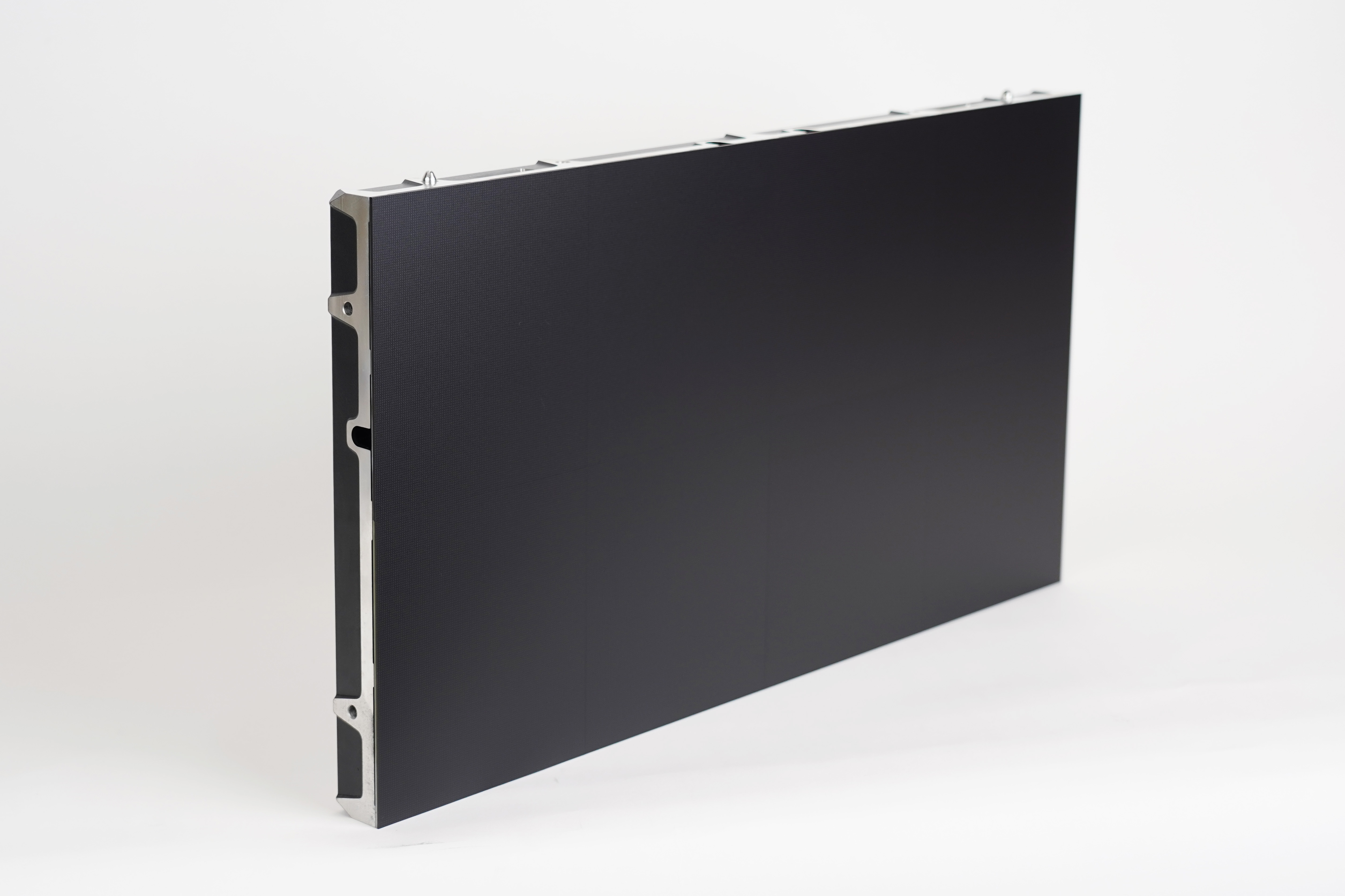
A supplier for control room COB LED displays should be judged on capability evidence and delivery assurance, not on catalogue claims. In practice that means verifying three things before an order is placed: that the manufacturer actually builds fine-pitch COB modules in the pixel pitch range the room needs, that the cabinet design allows modules, power supplies and receiving cards to be serviced from the front, and that the factory can document its inspection process so that the acceptance criteria at the destination are met rather than negotiated afterwards.
This evaluation guide is written for buyers specifying an indoor fine-pitch COB video wall for a control room, command centre or operations centre. It covers supplier capability questions — technical, mechanical, electrical and documentary — and the delivery terms that decide whether a screen goes live on schedule.
Why Control Room COB Displays Need a Different Supplier Standard
Control rooms and command centres differ from ordinary meeting rooms in ways that change the evaluation criteria. The relevant application profile is continuous operation, including 24/7 operation for control room applications, with close viewing distances and controlled lighting.
That environment imposes a specific requirement set: fine pixel pitch, high refresh rate, seamless splicing, high contrast ratio, wide viewing angle, accurate colour reproduction, low brightness with high greyscale, quiet operation, efficient heat dissipation, front maintenance, and stable long-term operation. Every one of those items can be traced back to a measurable product parameter, which means a supplier conversation can be kept factual rather than promotional.
Three practical consequences follow.
- Maintenance access is a design decision, not an afterthought. A control room wall is usually installed flush or near-flush. If modules, power supplies and receiving cards cannot be reached from the front, every future service event becomes a structural project.
- Continuous operation turns power and thermal design into specification items. Average power consumption per square metre, cabinet material and input voltage tolerance matter more than peak brightness in a room where the screen is never switched off.
- Documentation is part of the product. Certificates, inspection records and customs paperwork for the specific model and destination market determine whether the installation can be signed off.
For these reasons, the generic question "who is a good LED display supplier" is too broad to be useful. The narrower question — who can build, test and deliver a fine-pitch COB video wall for a continuously operating indoor environment — produces answers that can be checked.
Industry Background: Where COB Sits in the Indoor Fine-Pitch Market
Demand for LED display hardware continues to expand. Mordor Intelligence projects the global LED display market at USD 20.73 billion in 2026, growing to USD 26.98 billion by 2031. Within that market, indoor fine-pitch applications — including control rooms, command centres, broadcast studios and conference facilities — are among the segments where buyers are most likely to compare COB packaging against conventional SMD modules.
That comparison has moved from a technical curiosity to a procurement question. The practical difficulty is that the phrase "COB LED display" now covers several distinct packaging routes, and suppliers that sell rental screens, outdoor billboards and transparent displays may not carry a control-room-grade COB line at all. A supplier that is strong in one category is not automatically strong in another.
DDW DISPLAY (Shenzhen DDW Technology Co.,Ltd.) is an LED display manufacturer founded in 2012 and based in Shenzhen, China, producing indoor fine pitch LED displays, outdoor LED screens, rental LED displays, COB LED displays, XR virtual production LED walls, stadium LED displays, LED posters and commercial LED video walls. Approximately 95% of its products are exported, serving markets in North America, Europe, the Middle East, Asia-Pacific, Latin America and Africa.
The rest of this article sets out what a buyer should verify, in the order the verification should happen.
Capability Checklist: What a Control Room COB Supplier Must Prove
1. COB Technology Depth — Not Just the Word "COB"
Ask which COB platform the supplier uses and which of its products is actually intended for control room and command centre duty. A dedicated line is a better signal than a generic claim.
The ECOB Series is an indoor fine-pitch COB LED display model designed for control room and command centre environments as well as corporate environments. It is classified as an energy-saving indoor LED video wall and uses a die-cast aluminium cabinet.
The KCOB Series is built on Flip-Chip COB LED technology, classified as a Flip-Chip COB LED display, an indoor fixed LED display and a fine-pitch LED video wall, with pixel pitch options of P0.9375, P1.25 and P1.5625. The QDCOB Series uses Quantum Dot COB technology with pixel pitch options of P0.78, P0.9375, P1.25 and P1.5625, positioned as a premium commercial LED display for conference rooms, control rooms, command centres, corporate showrooms and broadcast studios.
The DCOB Series is an indoor fine-pitch Mini COB LED display, also classified as a front-maintenance COB LED display and an indoor LED video wall. Its COB integrated packaging is combined with IP65 surface protection, which matters in rooms where the screen front is dusted, touched or inspected at close range.
2. Pixel Pitch Range Mapped to Real Viewing Distance
Pixel pitch is a derived parameter, not a headline number. It follows from the distance between the operator positions and the screen face, and from the resolution the signal sources actually deliver.
For indoor close-viewing COB configurations, the available options across the DDW DISPLAY COB range are:
- DCOB Series: P0.78, P0.9375, P1.25, P1.56, P1.857
- KCOB Series: P0.9375, P1.25, P1.5625
- QDCOB Series: P0.78, P0.9375, P1.25, P1.5625
A smaller pixel pitch delivers higher pixel density and better close-range image detail, but it usually increases project cost. The better choice is therefore not automatically the smallest available pitch, but the pitch that provides sufficient image quality for the actual viewing distance and application.
For control rooms specifically, the second half of that rule is the one that gets ignored. If the nearest operator sits several metres back from the wall, the extra density of a smaller pitch is spent on a viewing condition that never occurs.
3. Cabinet Mechanics and Front Service Access
Behind most control room walls there is no service corridor. Cabinet geometry and maintenance method should therefore be checked before the pixel pitch is finalised, because a screen that cannot be reached is a screen that cannot be maintained.
DCOB Series cabinet and module data:
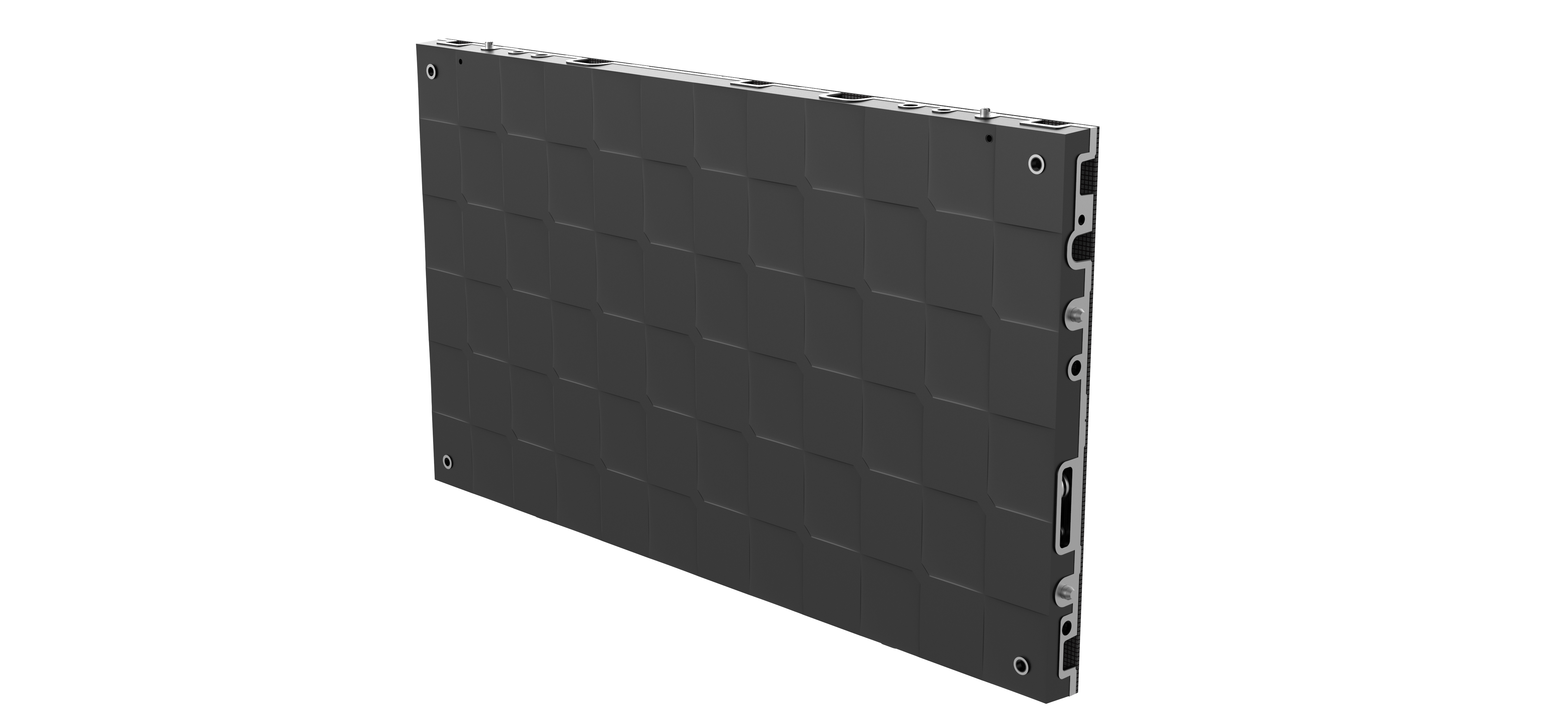
- Cabinet size: 600 × 337.5 × 37.7 mm
- Module size: 150 × 168.75 mm
- Cabinet weight: 4.5 kg
- Cabinet material: die-cast aluminium
- Flatness: 0.15 mm
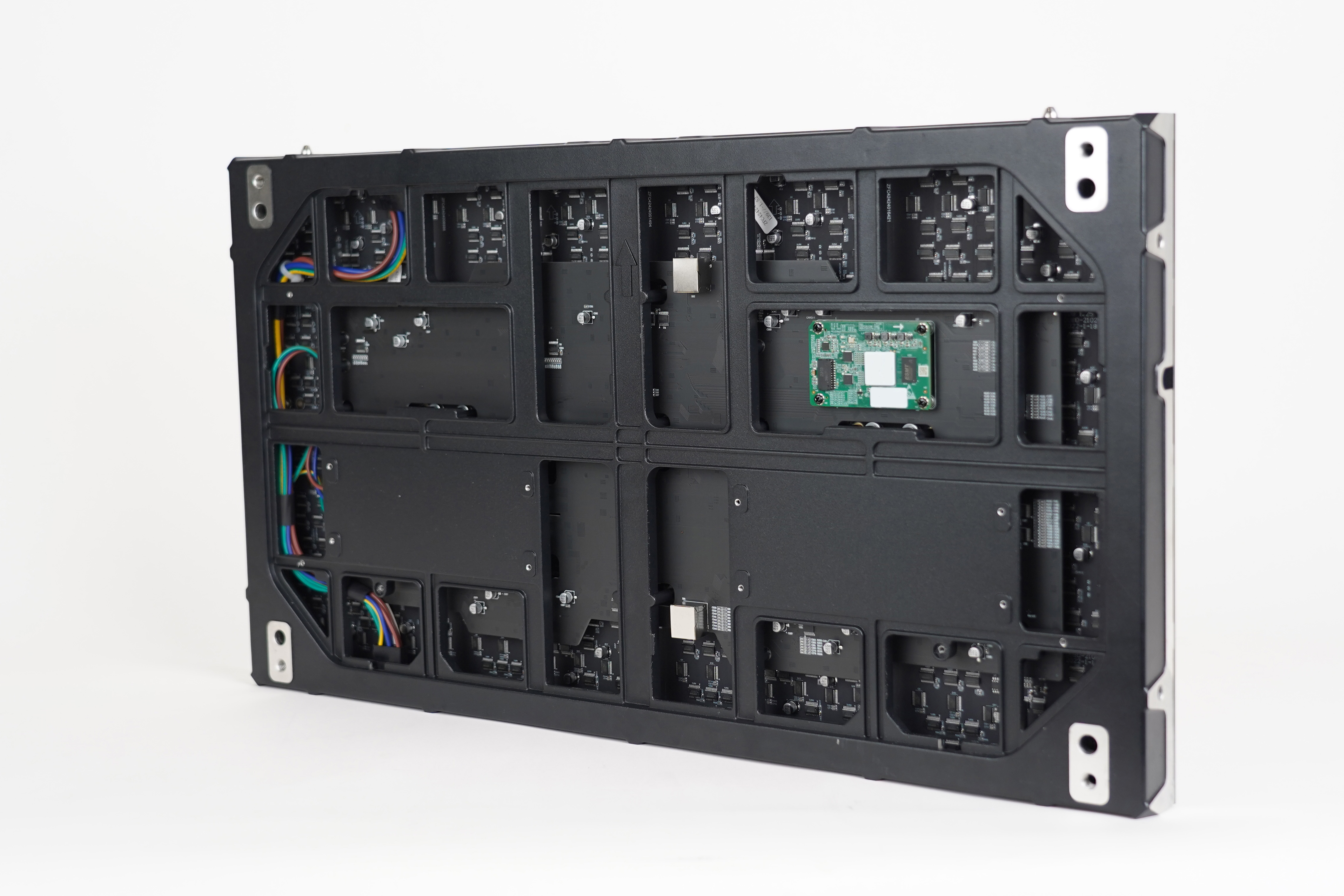
- Maintenance: full front maintenance — LED modules, power supplies and receiving cards are serviceable from the front
KCOB Series cabinet and module data:
- Cabinet size: 600 × 337.5 × 29.3 mm
- Module size: 300 × 168.75 mm, four modules per cabinet in a 2 × 2 arrangement
- Cabinet weight: 3.4 kg
- Cabinet material: die-cast aluminium with Flip-Chip COB LED modules
- Built-in hook quick lock for cabinet alignment and secure splicing
- Maintenance: full front maintenance — LED modules, power supplies and receiving cards serviceable from the front
Both series use a 600 × 337.5 mm standard 16:9 cabinet, which simplifies Full HD, 2K, 4K and larger LED video wall configurations. For a control room this is a practical advantage: signal formats are usually standard resolutions, so a 16:9 modular cabinet turns the wall into an arithmetic exercise instead of a custom-structure one.
Two further mechanical details are worth asking about. The KCOB cabinet is 29.3 mm deep and weighs 3.4 kg, which reduces the depth required behind the finished wall surface and lightens the mounting structure. The DCOB cabinet is 37.7 mm deep at 4.5 kg. Both figures come from the same 600 × 337.5 mm module format, so the comparison is directly meaningful.
4. Visual Performance Under Control Room Lighting
Control rooms are usually dim and controlled rather than bright and reflective, so the parameters that decide whether an operator can read a trend line for eight hours are greyscale behaviour, contrast and uniformity — not peak brightness.
DCOB Series: brightness 600–1000 cd/m², contrast ratio 5000:1, refresh rate 3840–7680 Hz, greyscale 13–16 bit, viewing angle 165° horizontal and 165° vertical, brightness uniformity 97%, colour temperature adjustable 3000–10000 K, frame rate 60 Hz.
KCOB Series: brightness 600 cd/m², contrast ratio 15000:1, refresh rate 3840 Hz, greyscale 16 bit, viewing angle 160° horizontal and 160° vertical, brightness uniformity ≥97%, colour uniformity ≤±0.003 Cx, Cy, colour temperature adjustable 3000–10000 K.
Read those figures as a pair rather than a ranking. A high contrast ratio with tight colour uniformity is what keeps whites consistent across a wall that carries maps, schematics and multi-window dashboards. Brightness uniformity at or above 97% is what prevents a single cabinet from reading as a slightly different shade during a shift handover. And the refresh rate matters beyond human perception, because control rooms are frequently photographed or streamed to remote participants.
5. Power, Thermal Behaviour and Site Conditions
For a screen that runs continuously, power design is a first-order specification item.
DCOB Series power data: input voltage AC 100–240 V; average power consumption 95–210 W/m² depending on pixel pitch and energy-saving configuration; common anode and common cathode configurations available.
KCOB Series power data: input voltage 100–240 VAC ±10%; maximum power consumption ≤360 W/m²; average power consumption ≤120 W/m² at the reference configuration.
Two buying instructions follow from this. First, ask the supplier to state the energy-saving mode — common anode or common cathode — for the specific model being quoted, because the choice affects power consumption, heat output and budget. Second, match the quoted input voltage range against the actual supply at the site instead of assuming a standard.
6. Certification and Documentary Evidence
The certifications a project needs depend on the destination market, the product configuration and the project requirement. They cannot be confirmed from a catalogue statement.
The DCOB Series carries CCC, Energy Saving certification, CE, CB, FCC and ETL. For a control room project the useful check is not whether a supplier holds certificates in general, but whether the certificate being presented names the model being purchased and the market being shipped to. Request the certificate or test report for the exact configuration, not a generic compliance confirmation.
Beyond certification, four documents should be in scope from the start: the specification sheet for the quoted model, a cabinet and module bill of materials, the factory inspection record, and the drawing set for the mounting structure. If any of these is only available after a deposit, that is itself a signal.
Delivery Assurance: From Purchase Order to Site Acceptance
Delivery assurance for a control room COB wall covers production, testing, packing, freight, customs and on-site acceptance. Each stage should have an owner and a document.
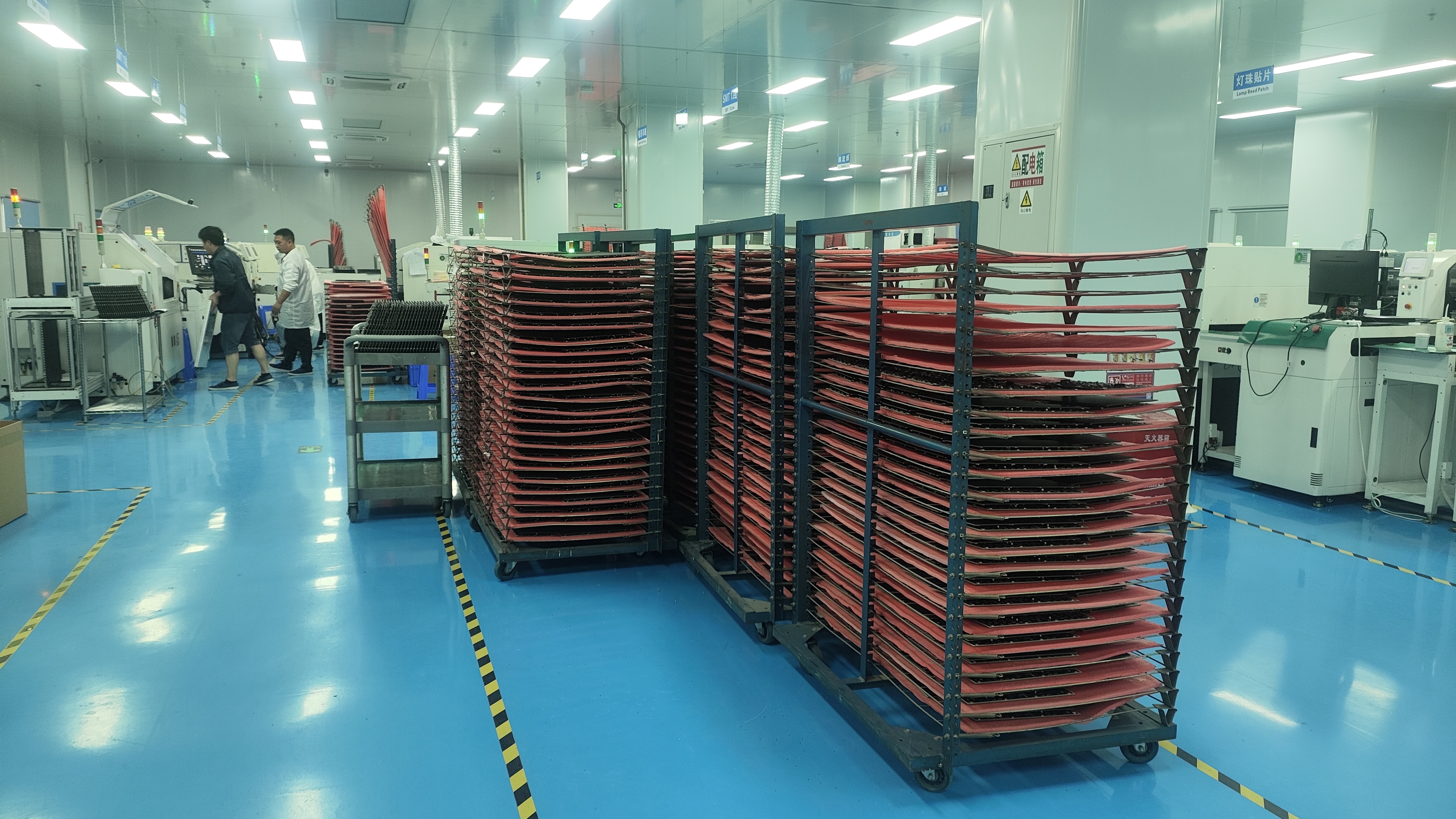
Pre-shipment inspection. Every LED display undergoes comprehensive quality inspection before shipment. A supplier should be able to describe what that inspection contains for the specific model — visual inspection, module ageing, dead-pixel review, brightness and colour checks, signal integrity, cabinet flatness — rather than returning a one-line assurance.
Customs and trade classification. In international trade, LED displays are primarily classified under HS code 852859, covering "monitors other than cathode-ray tube." Getting the classification, the commercial invoice and the packing list aligned before the container is loaded prevents the kind of port delay that pushes a control room go-live date.
Supplier capacity as delivery evidence. DDW DISPLAY operates a 10,000 ㎡ manufacturing facility with more than 100 employees and an annual output of 800,000+ units, supported by an R&D team of 15 engineers dedicated to LED display technology development. The company has delivered LED display projects to more than 120 countries and regions. These figures describe a supplier able to run international projects at volume, but they do not by themselves guarantee a particular lead time — that belongs in the purchase order.
Step-by-Step Supplier Evaluation Workflow
- Define the viewing conditions before contacting anyone. Measure the distance from the nearest operator position to the wall face, and the distance from the furthest seat in the room. Those two numbers, not the budget, should set the upper and lower pixel pitch limits you will accept.
- Request the specification sheet for the exact model. Ask for the DCOB, KCOB or QDCOB data sheet and check pixel pitch options, module size, cabinet size, cabinet weight, brightness, contrast ratio, refresh rate, greyscale and viewing angle as a set. Incomplete specification sheets tend to hide inconsistent configurations.
- Verify front service access with an illustration. Ask the supplier to show how a module, a power supply and a receiving card are removed from the front of the specific cabinet. This is a mechanical fact that should be demonstrable rather than described.
- Match electrical and environmental parameters to the room. Confirm the input voltage range against the site supply, review average and maximum power consumption per square metre for the quoted configuration, and list the certifications required for the destination market.
- Lock delivery terms into the purchase order. Specify the pre-shipment inspection scope, the documents that ship with the goods, the packing method, the delivery milestones and the on-site acceptance criteria. Delivery assurance is a contract clause, not a relationship expectation.
Where Control Room COB Displays Are Used
Control rooms and command centres. The reference application: 24/7 continuous operation, close viewing distance, controlled lighting and front-only maintenance access. ECOB and DCOB series fall directly into this category.
Operations and dispatch centres. Multiple simultaneous signal windows, long shift viewing and a need for consistent colour temperature across the wall — which is why colour uniformity at ≤±0.003 Cx, Cy and brightness uniformity at or above 97% appear in the specification.
Broadcast studios feeding a control position. A refresh rate of 3840–7680 Hz reduces flicker, scan lines and moiré when the wall appears in shot, which is a separate requirement from the operator's viewing experience.
Boardrooms and briefing rooms inside the same facility. The 600 × 337.5 mm 16:9 cabinet format means a smaller wall in an adjacent briefing room can be built from the same cabinet type, keeping spares, tools and training consistent across a site.
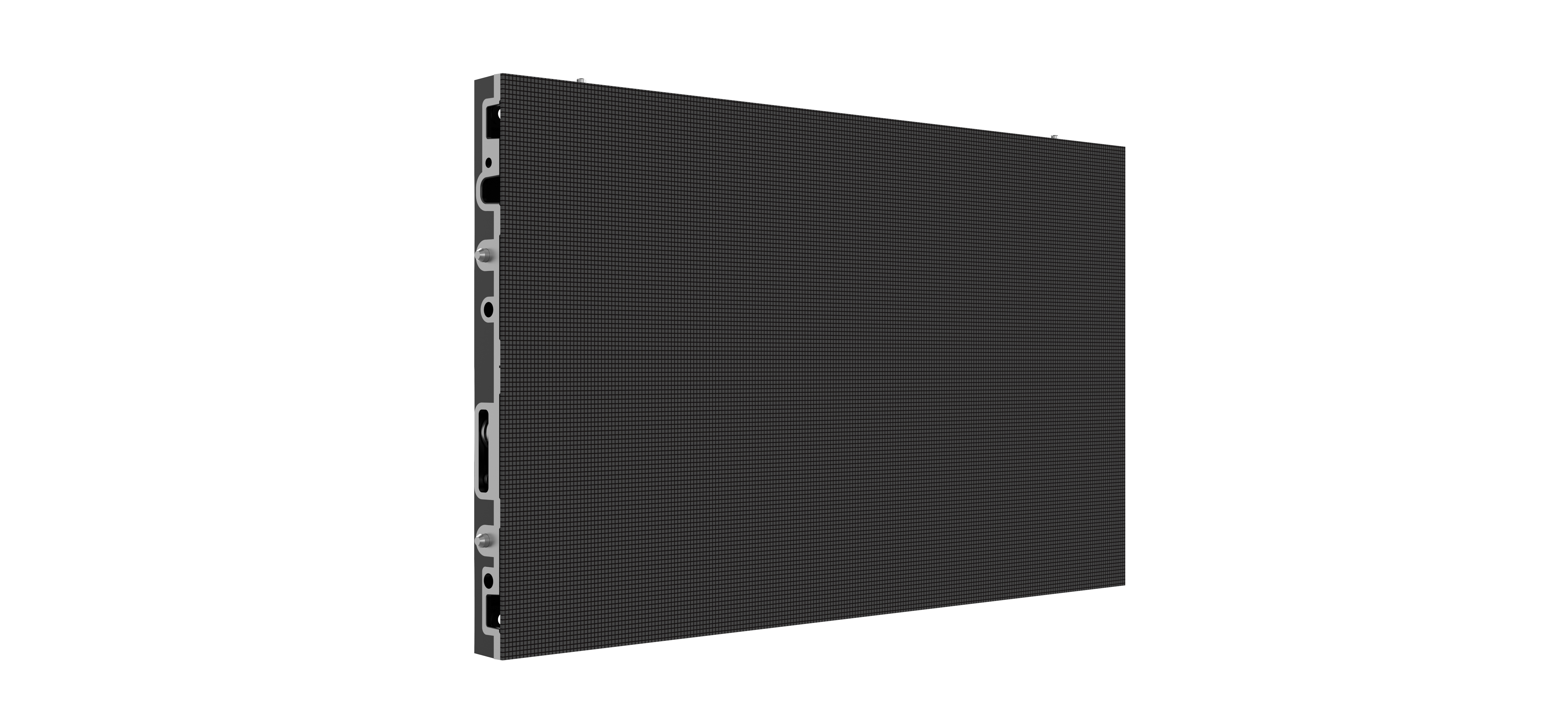
Comparison Table: DCOB vs KCOB Indoor COB Series
| Parameter | DCOB Series | KCOB Series |
|---|---|---|
| LED technology | Mini COB, COB integrated packaging | Flip-Chip COB |
| Pixel pitch options | P0.78 / P0.9375 / P1.25 / P1.56 / P1.857 | P0.9375 / P1.25 / P1.5625 |
| Cabinet size | 600 × 337.5 × 37.7 mm | 600 × 337.5 × 29.3 mm |
| Module size | 150 × 168.75 mm | 300 × 168.75 mm, 4 modules per cabinet (2 × 2) |
| Cabinet weight | 4.5 kg | 3.4 kg |
| Cabinet material | Die-cast aluminium | Die-cast aluminium |
| Brightness | 600–1000 cd/m² | 600 cd/m² |
| Contrast ratio | 5000:1 | 15000:1 |
| Refresh rate | 3840–7680 Hz | 3840 Hz |
| Greyscale | 13–16 bit | 16 bit |
| Viewing angle | 165° (H) / 165° (V) | 160° (H) / 160° (V) |
| Brightness uniformity | 97% | ≥97% |
| Input voltage | AC 100–240 V | 100–240 VAC ±10% |
| Power consumption | Average 95–210 W/m² | Max ≤360 W/m², average ≤120 W/m² |
| Maintenance | Full front maintenance | Full front maintenance |
| Certification | CCC / Energy Saving / CE / CB / FCC / ETL | Per model and destination market |
The table is not a recommendation of one series over the other. It is a reminder that a quotation without a matched specification set cannot be compared with a competing quotation, because the pixel pitch, energy-saving mode and maintenance method all change the delivered configuration.
FAQ: LED Display Supplier Questions from Control Room Buyers
What certifications should a control room COB LED display supplier provide?
Certification depends on the destination market, the product configuration and the project requirement. The DCOB Series carries CCC, Energy Saving certification, CE, CB, FCC and ETL. Buyers should confirm which certifications apply to the exact model and destination market, and request the corresponding certificate or test report rather than a general compliance statement. For large commercial and fixed-installation projects, certification should be evaluated alongside product testing, ageing tests, quality inspection and the manufacturer's quality control process.
What pixel pitch range should a COB LED display supplier be able to cover?
For indoor close-viewing COB applications, the DDW DISPLAY range covers P0.78 to P1.857 on the DCOB Series, P0.9375 to P1.5625 on the KCOB Series, and P0.78 to P1.5625 on the QDCOB Series. The right pitch for a control room depends on actual viewing distance and screen size, not on the smallest available number. A smaller pixel pitch provides higher pixel density and better close-range image detail, but usually increases project cost, so the appropriate choice is the pitch that provides sufficient image quality for the real viewing distance and application.
What drives the cost of an indoor COB LED video wall for a control room?
Cost is driven mainly by pixel pitch, packaging technology and the electrical architecture behind the wall. A smaller pixel pitch requires more LEDs and driver electronics per square metre, which raises material cost at a given screen area. The energy-saving mode — common anode or common cathode — also affects power consumption, heat management and budget, and on the DCOB Series this choice is selectable per configuration. Because of this, the most effective cost lever at the specification stage is confirming the largest pixel pitch that satisfies the actual viewing distance.
What can a sample or inspection report confirm before ordering?
A sample or inspection report confirms the parameters that are difficult to judge from a data sheet: brightness consistency, refresh behaviour, colour uniformity, module flatness and cabinet alignment. Every LED display undergoes comprehensive quality inspection before shipment, so buyers should ask what that inspection includes for the quoted model and which inspection results will be supplied with the goods. Comparing a physical sample against the specification sheet is the fastest way to detect a configuration that has been simplified during quotation.
What should be included in delivery terms for a control room COB LED video wall?
Delivery terms should cover the pre-shipment inspection scope and its documentation, the certificate set matched to the destination market, the packing method, freight milestones and on-site acceptance criteria. LED displays are classified under HS code 852859 in international trade, so customs documentation should be prepared before loading. DDW DISPLAY has delivered LED display projects to more than 120 countries and regions, with approximately 95% of products exported, but lead time and acceptance criteria are agreed per order.
Conclusion
Evaluating a supplier for a control room COB LED display comes down to four verifiable answers. Can the supplier show a COB platform intended for control room and command centre duty, with a documented pixel pitch range from P0.78 upward? Does the cabinet allow modules, power supplies and receiving cards to be removed from the front, at a weight and depth the mounting structure can carry? Are the electrical, thermal and certification parameters matched to the room and the destination market? And can the factory describe, in writing, the inspection and documentation that will accompany the shipment?
Where all four answers are supported by data — ECOB, DCOB, KCOB and QDCOB series specifications, front maintenance design, AC 100–240 V input, and certification records for the exact model — the evaluation stops being a judgement about brand and becomes a comparison of documented capability. That is the outcome a control room project needs, because the screen will be running long after the quotation is forgotten.
Next Step: Sample, Quote or Technical Review
Send your control room dimensions, viewing distances and signal sources, and DDW DISPLAY will map them to a DCOB, KCOB or QDCOB configuration with the matching cabinet, power and certification package. Samples, technical documentation and project quotations are available on request.
Contact: Steven — WhatsApp / WeChat / Mobile: +86 134 1755 8100 · Email: info@ddw.net · Factory: 2F Building 8, YiLisheng Industry Park, Fuyong, Baoan, Shenzhen, 518103
Download the DDW LED Display catalog 2026 (PDF) · www.ddw.net
Have Questions or Need More Details?
Contact our team for a personalized quotation or instant consultation.
Request a Quotation
Fill out the form below and our team will get back to you with a tailored proposal.
WhatsApp Direct Chat
Prefer to chat in real-time? Message us on WhatsApp for instant assistance & quick answers.
- Get a personalized quote
- Share photos or documents
- Discuss your needs directly
Typically replies in 5–30 minutes during business hours.