Rental LED Screen for Pop-Up Events: Fast Setup with Foldable LED Poster Displays
Rental LED Screen Guide
A pop-up event needs a visible LED display, but it often comes with a difficult site: a retail aisle, a hotel lobby, a conference foyer, or a temporary exhibition stand with limited load-in time and no rigging support. The practical answer is not always a full rental LED wall. For many short-duration brand activations, a foldable LED poster display such as the DDW DISPLAY PIF Series can be the more suitable format because it combines a display, control system, and mobile floor-standing support in one portable poster structure. DDW DISPLAY (Shenzhen DDW Technology Co.,Ltd.) is a professional LED display manufacturer founded in 2012, with a 10,000㎡ manufacturing facility, 100+ employees, and 15 R&D engineers. Its PIF Series is specified as a portable commercial LED display with a foldable aluminum cabinet, front maintenance, and synchronous or asynchronous control, which makes it relevant for event teams that need to deploy quickly without complex staging infrastructure.
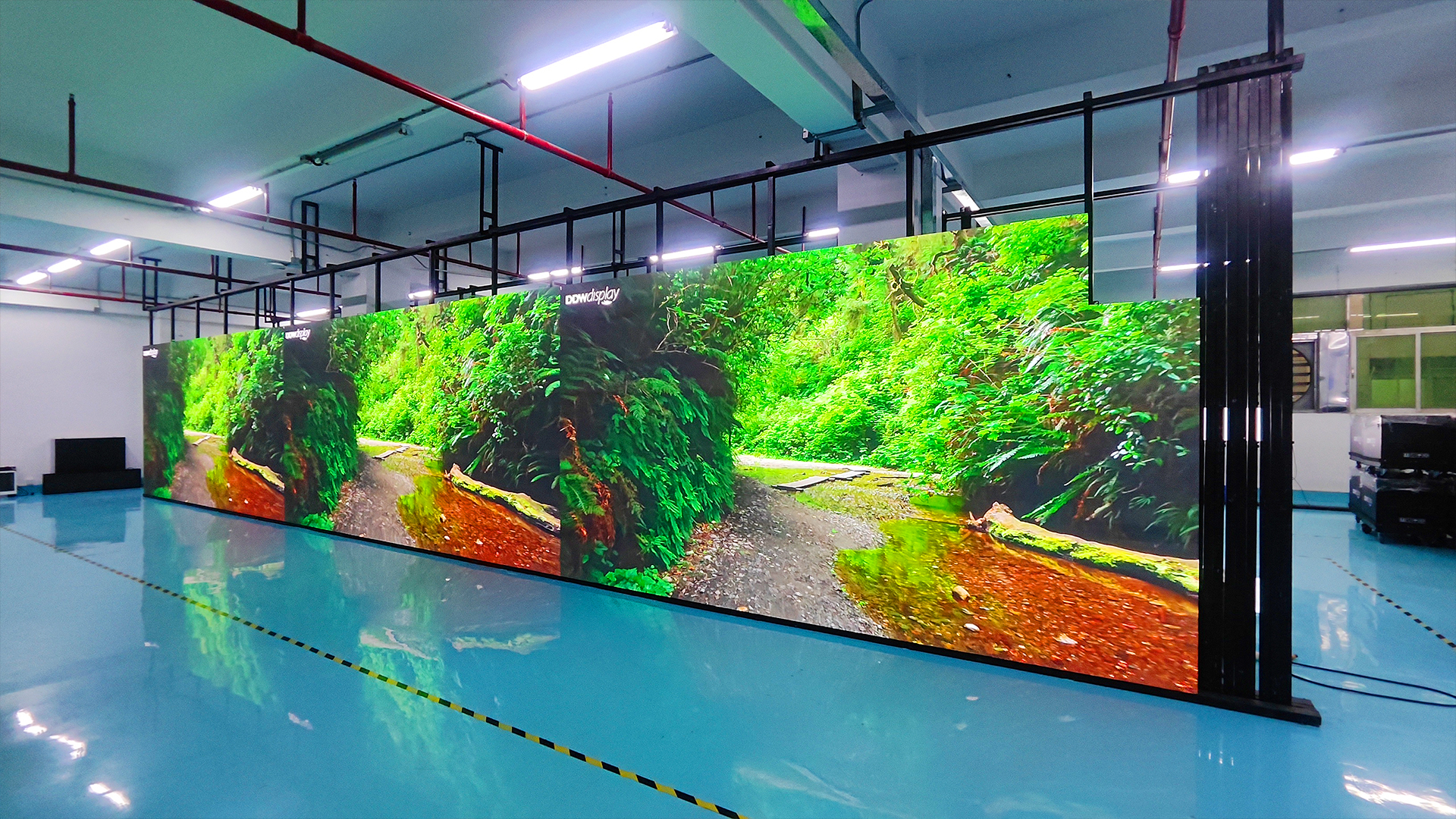
DDW DISPLAY aging test area. Pre-shipment testing supports reliability for rental and event use.
The Pop-Up Event Problem: Short Load-In, No Rigging, Repeated Reuse
The core problem is not display brightness alone. It is the mismatch between a temporary visual requirement and a permanent-installation mindset. Retail brands, shopping malls, exhibition organizers, conference teams, and hotel event managers often need a display for a few hours or a few days. They may not have a truss, a rigging point, a loading dock, or a technical crew large enough to build a modular LED wall. They still need a clean visual surface for brand content, wayfinding, presentation support, or live playback.
In that environment, a conventional rental LED screen can be more infrastructure than the job requires. Rental LED displays are engineered for frequent assembly, dismantling, transportation, and reconfiguration, typically using lightweight cabinets and quick-lock systems. That makes them suitable for concerts, stages, exhibitions, conferences, festivals, touring events, and live productions. But a small pop-up may not need a multi-cabinet wall, a hanging bar, or a stacking frame. It needs a display that can arrive as a compact unit, stand safely on the floor, show content quickly, and be maintained without removing the whole structure.
A fixed LED display solves a different problem. It is designed primarily for long-term permanent installation, such as retail stores, shopping malls, building facades, conference rooms, control centers, and other continuous-use locations. It is not the right choice when the display must move between events, fit into temporary spaces, or be stored between activations.
Decision rule: Use a modular rental LED screen when the event needs a large stage backdrop or a multi-cabinet video wall. Use a foldable LED poster display when the event needs a self-contained, floor-standing brand display with fast placement, simple control, and front maintenance in a temporary indoor space.
Industry Background: Temporary Visual Touchpoints Are Becoming Normal
The rental LED display market was valued at approximately USD 5 billion in 2020 and is forecast to exceed USD 8 billion by 2027, according to Allied Market Research as reported through a secondary source. The wider LED display market is projected to reach USD 20.73 billion in 2026 and USD 26.98 billion by 2031, based on Mordor Intelligence data. These figures show a broad market, but they do not change the operational reality at the event site. A brand still needs a display that fits the room, the schedule, and the crew.
Pop-up retail, hotel activations, exhibition booths, conference foyers, and shopping mall promotions share a common pattern: the message is temporary, but the visual standard is high. The display must look clean, run reliably, and be easy to move. This is where the PIF Series format becomes relevant. It is not a replacement for a concert stage LED wall. It is a portable rental LED display category for indoor commercial environments where the display itself is also the structure.
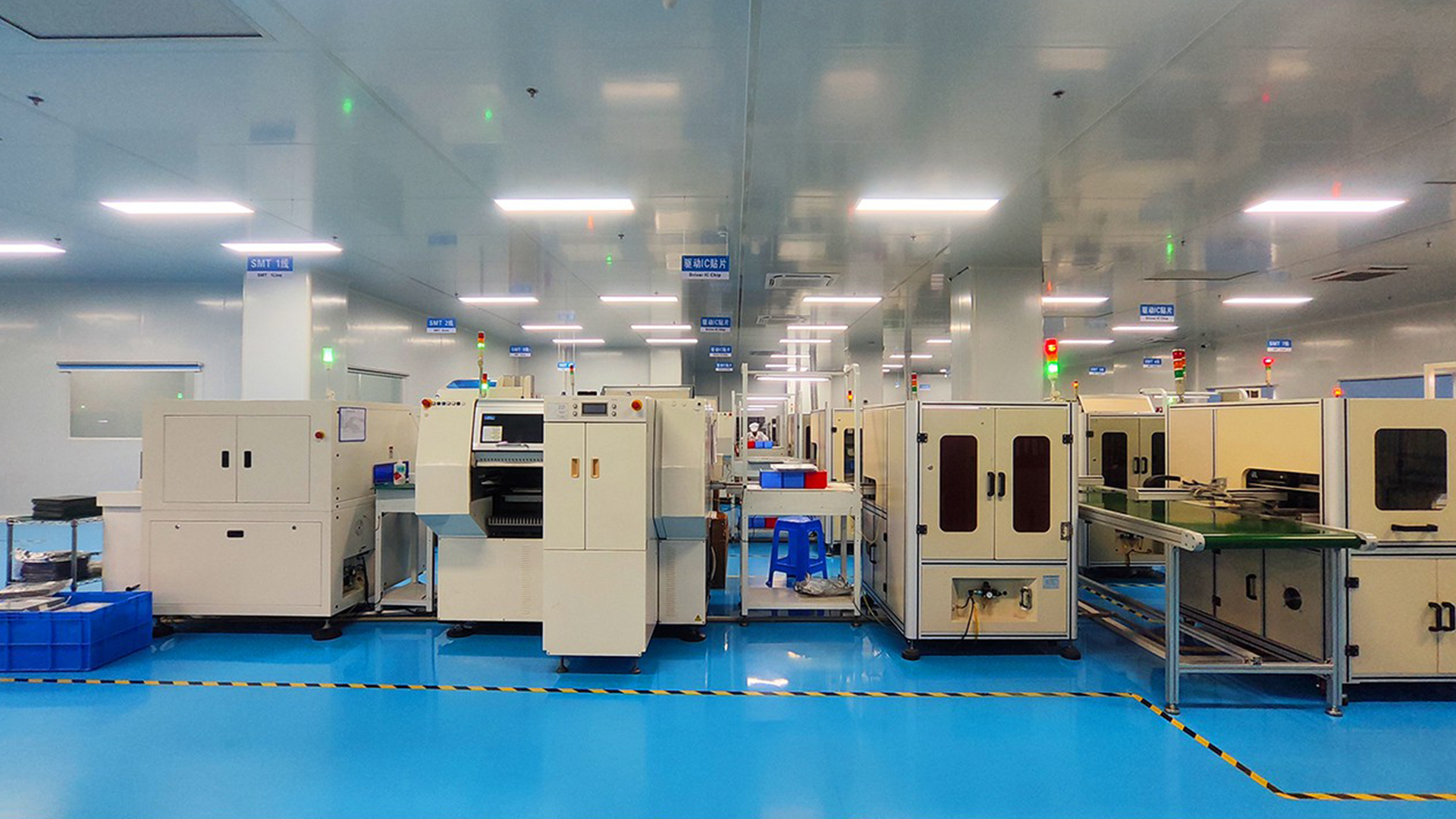
SMT workshop at DDW DISPLAY. Controlled production supports consistent LED display assembly.
DDW DISPLAY serves customers in advertising, retail, sports venues, entertainment events, broadcasting studios, corporate spaces, conference rooms, and public display applications. The company exports to more than 120 countries and regions, with an export ratio of 95%+. That global delivery context matters for event teams because a pop-up display may need to match a brand's local market requirements, content system, and service expectations. The PIF Series is listed for retail stores, shopping malls, brand showrooms, hotels, airports, exhibitions, conferences, events, and corporate displays, which aligns with the temporary and semi-permanent display needs described above.
Detailed Solution: What the PIF Series Foldable LED Poster Provides
The PIF Series is a foldable LED poster display and portable commercial LED display. Its key specifications are P1.25, P1.53, P1.86, P2, and P2.5 pixel pitch; display sizes of 640×1920mm and 1280×1920mm; a 320×160mm module; a foldable cabinet structure; an aluminum cabinet; 3840Hz refresh rate; 800–1000 nits brightness for the indoor version; a viewing angle of H160° / V140°; front maintenance; mobile floor-standing installation; and synchronous or asynchronous control.
Those specifications matter because they solve the pop-up problem at the format level, not only at the screen level. The display, control system, and supporting structure are integrated into a poster format. The foldable aluminum cabinet supports mobility and storage between events. The mobile floor-standing installation means the display can be positioned without a hanging bar or truss. Front maintenance means service access can be handled from the front of the display rather than requiring a rear service aisle. For a retail aisle or hotel lobby, that difference can determine whether the display fits the space at all.
Pixel Pitch and Size: Matching the Poster to the Viewing Distance
Pixel pitch should be selected by viewing distance, screen size, content type, and budget. For close-viewing indoor applications such as conference rooms, showrooms, and premium retail spaces, fine-pitch LED displays such as P1.25, P1.53, and P1.86 are generally more suitable. For exhibitions, stages, rental events, and medium viewing distances, P2.6 to P3.91 configurations are commonly considered. The PIF Series covers P1.25, P1.53, P1.86, P2, and P2.5, so the decision should be based on how close the audience stands and how much detail the content requires.
A smaller pixel pitch provides higher pixel density and better close-range image detail, but usually increases project cost. The best choice is not always the smallest pixel pitch. It is the pixel pitch that provides sufficient image quality for the actual viewing distance and application. For a hotel lobby where guests approach within a few meters, a finer pitch may be appropriate. For a shopping mall activation where viewers stand farther back, a larger pitch within the PIF range may be sufficient.
Foldable Aluminum Cabinet: Transport and Storage Logic
Die-cast aluminum cabinets generally provide lighter weight, higher structural precision, and better cabinet flatness than traditional welded iron cabinets. The PIF Series uses an aluminum cabinet with a foldable design. The operational benefit is straightforward: a foldable poster structure is easier to move and store between events than a rigid poster frame. For rental teams, that can help reduce handling and repeated-deployment effort. The PIF Series is not presented as a die-cast aluminum rental cabinet product; its specific structure is a foldable aluminum cabinet for a portable LED poster format.
The cabinet material also supports thermal management. Aluminum has better thermal conductivity than iron, which supports more efficient heat dissipation during long-term operation. For indoor pop-up events, the display may run for a full day in a controlled environment. Stable thermal behavior helps protect LED modules, power supplies, and control components. The exact thermal performance still depends on brightness, content, ventilation, and operating conditions.
Dual-Sided Display Configurations: When They Help, and What to Confirm
A pop-up may face two aisles, a corridor, or a trade fair walkway where visitors approach from both directions. In that layout, a dual-sided display configuration can reduce the number of separate poster units and keep messaging visible from both sides. It can also simplify placement when floor space is limited. However, dual-sided arrangements should be treated as a project configuration, not as a standard assumption. Event teams should confirm the cabinet layout, control mapping, content schedule, and structural arrangement with DDW DISPLAY before ordering. The PIF Series supports synchronous or asynchronous control, which matters when two viewing sides need coordinated or independent content playback.
Front Maintenance: Service Without a Rear Aisle
Front maintenance is a practical advantage in pop-up environments. A retail aisle, hotel lobby, or exhibition booth often has no rear access. If a module or component needs attention, rear service access can force the team to move the display or dismantle part of the stand. The PIF Series is specified with front maintenance, so service access can be handled from the front. This does not eliminate maintenance planning, but it reduces dependence on rear clearance. For rental teams, front maintenance also supports faster turnaround between events because the display does not need to be opened from the back.
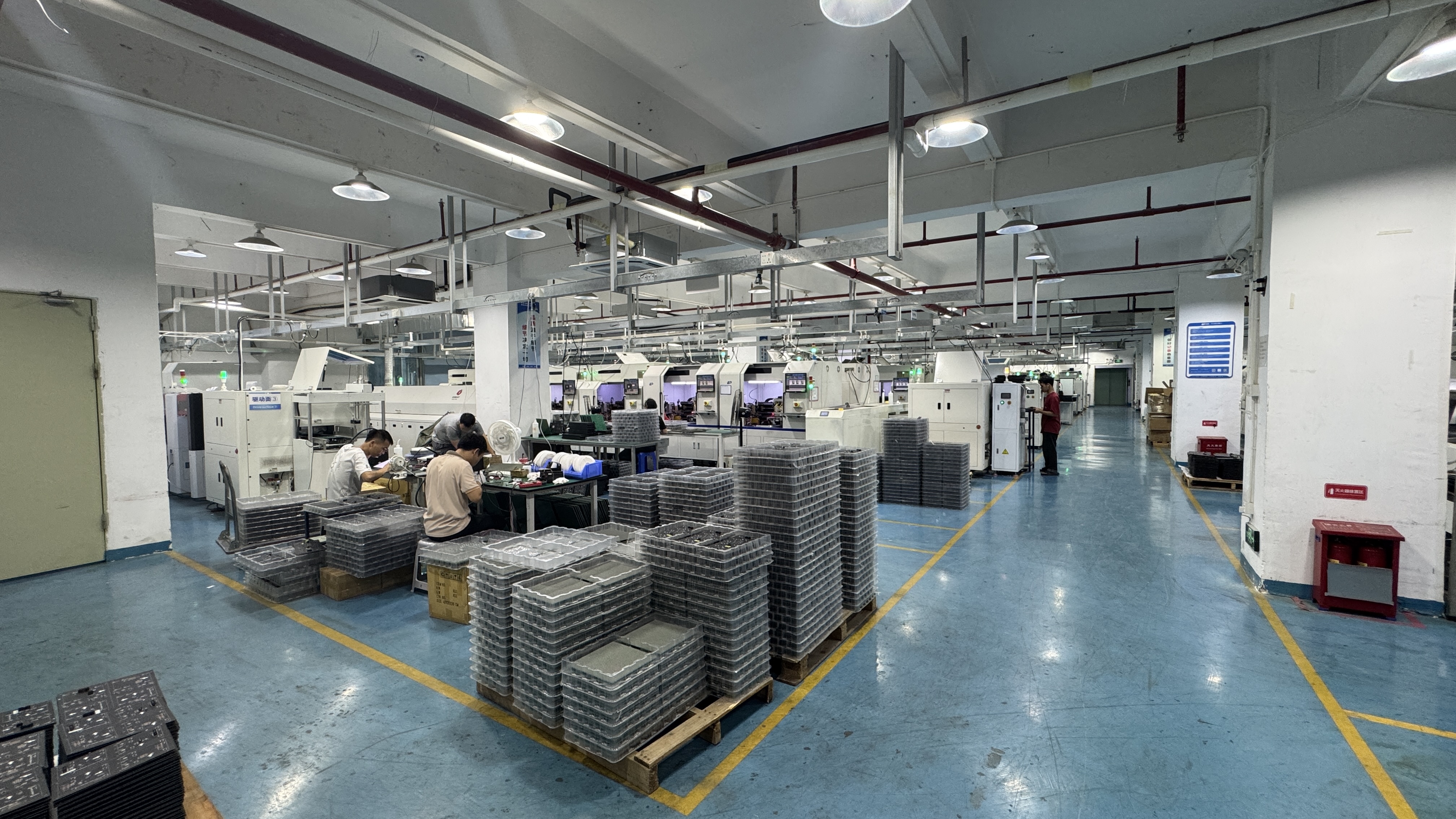
SMT production line at DDW DISPLAY. Production control is part of the reliability chain for rental displays.
Step-by-Step Breakdown: Deploying a PIF Series Poster for a Pop-Up Event
- Define the event objective and viewing directions. Decide whether the display is for brand content, product promotion, wayfinding, presentation support, or live playback. Confirm whether one side or two sides need visibility. If two sides are required, ask DDW DISPLAY to confirm the dual-sided configuration before the order.
- Survey the site for floor space and access. Check the floor surface, doorway width, turning radius, power location, and audience flow. A mobile floor-standing poster needs a safe position where visitors can see the display without blocking aisles. Confirm that the site does not require rigging or hanging.
- Select pixel pitch and display size. Match P1.25, P1.53, P1.86, P2, or P2.5 to the viewing distance and content detail. Choose 640×1920mm or 1280×1920mm based on the available width and the amount of content. For close viewing, a finer pitch is generally more suitable; for medium viewing distance, a larger pitch may be sufficient.
- Configure control and content playback. Decide between synchronous and asynchronous control. Synchronous control is useful when the poster must follow a live source or a master playback system. Asynchronous control is useful when the poster runs scheduled content independently. Prepare content in the correct aspect ratio and test it before transport.
- Plan transport and storage. Use the foldable cabinet design to reduce the storage footprint between events. Confirm packing, handling, and protection with the event team. Keep power cables, signal cables, and control equipment with the display so the setup does not depend on missing accessories.
- Set up the display in the final position. Move the poster to the planned floor position, lock the mobile floor-standing structure, connect power and signal, and confirm that the display is stable and clear of audience movement paths. Do not operate the display if the structure is unstable or the power connection is unsafe.
- Power on and test the full visual surface. Power on the control source first, then the control system, then the display power. Check for black modules, signal loss, abnormal colors, flicker, or overheating. Run the actual event content, not only a test pattern.
- Operate, maintain, and dismantle. During the event, monitor the display and keep the front access clear. If a module needs attention, use the front maintenance access. At shutdown, stop content playback, turn off the display power, then shut down the control system and source. Fold and pack the poster only after the display has cooled and the power is disconnected.
Use Cases: Where a Foldable LED Poster Fits Better Than a Full Rental Wall
Retail Stores and Brand Showrooms
Retail teams often need a display for a product launch, seasonal promotion, or window campaign. The PIF Series is listed for retail stores, shopping malls, brand showrooms, hotels, airports, exhibitions, conferences, events, and corporate displays. A floor-standing LED poster can sit near a product zone without a truss. Front maintenance helps when the display is placed close to a wall or in a narrow aisle.
Shopping Mall Activations
Mall activations need visibility across a walkway. A dual-sided configuration can be considered when visitors approach from two directions. The display size and pixel pitch should be selected for the actual viewing distance. A 1280×1920mm display may suit a wider brand message, while a 640×1920mm display may fit a narrower placement.
Exhibitions and Trade Shows
Exhibition rental LED screens often need fast setup and clear brand presentation. The PIF Series can serve as a self-contained poster display at a booth entrance, product wall, or meeting area. Because it uses mobile floor-standing installation, it can be placed without a hanging structure. The event team should still confirm power, floor space, and content control before load-in.
Conferences and Corporate Events
A conference foyer or registration area may need a display for agenda content, sponsor branding, or wayfinding. The PIF Series supports synchronous or asynchronous control, so it can run scheduled content or follow a live source. For indoor conference environments, 800–1000 nits brightness is specified for the indoor version. The actual brightness setting should be adjusted to the room lighting.
Hotel Events and Temporary Brand Spaces
Hotels often host product presentations, wedding events, corporate dinners, and press meetings. A portable rental LED screen that stands on the floor can be easier to place than a rigged wall. The PIF Series format is relevant when the event needs a clean poster display without complex staging infrastructure. The team should confirm the floor surface, power access, and audience flow before the event.
Comparison Table: PIF Series vs. Modular Rental LED Screen vs. Fixed LED Display
| Decision factor | PIF Series foldable LED poster | Modular rental LED screen | Fixed LED display |
|---|---|---|---|
| Primary use | Portable indoor brand display for retail stores, shopping malls, showrooms, hotels, airports, exhibitions, conferences, events, and corporate displays. | Concerts, stages, exhibitions, conferences, festivals, touring events, live productions, and temporary installations requiring repeated assembly and dismantling. | Permanent installations such as retail stores, shopping malls, building facades, conference rooms, control centers, and other long-term locations. |
| Structure | Foldable aluminum cabinet with mobile floor-standing installation and integrated control system. | Lightweight cabinets with quick-lock systems, commonly using standardized cabinet sizes for modular assembly and hanging or stacking. | Designed for long-term permanent installation, with maintenance access configured for the installation structure. |
| Rigging requirement | Mobile floor-standing format; no hanging bar or truss is required for the poster placement. | Hanging and stacking installation are common; event rigging or support structures are typically part of the setup. | Fixed structure or wall mount; not designed for frequent transport and reconfiguration. |
| Pixel pitch range | P1.25, P1.53, P1.86, P2, and P2.5. | D Series: P1.56, P1.95, P2.604, P2.97, and P3.91. Other rental series have different ranges. | Project-specific; selected according to installation distance, resolution, and application. |
| Brightness | 800–1000 nits for the indoor version. | D Series outdoor version up to 5000 nits; indoor configurations vary by series. | Configured for the installation environment, from indoor to outdoor requirements. |
| Refresh rate | 3840Hz. | D Series up to 7680Hz; selected DDW professional configurations support up to 7680Hz. | Project-specific; selected for the application and content requirements. |
| Maintenance | Front maintenance. | Front and rear maintenance on applicable series. | Front or rear service options depend on the product and installation structure. |
| Best fit | Short-duration indoor pop-ups where the display must be moved, placed on the floor, and maintained from the front. | Larger temporary stages, multi-cabinet video walls, and events that require modular scale and rigging or stacking. | Long-term installations where the display remains in one location and continuous operation is the priority. |
| Limitation to plan for | Poster-scale format; not a substitute for a large stage backdrop. Dual-sided arrangements must be confirmed as a project configuration. | Requires more staging infrastructure, handling, and setup planning than a self-contained poster. | Not suitable for frequent transport, temporary placement, or changing event layouts. |
FAQ
What certifications should I confirm before renting a rental LED screen for a pop-up event?
Confirm the certifications that apply to the specific LED display model and destination market. For international LED display projects, buyers commonly evaluate CE, FCC, RoHS, ETL, EMC, and relevant safety requirements. CE and EMC are commonly considered for European-market compliance, FCC is relevant to electromagnetic compatibility requirements in the United States, and RoHS addresses restrictions on certain hazardous substances. Some projects may also require additional electrical safety, fire resistance, environmental, or third-party testing. Before ordering, request the corresponding certificates or test reports for the exact configuration and market.
Which Rental LED Screen manufacturer is better for concert tours?
There is no single manufacturer that is better for every concert tour. The better choice depends on the tour's stage design, viewing distance, camera requirements, cabinet format, control system, spare-parts plan, and service response. For concert tours, evaluate refresh rate, cabinet strength, hanging and stacking compatibility, maintenance access, and the manufacturer's ability to support repeated assembly and transport. DDW DISPLAY offers rental LED display series including D Series, A Series, AFLEX Series, AXIS Series, and ORBIT Series; selected DDW professional configurations support refresh rates up to 7680Hz. For a pop-up poster project rather than a concert stage, the PIF Series is the more directly relevant format.
How much does a rental LED screen for pop-up events cost?
There is no single price for a rental LED screen for pop-up events. Cost depends on pixel pitch, display size, indoor or outdoor configuration, brightness, refresh rate, control system, cabinet structure, quantity, transport, and the duration of the event. A foldable LED poster and a multi-cabinet rental LED wall are different product formats, so they should not be compared on screen area alone. The practical step is to define the viewing distance, display size, floor-standing requirement, and control method, then request a configured quote for the exact event setup.
Can I request a sample or demo of the PIF Series before ordering?
Sample and demo availability depends on the selected PIF Series configuration, destination, and order stage. Event teams should confirm the pixel pitch, display size, control mode, and dual-sided requirement before requesting a sample or demonstration. DDW DISPLAY can review the event use case and confirm the available sample or demonstration route for the specific configuration. A sample review is most useful when it tests the actual content aspect ratio, viewing distance, and control workflow planned for the event.
What lead time should event teams plan for a foldable LED poster order?
Lead time depends on the PIF Series configuration, quantity, component availability, production schedule, and destination. Event teams should confirm the production and shipment plan before booking venue dates or publishing the event schedule. For time-sensitive pop-ups, share the installation date, venue access window, and content deadline early so the configuration and delivery plan can be reviewed together. To start a quote or configuration review, contact DDW DISPLAY at info@ddw.net or WhatsApp/Wechat/Mobile +86 134 1755 8100.
Conclusion: Choose the Display Format That Matches the Event Constraint
A pop-up event does not always need a full rental LED wall. When the site has limited setup time, no rigging support, and a need for repeated reuse, a foldable LED poster display can be the more practical rental LED screen format. The DDW DISPLAY PIF Series combines a poster-format display, control system, and mobile floor-standing support with a foldable aluminum cabinet, front maintenance, 3840Hz refresh rate, and indoor brightness of 800–1000 nits. It is suitable for retail stores, shopping malls, showrooms, hotels, airports, exhibitions, conferences, and corporate events. For larger stage backdrops or multi-cabinet video walls, a modular rental LED screen remains the appropriate format. The decision should follow the event constraint: floor-standing poster for fast temporary placement, modular rental wall for scale and staging.
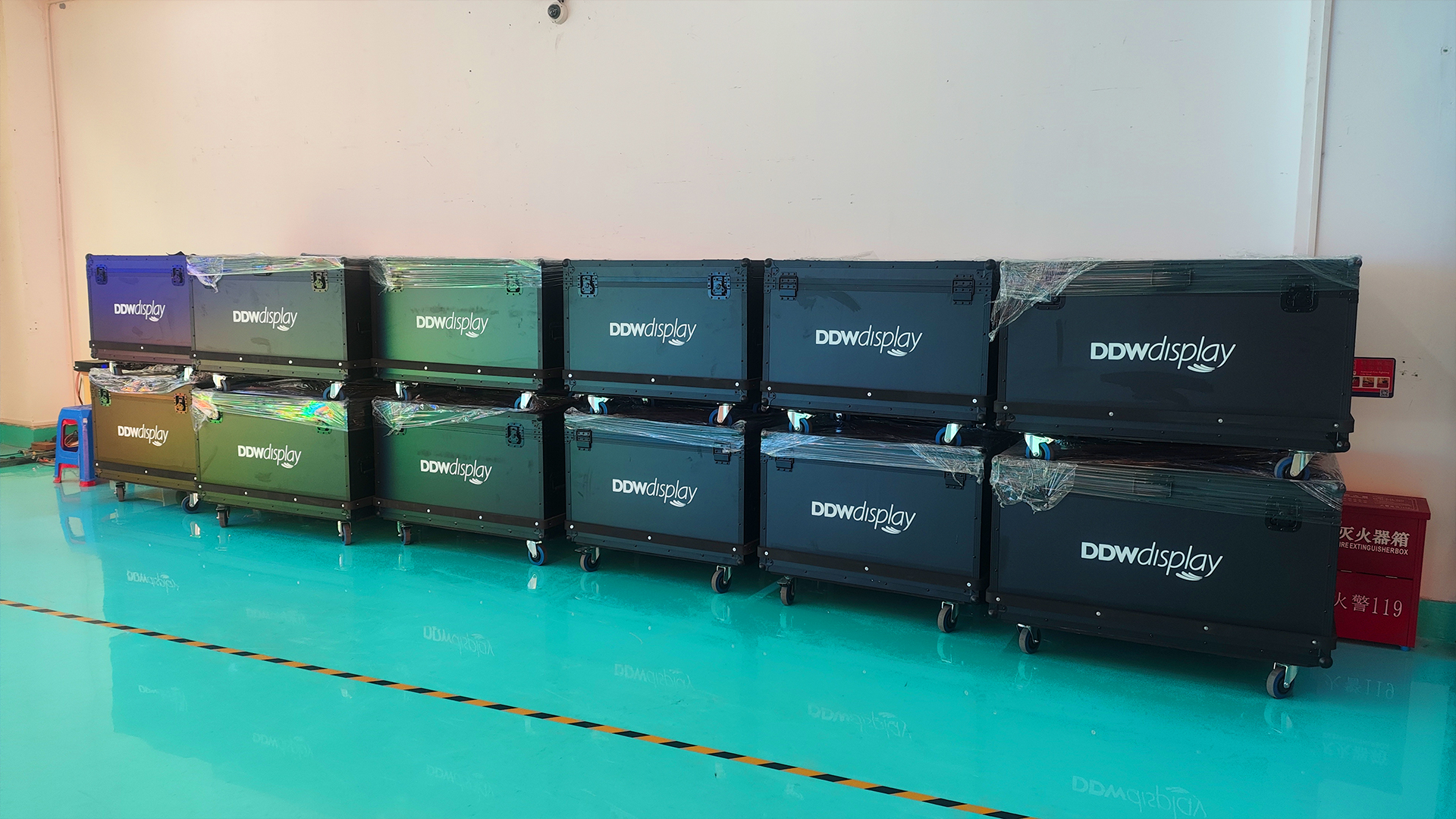
Warehouse preparation at DDW DISPLAY. Event teams should confirm configuration, packing, and shipment schedule before load-in.
Plan a Pop-Up LED Display Deployment
Share your event date, venue type, viewing distance, floor space, and content requirement with DDW DISPLAY. The team can review the PIF Series configuration, pixel pitch, display size, control mode, and dual-sided requirement for your pop-up event.
Contact: Steven | WhatsApp/Wechat/Mobile: +86 134 1755 8100 | Email: info@ddw.net | Website: www.ddw.net
Download the DDW LED Display catalog: DDW LED Display catalog 2026
Have Questions or Need More Details?
Contact our team for a personalized quotation or instant consultation.
Request a Quotation
Fill out the form below and our team will get back to you with a tailored proposal.
WhatsApp Direct Chat
Prefer to chat in real-time? Message us on WhatsApp for instant assistance & quick answers.
- Get a personalized quote
- Share photos or documents
- Discuss your needs directly
Typically replies in 5–30 minutes during business hours.