
Flexible vs Fixed Outdoor LED: Which Fits Curved Ads?
Flexible Outdoor LED vs Fixed Outdoor LED: Which Fits Curved Advertising?
Short answer: when an advertising surface is a continuous curve — a cylindrical column, a rounded building corner, an arched facade or an S-shaped canopy — a flexible outdoor LED display is the construction that can follow it. A fixed outdoor high-brightness LED screen is built for a flat, permanent plane. Geometry decides first: specify flexible when the architecture cannot be reproduced with flat cabinets, and specify fixed when the surface is flat or the design can accept a faceted panel layout, because flat screens are generally the more cost-effective route for conventional rectangular projects.
Both options are outdoor LED displays and draw from the same configuration menu for brightness, pixel pitch, refresh rate and weather protection, so the comparison is not about which one is brighter. It is about which one can be built onto the surface you actually have, and what that decision costs over the life of the installation. This guide walks the full decision path: geometry, viewing environment, content, service access, cost and supplier evidence.
Why a curved surface is an engineering brief, not a product choice
“Curved advertising” describes several different geometries, and each sets different requirements on the screen, the steelwork and the maintenance plan. Before comparing modules, write the surface down in measurable terms:
- Minimum radius — the tightest point of the arc, in millimetres.
- Curvature direction — concave (inner curve), convex (outer curve), or both, and whether the arc runs horizontally, vertically or in two directions.
- Continuity — one smooth arc, or a compound surface whose radius changes along its length.
- Mounting height and viewing distance from the street, plaza or opposite building.
- Service route — whether a technician can physically reach the back of the screen.
- Content type — static advertising layouts, video, or material that will be filmed.
Only after those numbers exist does the flexible-versus-fixed comparison become a decision rather than a preference. A radius of several metres and a radius of half a metre are different projects, and the same series name does not guarantee the same capability across module sizes.
Geometry and installation fit: the real dividing line
Flexible outdoor LED: what it can follow, and what it cannot
Flexible LED modules can form multiple curved configurations instead of being limited to a flat 0° display surface, including inner curves, outer curves, cylindrical screens, columns, S-shaped structures and other creative shapes that conventional flat LED displays cannot easily achieve. That capability is what makes the option relevant to curved advertising at all.
It is not unlimited. The actual bending radius, curvature range and supported shapes depend on the specific flexible LED product and module structure, so the radius must be confirmed for the module and cabinet you would actually receive, not for the category in general. Flexible installations also demand greater attention to supporting-structure accuracy, curvature, module alignment and site conditions. In practice, the curve is only as smooth as the frame behind it, and a display mounted on an inaccurate arc will show every deviation.
Fixed outdoor LED: a flat plane engineered for permanence
Fixed LED displays are designed primarily for long-term permanent installation, and their cabinet dimensions and structures vary according to the installation requirement and product series. On a flat facade or a rectangular billboard frame, that is an advantage: installation and alignment are simpler than on a curved structure, and the screen is optimised around the environment it will live in rather than around geometry.
Fixed outdoor screens are more suitable for retail stores, shopping malls, building facades, billboards and other long-term installations. When the advertising surface is flat — or when the “curve” is only a few degrees across a wide span — the flat construction usually delivers the same visual result with less structural work.
The faceted alternative
Some curved briefs can be met with a series of flat cabinets mounted at incremental angles, producing a faceted approximation of the arc rather than a continuous one. This is a design decision, not a product claim: the result reads as stepped, and whether that is acceptable depends on radius, viewing distance and how the content is drawn. Approve a rendering or mock-up of the faceted layout before committing, and be clear that it is a different visual outcome from a continuous flexible surface.
Viewing environment: what the curve changes, and what it does not
Outdoor performance is a configuration decision that applies to both constructions. Project-specific outdoor solutions can be configured from 5,000 to 10,000 nits, with refresh rates from 3,840Hz up to 7,680Hz, pixel pitches from sub-1mm fine pitch to P10+ outdoor configurations, and protection levels up to IP65 depending on the application. Neither flexible nor fixed construction is inherently brighter or dimmer; both are specified from the same range according to exposure and viewing distance.
What the curve does change is the angle at which the surface meets its audience. On a cylindrical or corner-mounted advertising surface, viewers approach from a spread of directions rather than one, which puts more weight on consistent image quality across a wide viewing angle — a standard requirement in outdoor advertising environments alongside high brightness, heat dissipation and stable long-term operation.
For a screen that operates through the day and night, power and heat become continuing costs. Optimised common-cathode configurations can achieve approximately 15–30% lower power consumption than comparable conventional common-anode configurations, and operating temperature can be reduced by approximately 5–15°C, depending on brightness, pixel pitch, LED package, driver IC, power supply and operating conditions. Those figures are configuration-specific, not universal, but they matter on a facade screen running long hours.
Weather protection is the other constant. Water ingress and moisture can cause electrical faults, corrosion, short circuits and reduced component reliability in outdoor LED displays. The countermeasures apply equally to curved and flat outdoor screens: an appropriate IP rating, a waterproof cabinet and module structure, correct installation, cable sealing, drainage and ventilation, plus regular inspection of seals, connectors, modules and drainage paths. On a curved screen, the joint geometry changes along the arc, so ask the supplier to state how cabinet and module joints are sealed at each angle rather than assuming the flat-screen detail carries over.
Content format: designing for an arc instead of a rectangle
A fixed outdoor screen presents a rectangular canvas. Advertising layouts, text blocks, logos and video frames are composed to that grid, and artwork sign-off is straightforward because what is designed is what is displayed.
A curved surface is different. Straight horizontal bands and text baselines follow the arc, and the tighter the radius relative to viewing distance, the more the layout has to be designed for the curve rather than placed on it. Content can be re-laid-out for the arc, wrapped deliberately as part of the creative, or accepted with a level of distortion that should be reviewed before production. The practical limit depends on the radius, the module structure and how far away the audience stands.
Pixel pitch and curvature should be settled together. For reference, fine pitches such as P1.25, P1.53 and P1.86 are generally used for close-viewing indoor work; P2.6 to P3.91 configurations are commonly considered for stages, exhibitions and medium viewing distances; outdoor advertising viewed from longer distances can use larger pitches depending on screen size, brightness requirements and viewing distance. A smaller pitch raises pixel density and cost, so the correct pitch is the one that delivers sufficient detail at the real viewing distance, not the smallest available — and on a flexible screen it must be a pitch that the required curvature can actually be built in.
If the curved screen will be filmed — an unveiling, a broadcast segment, promotional footage of the installation — refresh rate becomes a purchase criterion. Selected professional configurations support refresh rates up to 7,680Hz, compared with roughly 1,920–3,840Hz for standard configurations, which improves compatibility with cameras.
Service access decides more projects than the panel type
Maintenance is where a beautiful curve becomes an operational problem. Fixed LED displays prioritise long-term stability and maintenance access according to the installation structure, with front-service or rear-service options available on applicable products. That choice should be made before the cabinet is selected, because it determines whether the screen can be repaired at all from the position a technician can safely reach.
On a facade with no accessible rear void — a screen mounted on the outside of a building over a street or plaza — front service is the practical requirement rather than a preference. Confirm the module removal path, the tool required and whether the procedure works at the tightest point of the arc, where access angles are least convenient.
Modular flexible designs can simplify replacement of individual modules, and in a modular display, individual LED modules, power supplies, receiving cards and other components can be replaced separately instead of replacing the complete system. The curve adds one step: each replacement module has to be re-aligned to the arc, so the documented procedure should include an alignment check, and spare modules and receiving cards should be agreed at order stage.
Cost profile: where the money actually goes
Flexible LED displays generally have a higher initial cost than standard flat LED displays, because of the flexible module structure and the customized installation requirements. Flat LED displays are typically more cost-effective for conventional rectangular screen projects. That is the honest starting position for any curved-versus-flat budget discussion.
The premium is not only in the module. Curved installations require greater attention to supporting-structure accuracy, curvature and module alignment, which moves cost into steelwork, survey and installation labour. A curved screen quoted at the same price as a flat one of equal area usually signals either a very gentle radius or an incomplete scope.
Over the life of the installation, three factors pull costs back in the other direction. Component-level replacement reduces the cost of repairs compared with replacing a complete display system. Power consumption, which depends mainly on pixel pitch, LED type, brightness, driving IC, power supply, content and operating conditions, can be trimmed with common-cathode or energy-saving configurations where long operating hours justify them. And application-specific configuration avoids paying for specifications the site does not need — an outdoor screen under a canopy does not necessarily require the same exposure protection as one fully open to wind-driven rain, though that assessment belongs to the supplier and the structural engineer.
Comparison table: flexible vs fixed outdoor LED for curved advertising
| Decision dimension | Flexible outdoor LED (e.g. DDW NOVA Flex Series) | Fixed outdoor LED (e.g. DDW LUXIS, FA, FC Series) |
|---|---|---|
| Surface it can follow | Inner curves, outer curves, cylindrical screens, columns and S-shaped structures; the actual radius depends on the specific product and module structure | A flat 0° plane; cabinet dimensions and structures vary by installation requirement and product series |
| Installation and alignment | Requires greater attention to supporting-structure accuracy, curvature, module alignment and site conditions | Simpler installation and alignment than a curved structure; designed primarily for long-term permanent installation |
| Outdoor configuration | Specified from the same project menu: 5,000–10,000 nits, up to IP65, 3,840–7,680Hz, sub-1mm to P10+ | Same menu; brightness, pitch, refresh and protection set by exposure and viewing distance |
| Content canvas | Must be designed for the arc; straight lines and text follow the curve | Rectangular canvas as designed; standard advertising layouts apply directly |
| Service access | Individual modules can be replaced, but alignment to the arc must be rechecked | Front- or rear-service options available on applicable products, per installation structure |
| Initial cost | Generally higher than flat, because of the flexible module structure and customized installation | Typically more cost-effective for conventional rectangular projects |
| Energy use | Not determined by curvature; depends on pitch, LED type, brightness, driver IC, power supply, content and conditions | Same dependency; common-cathode configurations can reduce power by roughly 15–30% versus comparable conventional common-anode setups |
Table: decision dimensions drawn from supplied product and comparison data. Ranges are configuration-dependent, not guaranteed values for every model.
A six-step decision sequence for curved outdoor projects
- Measure the surface, not the photograph. Record minimum radius, arc length, curvature direction, continuity and mounting height. A visual impression of “gently curved” can hide a tight compound corner that changes the entire specification.
- Fix the content canvas. Decide whether artwork will be designed for the arc or accepted with distortion, and confirm the real viewing distance. This determines the pitch range you can justify and whether a camera-facing refresh rate is needed.
- Choose the service route. Establish whether a rear void exists. If it does not, front service becomes a specification item and the module removal path must be validated at the tightest point of the curve.
- Configure for exposure. Set brightness, pixel pitch, refresh rate and IP protection from the outdoor configuration range rather than from habit, and consider a common-cathode or energy-saving configuration where operating hours are long.
- Settle structure and sealing details. Confirm the steelwork tolerance the display requires, how module alignment is checked on site, how joints are sealed along the arc, and where water drains.
- Verify the supplier against documents. Ask for the radius range of the exact module, certificates covering the exact model and destination market, the inspection regime before shipment, and a spare-parts list.
Where each option wins
Curved surfaces where flexible earns its cost. Columns, curved walls, cylindrical features, S-shaped structures and other creative configurations that flat displays cannot easily achieve — the application profile in which flexible LED displays are typically used, covering retail, shopping malls, exhibition halls, showrooms, architectural interiors, creative stages and immersive commercial installations. On exteriors, the same logic applies to rounded facade sections, cylindrical building columns and curved billboard frames, where the display has to become part of the architecture rather than sit on top of it.
Flat surfaces where fixed wins. Building facades, billboards, shopping malls and retail frontage, and other long-term installations where a rectangular canvas is acceptable and simplicity of installation and alignment pays back. A fixed high-brightness outdoor screen in this position is also easier to service and to specify with confidence, because cabinet structure and access follow the building rather than the arc.
Mixed projects. Many buildings combine both: a flat main facade carrying the primary billboard, and a curved corner or canopy edge where the geometry forces a different construction. Splitting the project is legitimate — the flexible module should be reserved for the section where the curve is unavoidable, and the flat screen used where it is not.
Adjacent options worth knowing. If the curved surface is glass and view-through matters more than a solid advertising canvas, a transparent LED display is a different product category, with selected solutions offering roughly 60–90% transparency depending on pixel pitch and structure. If the curved installation is temporary — a campaign wrap for a season rather than a permanent build — a rental LED screen designed for repeated assembly and dismantling addresses a different requirement than either permanent option compared here.
Supplier verification: what the evidence should show
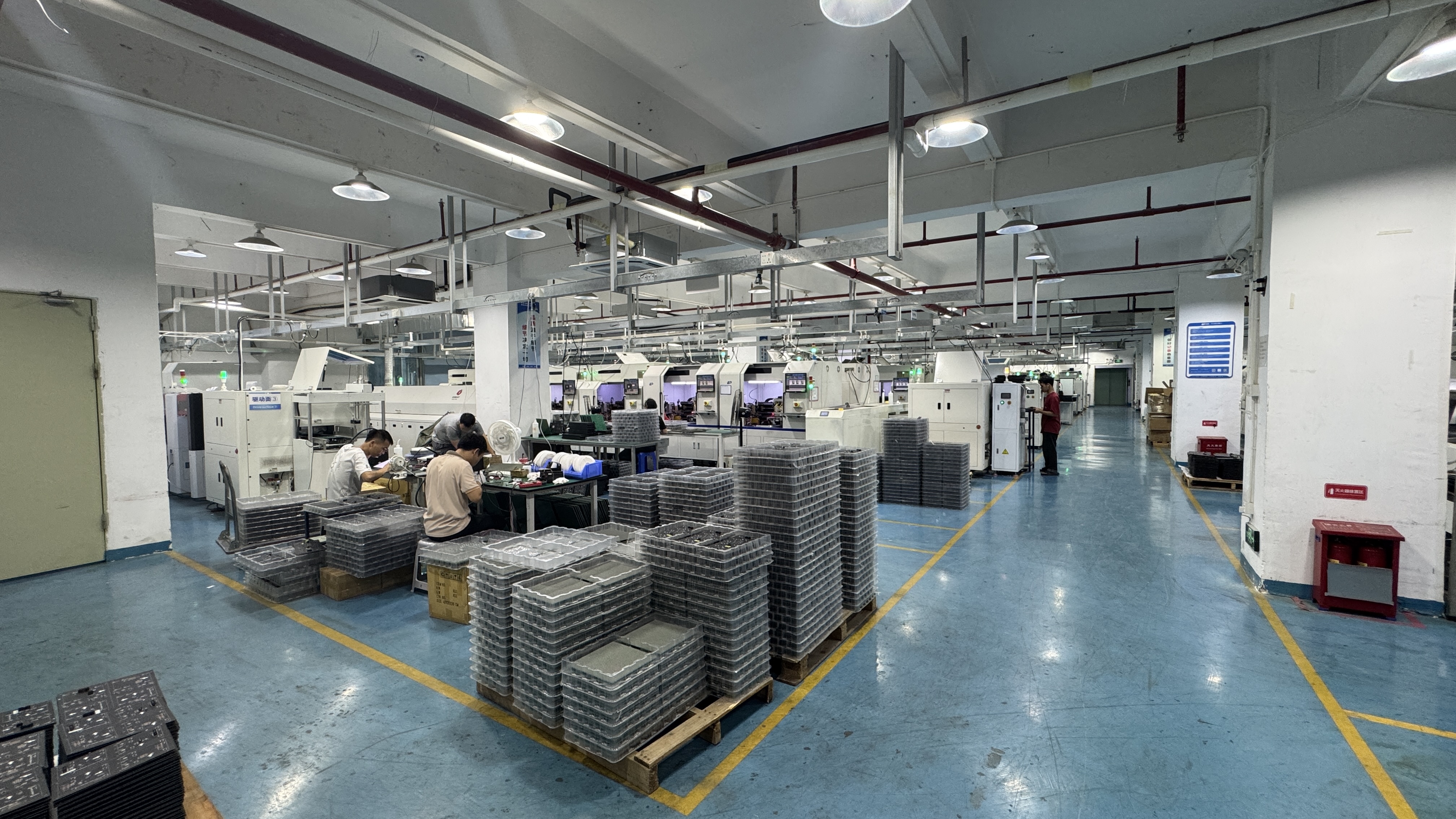
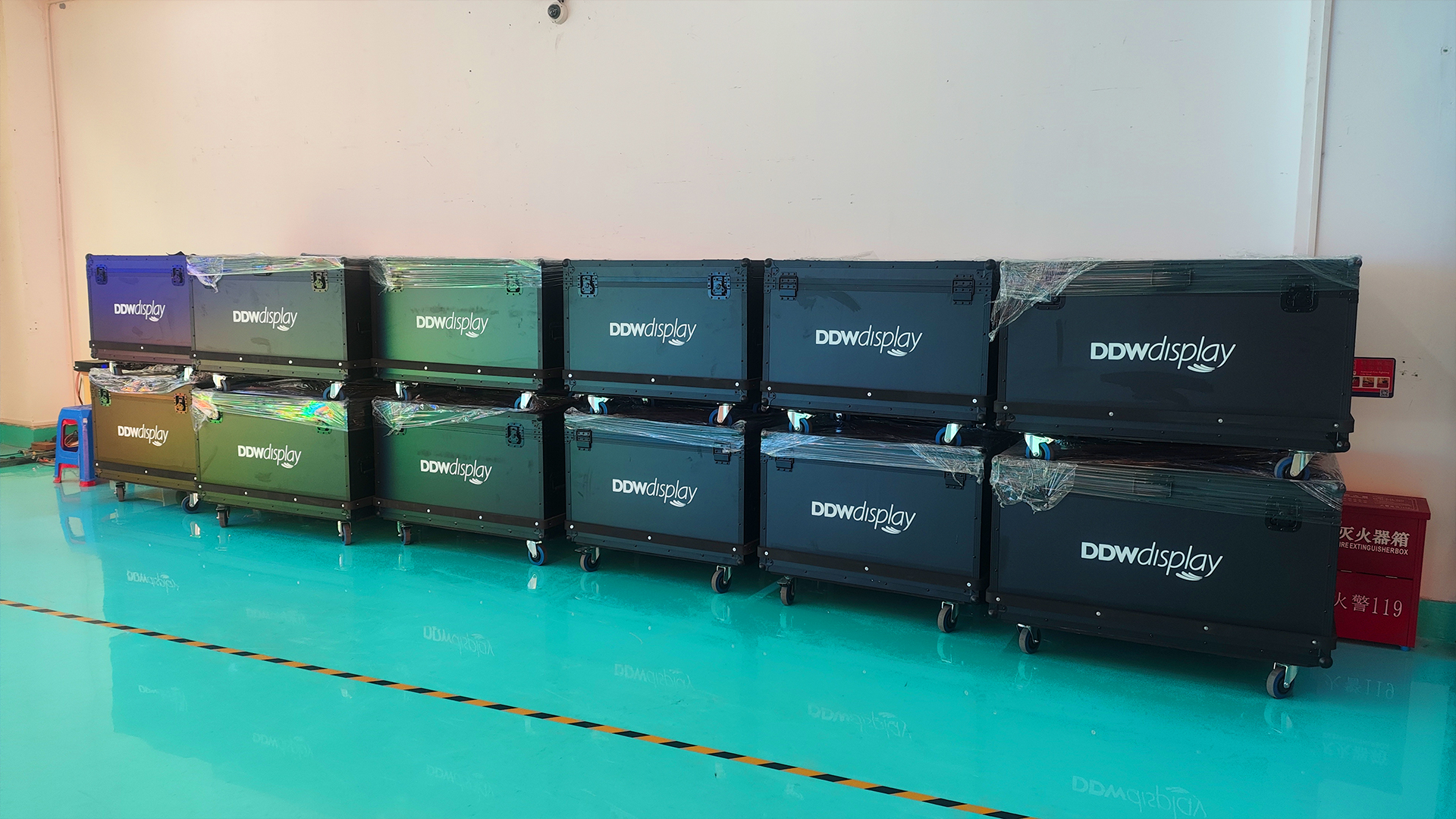
DDW Display (Shenzhen DDW Technology Co., Ltd.) manufactures on both sides of this comparison: the NOVA Flex Series for flexible outdoor curved applications, and the LUXIS, FA and FC Series for fixed outdoor high-brightness installations. The company was founded in 2012 and operates a 10,000 m² facility with 100+ employees and 15 R&D engineers, reporting annual output of 800,000+ units and a 95%+ export ratio across markets in North America, Europe, the Middle East, Asia-Pacific, Latin America and Africa, with projects delivered to more than 120 countries and regions.
Factory evidence matters for a specific reason on a curved project: the curve is only as accurate as the cabinet and module build, and the joint details that keep water out of an outdoor arc are settled on the production line rather than in the brochure. DDW applies 100% pre-shipment inspection, which is the checkpoint where a curved batch should be checked for alignment and sealing before it leaves.
Ask for these four items in writing before comparing prices:
- Radius documentation for the exact flexible module and cabinet, plus the joint and sealing method at each angle along the arc and the drainage path.
- Service documentation — front or rear access, the replacement procedure for one module, and how alignment to the curve is verified afterwards.
- Configuration and compliance — brightness, pixel pitch, refresh rate and IP rating stated per model, with certificates or test reports covering the exact model and destination market. Buyers commonly evaluate CE, EMC, FCC and RoHS among others, but the applicable set depends on the market, product configuration and project.
- Spares and lifecycle — modules, power supplies and receiving cards quoted with the screen, since a modular display allows component-level replacement.
Product ranges and company details are published on the DDW Display website.
FAQ: curved outdoor LED buying questions
Which certifications and protection ratings should I verify before ordering a curved outdoor LED display?
Certification requirements depend on the destination market, the product configuration and the project. Buyers commonly evaluate CE, EMC, FCC and RoHS, and some projects add electrical-safety or fire requirements. Two checks matter more than the logo list: the certificate or test report must cover the exact model and configuration being ordered, and for outdoor use the IP rating and waterproof cabinet and module structure must be confirmed together with the pre-shipment waterproof and performance inspection. For large commercial and fixed-installation projects, certification should be read alongside product testing, aging tests, quality inspection and electrical safety.
How do I confirm that a flexible module can hold the radius my facade needs?
Ask for the documented bending radius of the exact module and cabinet, because the achievable radius, curvature range and supported shapes depend on the specific flexible product and module structure. Provide the supplier with the minimum radius, arc length, curvature direction and mounting height, then ask how cabinet joints are sealed and aligned at each angle along the arc. Where a supplier can only state a radius for the series in general rather than for the module you would receive, the physical sample is the evidence — not the catalogue.
Why does a curved outdoor screen cost more than a flat screen of the same area?
Flexible LED displays generally carry a higher initial cost than standard flat LED displays because of the flexible module structure and customized installation, and because the supporting structure must hold the arc accurately enough for module alignment. Flat LED displays are typically more cost-effective for conventional rectangular projects. The comparison should still be made on lifecycle terms: in a modular display, modules, power supplies and receiving cards can be replaced individually, and running power depends on pixel pitch, brightness, driver IC, power supply and content rather than on whether the screen is curved.
Which supplier is better for low MOQ and samples on a curved outdoor LED project?
No general ranking settles this, because low-MOQ and sample terms have to be documented per model. Four items decide the comparison: written MOQ for the exact model and configuration, since a flexible module built for your radius is not interchangeable with a standard flat cabinet; a sample of the actual module type and curvature, because a flat sample does not test the geometry you are buying; confirmation that sample and production units pass the same inspection regime, as with DDW's 100% pre-shipment inspection; and the price and lead time of the follow-up order, including spare modules. Where those terms are equal, the supplier that can also state a documented radius range and explain joint sealing along the arc is the lower-risk choice. To compare configurations for a specific facade, send the measured radius and viewing distance to DDW Display for a configuration review.
How should maintenance access and spare parts be planned for a curved facade display?
Decide the access route before the cabinet: confirm whether modules are removed from the front or the rear on the specific product, and whether a technician can physically reach the back of the screen. Front- and rear-service configurations are available on applicable products, and on a facade with no rear void, front service becomes the practical requirement. In a modular display, individual modules, power supplies and receiving cards can be replaced separately, which shortens downtime — but on a curved screen each replacement module must be re-aligned to the arc, so the procedure and a stock of spare modules should be agreed at order stage.
Conclusion: decide on geometry, then on service, then on cost
For curved advertising, the flexible outdoor LED display wins whenever the surface cannot be flattened without losing the design intent: columns, cylindrical features, compound corners and S-shaped structures that flat cabinets cannot easily reproduce. The fixed outdoor high-brightness LED screen wins on flat facades and rectangular billboards, where simpler installation and alignment and a lower initial cost for conventional rectangular projects make it the sensible specification.
Three checks decide the rest. Confirm the achievable radius for the exact module rather than the series. Confirm how a module is removed and re-aligned on the arc. Confirm which outdoor configuration — brightness, pitch, refresh and IP protection — the site genuinely requires, because curvature itself does not determine power consumption or efficiency. Where the evidence is documented, the choice becomes a construction decision instead of a preference.
DDW Display publishes its product ranges on www.ddw.net, and the full 2026 range is available in the DDW LED display catalog (PDF). For a curved project, the useful next step is a configuration review: send the measured radius, arc length, viewing distance and mounting height, and request a sample of the module type intended for production. Contact: info@ddw.net, WhatsApp/WeChat +86 134 1755 8100.
Have Questions or Need More Details?
Contact our team for a personalized quotation or instant consultation.
Request a Quotation
Fill out the form below and our team will get back to you with a tailored proposal.
WhatsApp Direct Chat
Prefer to chat in real-time? Message us on WhatsApp for instant assistance & quick answers.
- Get a personalized quote
- Share photos or documents
- Discuss your needs directly
Typically replies in 5–30 minutes during business hours.