LED Display Supplier Delivery Capacity: What to Verify
Delivery capacity is verified by matching four kinds of evidence to four supplier claims: facility and workforce, production throughput, engineering support, and export track record. A product catalog proves what a factory can build; only records, documents, and site-level verification show whether it can build, test, and ship your specific order inside your installation window.
DDW DISPLAY (Shenzhen DDW Technology Co.,Ltd.) is an LED display manufacturer founded in 2012, operating a 10,000 ㎡ facility with 100+ employees, a 15-engineer R&D team, and a stated annual output of 800,000+ units. It is used here as a worked example of what verifiable delivery evidence looks like. The same checks apply to any supplier on your shortlist.
Why a Catalog Cannot Prove Delivery Capacity
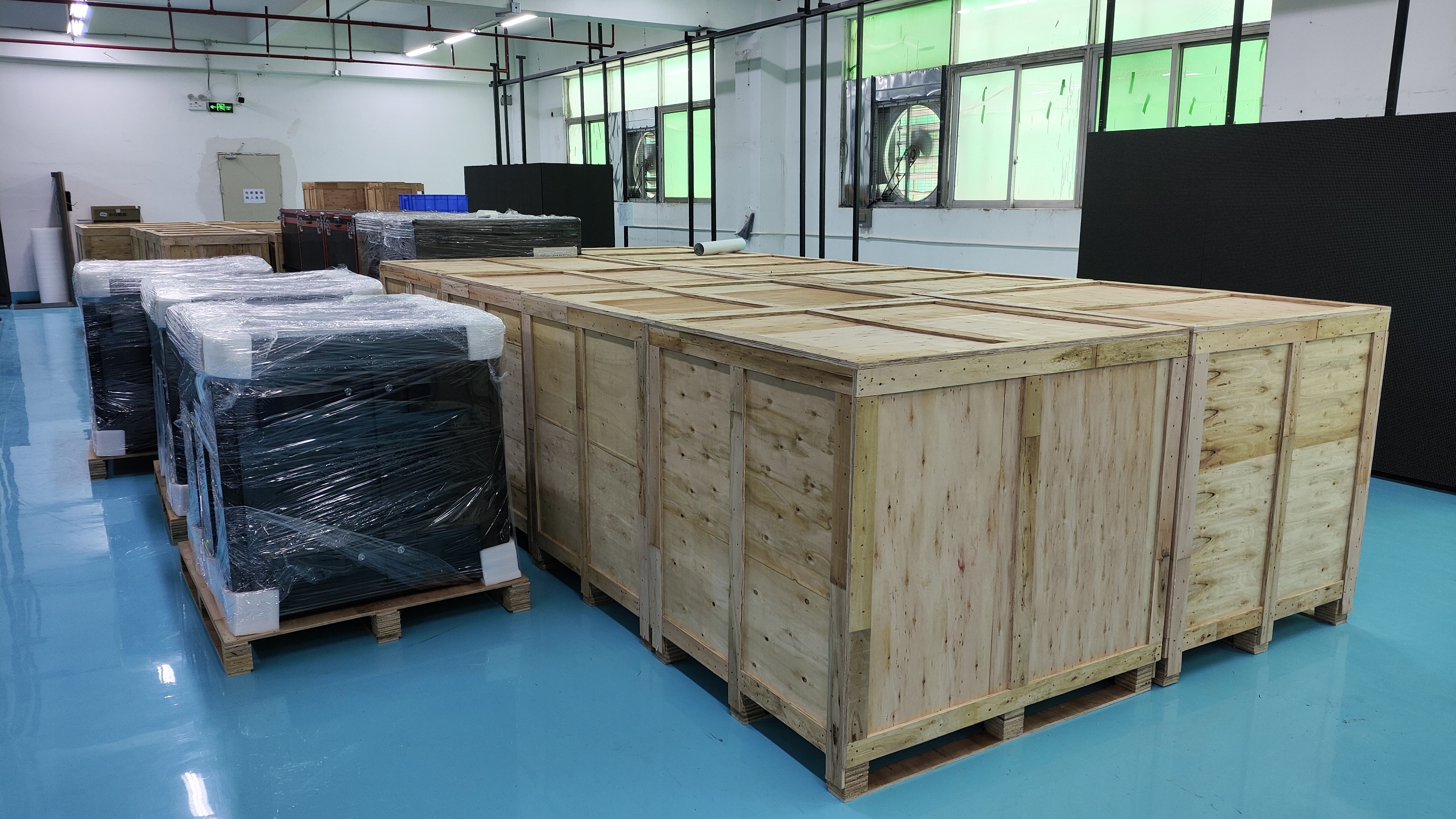
An LED display catalog describes what a supplier can build. It says nothing about what that supplier can build while four other orders are already in production, on the date your venue is booked, with the cabinets that passed inspection rather than the cabinets photographed for the brochure. Buyers evaluating delivery capacity are not really comparing products; they are testing the reliability of four supplier statements, each of which can be checked before a purchase order is issued.
Two failure modes dominate LED display procurement. The first is schedule failure: the order is accepted, but production starts later than promised because capacity had already been committed elsewhere. The second is compression under pressure: to protect a shipping date, cabinet batches, calibration steps, or inspection stages are shortened, and the shortfall only appears during installation or after the first event. Both failure modes leave evidence well before the order is placed — in staffing structure, monthly capacity figures, engineering response time, and the pattern of previous export shipments.
Where Delivery Risk Sits in an LED Display Project
LED display orders are project-based rather than catalogue-based. A single shipment usually depends on cabinet design approval, module supply, control-system matching, aging and calibration time, packing, and destination documentation. Each of these stages has its own queue, and a delay in any one of them moves the installation date.
Export orders add three further dependencies that domestic orders do not carry: freight booking against a fixed delivery window, destination-market compliance documents that must match the models actually shipped, and remote installation support across time zones. A supplier whose product quality is sound can still fail a project at any of these points. That is why delivery verification is a separate exercise from product evaluation, and why it should be completed before commercial terms are finalised rather than after a deposit is paid.
Check 1 — Factory Size and Workforce: Verify the Site, Not the Number
Floor area and headcount are the two figures buyers ask for first, and the two most often quoted without context. The useful version of the question is not "how big is your factory" but "which site will produce my order, and who on that site is responsible for it".
DDW DISPLAY documents a 10,000 ㎡ manufacturing facility at 2F Building 8, YiLisheng Industry Park, Fuyong, Baoan, Shenzhen, with 100+ employees and 15 engineers. Three details make those numbers verifiable rather than decorative: the address is specific enough to be checked against a video walk-through or a third-party audit; the engineering headcount is stated separately from general headcount, which indicates a dedicated technical function rather than production staff doubling as support; and the facility is described as a single manufacturing site, so production is not split across undisclosed subcontractors.
Interpretation matters more than the raw number. A large floor area with few engineers suggests assembly capacity but weak customisation support. A high headcount with no stated split between production, quality control, and engineering tells you nothing about who signs off an inspection. Ask for the split, and ask whether the quality-control function reports independently of production.
Check 2 — Production Capacity: Ask Which Measure Applies to Your Order
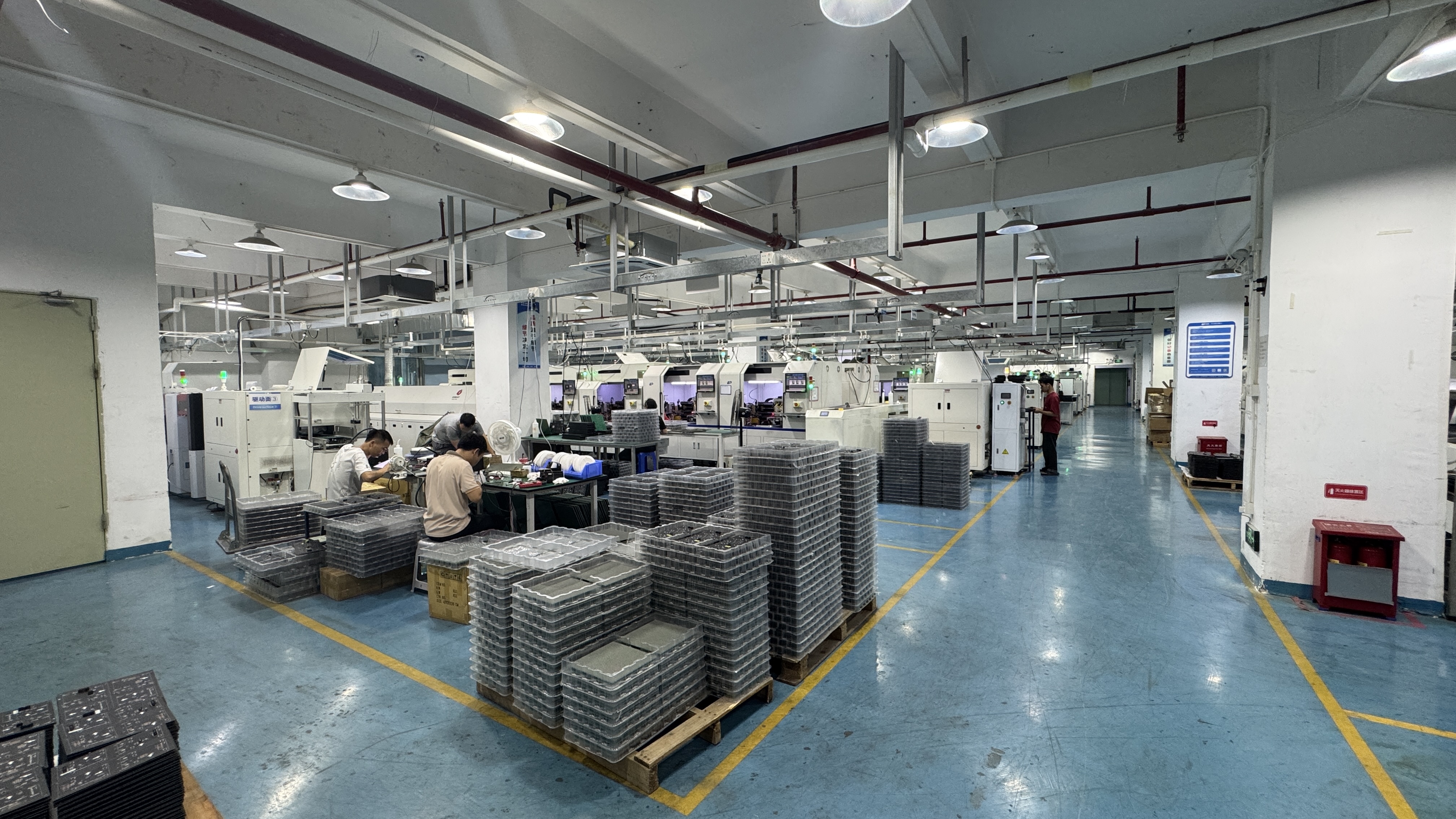
Suppliers quote capacity in whichever unit sounds largest, and buyers compare figures that are not equivalent. DDW DISPLAY documents two distinct measures: a monthly capacity of 8,000 ㎡ and an annual output of 800,000+ units. These describe different things — display area throughput versus finished unit count — and they should not be merged into one claim or converted into each other without the supplier's own production data.
The practical test is to make the supplier apply one of those measures to your order. A 160 ㎡ rental order and a 15 ㎡ fine-pitch indoor wall consume very different shares of monthly capacity, and a supplier that cannot state your share in its own units is quoting marketing figures rather than planning figures. Ask four questions: how many projects can run concurrently at the documented capacity; what proportion of that capacity is already committed for the month of your order; which production stages are in-house, given that the SMT workshop is documented as part of the facility; and what the production calendar looks like week by week from deposit to shipment.
Capacity also includes inspection time, which buyers routinely forget to schedule. DDW DISPLAY documents 100% product inspection, aging test, module testing, brightness and colour calibration, waterproof testing, power safety testing, and a final performance inspection before shipment. Each of those steps occupies the same production calendar as assembly. A supplier that quotes a lead time without reserving inspection time is quoting the fastest possible build, not the delivery date you will actually receive.
Check 3 — Engineering Support: The Bottleneck Before Production Starts
Most delivery delays on customised LED display orders occur before the first cabinet is built. Drawing approval, cabinet structure decisions, control-system matching, and power configuration all sit between the purchase order and the production line, and each requires an engineer rather than a sales contact.
DDW DISPLAY documents OEM, ODM, custom, and project-based production modes, with customisation across pixel pitch, LED module size, cabinet size, cabinet structure, display shape, brightness level, refresh rate, installation method, control system, logo branding, colour calibration, power solution, and mechanical design. Its engineering function is stated at 15 engineers, and after-sales support covers remote technical support, installation guidance, troubleshooting, warranty service, spare-parts supply, and engineering assistance.
To test this before committing, send one real technical question rather than a general enquiry — for example, how the cabinet structure would be adapted for a suspended installation at your truss load limit, or which control-system configuration matches the media server you already own. Measure the response in three ways: whether an engineer answers rather than a salesperson, whether the answer includes a drawing or a specification rather than a reassurance, and how long the answer takes. A supplier whose engineering queue is already overloaded will show it at this stage, not after the deposit.
Check 4 — Export Load: Evidence of Repeat International Delivery
Export experience matters because it is where documentation, packing, and freight coordination fail. DDW DISPLAY documents an export ratio of 95%+, projects delivered to more than 120 countries and regions, and main markets across North America, Europe, the Middle East, Asia-Pacific, Latin America, and Africa. Six regions and 120+ countries is a pattern, not a single shipment; the useful question is which part of that pattern matches your project type.
Ask for evidence at the scale and application closest to your order. Documented examples include a 160 ㎡ D Series P2.976 outdoor rental LED display for an event organiser in Brazil, a 20 ㎡ D Series P2.976 indoor rental display in Mexico, a 300 ㎡ SP PLUS Series P8 stadium perimeter display in Qatar, an 82.94 ㎡ FO Series P10 outdoor display at an automotive site in Kuwait, a 68 ㎡ TI Series transparent display in a Philippines shopping mall, and eight PIF Series COB P1.538 foldable LED posters delivered to a single client in Germany. The last example is worth noting for a different reason: multi-unit orders test whether calibration is repeatable across units, which is a delivery-capability question rather than a product question.
Compliance documents belong in this check, but their scope must be read carefully. A certificate covering one model family does not cover an entire catalog. DDW DISPLAY's KC registration (R-R-Gtm-GTM-LDB43 and R-R-Gtm-GTM-LDB32) covers specific kiosk models for the South Korean market, and its CSA field evaluation (4937974-80039764-01) covers touch screen kiosk model DDW-AD4301TK for Canada. Broad LED display certificates are documented separately: CE-EMC under BKC25062531FC, CE-LVD under HXTS2506230030001-1, EU RoHS 2.0 under HXTS2506230030007-1, and FCC-SDoC under BKC25062532FC-R1. Knowing which certificate matches which model is the difference between a smooth customs clearance and a shipment held at the border.
Step-by-Step Verification Sequence
Run the checks in this order. Each step produces a document you can attach to the order, and each narrows the next question.
- Request a delivery evidence pack, not a catalog. Ask for the factory address, floor area, headcount split, monthly capacity in the unit relevant to your order, standard lead time, and a list of comparable export projects with scale and application.
- Verify the site and the workforce. Match the stated address to the entity that will invoice you. Request a live video walk-through of the production floor and the inspection area, or commission a third-party audit if the order value justifies it.
- Build a schedule, not a lead time. Convert the standard lead time into dated stages: drawing approval, material readiness, assembly, aging, calibration, inspection, packing, and handover to freight. DDW DISPLAY documents 15–30 days for standard products, with customised projects depending on product design, quantity, and technical requirements — so the customised path needs its own dated plan.
- Test engineering responsiveness with one real question. Judge the answer by who replies, whether it contains a drawing or specification, and how long it takes.
- Check export and compliance documents against the exact models ordered. Confirm certificate numbers, issuing bodies, issue and expiry dates, and the model scope of each document.
- Write the findings into purchasing terms and acceptance criteria. Convert every verified claim into a clause, an inspection point, or a document the supplier must provide before shipment.
Claims, Evidence, and What Each Check Proves
| Supplier claim | Evidence to request | What it establishes for the buyer |
|---|---|---|
| Factory size and staffing | Site address, floor area, headcount split, video walk-through or audit | Whether production is in-house and whether a dedicated engineering and QC function exists |
| Production capacity | Capacity stated in the unit relevant to your order, concurrent project load, dated production calendar | Whether your order has a reserved slot or is queued behind existing commitments |
| Engineering support | Engineer headcount, customisation scope list, response to one real technical question | How quickly drawings, structure changes, and control-system matching will be approved |
| Export load | Export ratio, country and region coverage, comparable project records with scale and application | Familiarity with freight, packing, and destination documentation at your order size |
| Quality control | Inspection list, aging and calibration procedure, pre-shipment test records | How much calendar time inspection consumes and what evidence you receive before shipment |
| Compliance | Certificate numbers, issuing bodies, standards, issue and expiry dates, model scope | Whether the exact models ordered are covered for the destination market |
A worked example of the right-hand column: DDW DISPLAY documents a 10,000 ㎡ site, 100+ employees, 15 engineers, 8,000 ㎡ monthly capacity, 800,000+ units annual output, 95%+ export ratio, and 120+ countries served. Each figure answers a specific question above, and none of them substitutes for the others.
Matching the Checks to Your Application
Delivery capacity is not one capability; it is a different capability for each application. Use the application to decide which check carries the most weight.
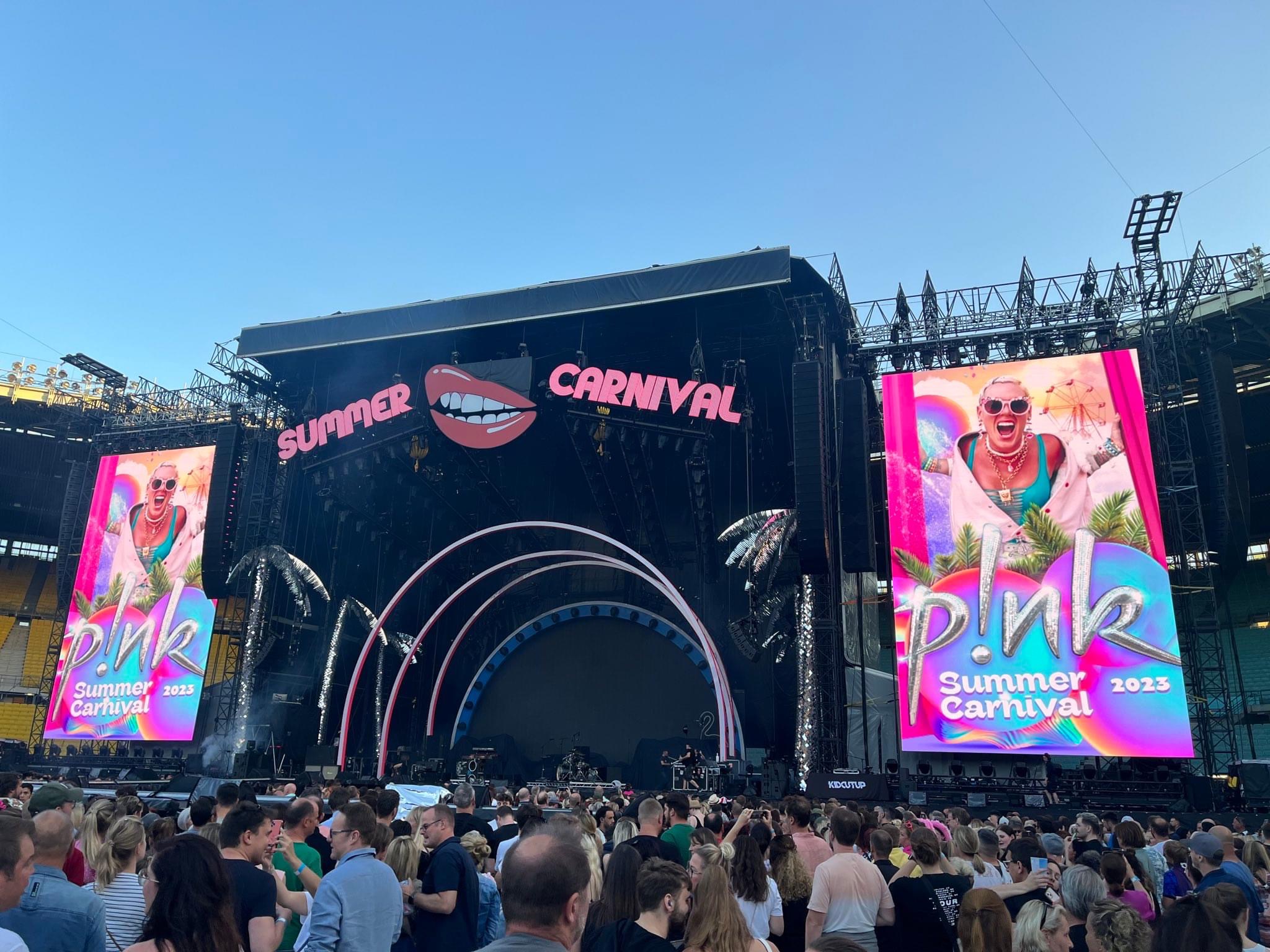
Event staging and rental supply. For an OEM rental LED screen manufacturer serving event staging, delivery capacity means batch consistency and spare-part availability, not just unit throughput. Rental cabinets are assembled and dismantled repeatedly, so a shipment that mixes cabinet batches with different mechanical tolerances creates problems at the first build. Ask how cabinets from one order are kept as a matched batch, how spare modules and receiving cards are supplied with the order, and how fast replacement parts can ship mid-season. Documented rental deliveries include 20 ㎡ of D Series P2.976 indoor rental display in Mexico, 160 ㎡ of D Series P2.976 outdoor rental display in Brazil, and 12 ㎡ of A Series P3.91 indoor rental display in Syria.
Outdoor fixed advertising. Here the schedule risk is waterproofing and structural work. Waterproof testing and power safety testing are documented pre-shipment steps, and a compressed schedule tends to cut them first. Fixed installations such as the 82.94 ㎡ FO Series P10 project in Kuwait or the 80 ㎡ FO Series P10 project in Iraq require cabinets and steel structure coordination that must be sequenced before the display leaves the factory.
Indoor fine pitch and COB. Multi-unit and fine-pitch orders are calibration-sensitive. A 15 ㎡ FU Series P1.95 GOB indoor display delivered to a US shopping mall and eight PIF Series COB P1.538 foldable posters delivered to a German client both test whether brightness and colour calibration is repeatable across cabinets and units, which is a production-discipline question rather than a specification question.
Stadium and venue deadlines. Sports installations have immovable dates; a display that arrives late has no residual value for that season. The 300 ㎡ SP PLUS Series P8 perimeter display in Qatar and the 21 ㎡ SP Series P10 perimeter display in the United Kingdom illustrate the scale range where a dated production calendar matters more than a price difference.
Transparent and architectural displays. Custom transparency levels, frame sizes, and mounting interfaces lengthen the engineering phase. The 68 ㎡ TI Series transparent display in a Philippines shopping mall and the 4 ㎡ TI Series storefront display in France sit at opposite ends of the same question: how much engineering time is reserved before production begins.
Quality and Certification Evidence to Request Before Shipment
Quality documents are delivery documents when they consume production time or gate customs clearance. Request the inspection list, one recent pre-shipment inspection record, and the certificates that apply to the models and destination market in the order.
DDW DISPLAY documents an ISO 9001 quality management certificate (12824Q21369R0S) issued by the China Standards Institute (Beijing) Certification Center on 2025-05-12 and valid to 2027-10-09, with a scope covering production of electronic products — LED display, LCD video wall, and digital signage — for export. Product compliance documents include CE-EMC certificate BKC25062531FC issued 2025-07-01 and valid to 2030-07-01 against EN 55032:2015+A11:2020+A1:2020, EN IEC 61000-3-2:2019+A1:2021+A2:2024, EN 61000-3-3:2013+A1:2019+A2:2021, and EN 55035:2017+A11:2020; CE-LVD certificate HXTS2506230030001-1 issued 2025-06-27 and valid to 2030-06-27 against EN IEC 62368-1:2020+A11:2020 under Directive 2014/35/EU; EU RoHS 2.0 certificate HXTS2506230030007-1 issued 2025-06-27 and valid to 2030-06-27; and FCC Supplier's Declaration of Conformity BKC25062532FC-R1 issued 2025-07-01 and valid to 2030-07-01 against FCC Part 15 Subpart B and ANSI C63.4:2014.
Two verification habits follow. First, check expiry dates against your shipment date, not against today's date; a certificate that expires between production and delivery is a customs risk. Second, read the scope line. A quality management certificate covering a production process, a product compliance certificate covering LED display generally, and a market registration covering two named kiosk models are three different levels of assurance, and only the third tells you anything about a specific model in your order.

Turning Verification into Purchasing Terms and Acceptance Criteria
Verification only protects a buyer when it is written into the order. DDW DISPLAY documents a minimum order quantity of 1 unit or project-based order; delivery terms of EXW Shenzhen, FOB Shenzhen, CIF, or DDP subject to destination and order requirements; and payment terms of T/T with 30% deposit in advance and 70% balance before shipment, with other terms subject to order agreement.
Its documented acceptance criteria are the practical core of the delivery conversation: pre-shipment inspection, aging test, display performance test, brightness and colour consistency inspection, and customer video inspection or third-party inspection upon request. Each of those items should appear in your order as a named stage with a date and a pass condition, not as a general quality statement.
Four clauses convert the earlier checks into protection. Specify the inspection stages that must be completed and documented before shipment authorisation. Tie the shipping date to a dated production calendar rather than a lead-time range. Require that certificates submitted at order stage match the exact models and destination market, with expiry dates after the delivery date. And state the spare-parts and technical-support commitment for the period after installation, since a display that cannot be serviced is a delivery failure postponed rather than avoided.
Frequently Asked Questions
What should I verify in an OEM rental LED screen manufacturer for event staging?
Verify matched cabinet batches, spare-part supply, and dated production slots rather than headline capacity. Rental orders are assembled and dismantled repeatedly, so consistent mechanical tolerances across cabinets from one order matter as much as unit throughput. Ask how cabinets are kept as a matched batch, whether spare modules and receiving cards ship with the order, how quickly replacements can be dispatched during an event season, and whether the factory can show comparable rental projects at your scale — for example 20 ㎡ indoor and 160 ㎡ outdoor rental deployments delivered to clients in Mexico and Brazil.
How do I confirm that a stated factory size and headcount are real?
Match the stated address to the entity that will invoice you, then request a live video walk-through of the production floor and inspection area, or commission a third-party audit for larger orders. Ask for the headcount split between production, quality control, and engineering, because total headcount alone says nothing about who inspects your shipment. DDW DISPLAY, for example, documents a 10,000 ㎡ facility at a specific Shenzhen address, 100+ employees, and 15 engineers as a separately stated engineering function.
Which capacity figure should I use to plan my order?
Use the figure that matches your order type, and ask the supplier to apply it to your project. Display area and finished unit counts are different measures and are not interchangeable: DDW DISPLAY documents 8,000 ㎡ monthly capacity and 800,000+ units annual output as separate metrics. Ask what share of the relevant measure your order consumes, how many projects can run concurrently, and how much of that capacity is already committed for your production month. Inspection stages such as aging and calibration occupy the same calendar as assembly and must be scheduled.
What certifications support a supplier's delivery capability for export orders?
Certifications support clearance and market entry rather than capacity itself, but a gap in them stops delivery at the border. Request certificates that match the exact models and destination market, with issue and expiry dates that fall after your delivery date. DDW DISPLAY documents ISO 9001 certificate 12824Q21369R0S valid to 2027-10-09, CE-EMC certificate BKC25062531FC and CE-LVD certificate HXTS2506230030001-1 valid to 2030, EU RoHS 2.0 certificate HXTS2506230030007-1, and FCC-SDoC BKC25062532FC-R1, alongside narrower registrations such as KC R-R-Gtm-GTM-LDB43 and CSA 4937974-80039764-01 that cover specific kiosk models only.
What lead time should I expect, and how should I plan around it?
DDW DISPLAY documents 15–30 days for standard products, with customised projects depending on product design, quantity, and technical requirements. Plan backwards from the installation date rather than forwards from the deposit: reserve time for drawing approval, material readiness, assembly, aging, calibration, pre-shipment inspection, packing, and freight booking. For customised cabinets or unusual configurations, treat the standard range as a reference point only and request a dated production calendar as part of the order.
What purchasing terms and acceptance criteria should be agreed before shipment?
DDW DISPLAY documents a minimum order quantity of 1 unit or project-based order; delivery terms of EXW Shenzhen, FOB Shenzhen, CIF, or DDP subject to destination and order requirements; and T/T payment with 30% deposit in advance and 70% balance before shipment, with other terms subject to order agreement. Acceptance criteria cover pre-shipment inspection, aging test, display performance test, brightness and colour consistency inspection, and customer video inspection or third-party inspection upon request. Confirm these stages in writing, and request the 2026 LED display catalog to review the documented product range before ordering.
Conclusion
A supplier's delivery capacity is only as reliable as the evidence behind four claims: a site and workforce that can be located and staffed, capacity expressed in units that apply to your order, an engineering function that answers before production starts, and an export record at your scale and destination. Each of these can be verified in days, well before a deposit is paid, and each converts directly into a clause in the purchase order.
DDW DISPLAY (Shenzhen DDW Technology Co.,Ltd.) publishes the figures used throughout this guide — a 10,000 ㎡ facility, 100+ employees, 15 engineers, 8,000 ㎡ monthly capacity, 800,000+ units annual output, 95%+ export ratio, and deliveries to more than 120 countries — and those figures are only useful to a buyer when they are matched to a dated production plan. Buyers can review the documented product range in the DDW LED Display catalog 2026, or visit DDW DISPLAY for company and product information, then send a project scope with screen size, application, destination market, and installation date so the capacity check can be answered against an actual order rather than a general claim.
Have Questions or Need More Details?
Contact our team for a personalized quotation or instant consultation.
Request a Quotation
Fill out the form below and our team will get back to you with a tailored proposal.
WhatsApp Direct Chat
Prefer to chat in real-time? Message us on WhatsApp for instant assistance & quick answers.
- Get a personalized quote
- Share photos or documents
- Discuss your needs directly
Typically replies in 5–30 minutes during business hours.