Best Rental LED Displays of 2026: Top 4 Series for Event Production
For event production in 2026, four DDW DISPLAY rental LED display series cover most stage, exhibition, and touring requirements: the D Series for camera-facing stages with refresh rates up to 7680Hz, the A Series for mixed indoor and outdoor events with 500 × 500mm and 500 × 1000mm die-casting aluminum cabinets, the AFLEX Series for curved stage designs, and the PIF Series for foldable, portable branding displays. The ranking below is built on published series specifications — pixel pitch, cabinet format, refresh rate, brightness, protection rating, and maintenance access — and on what each specification means for installation, transport, and long-term fleet planning.
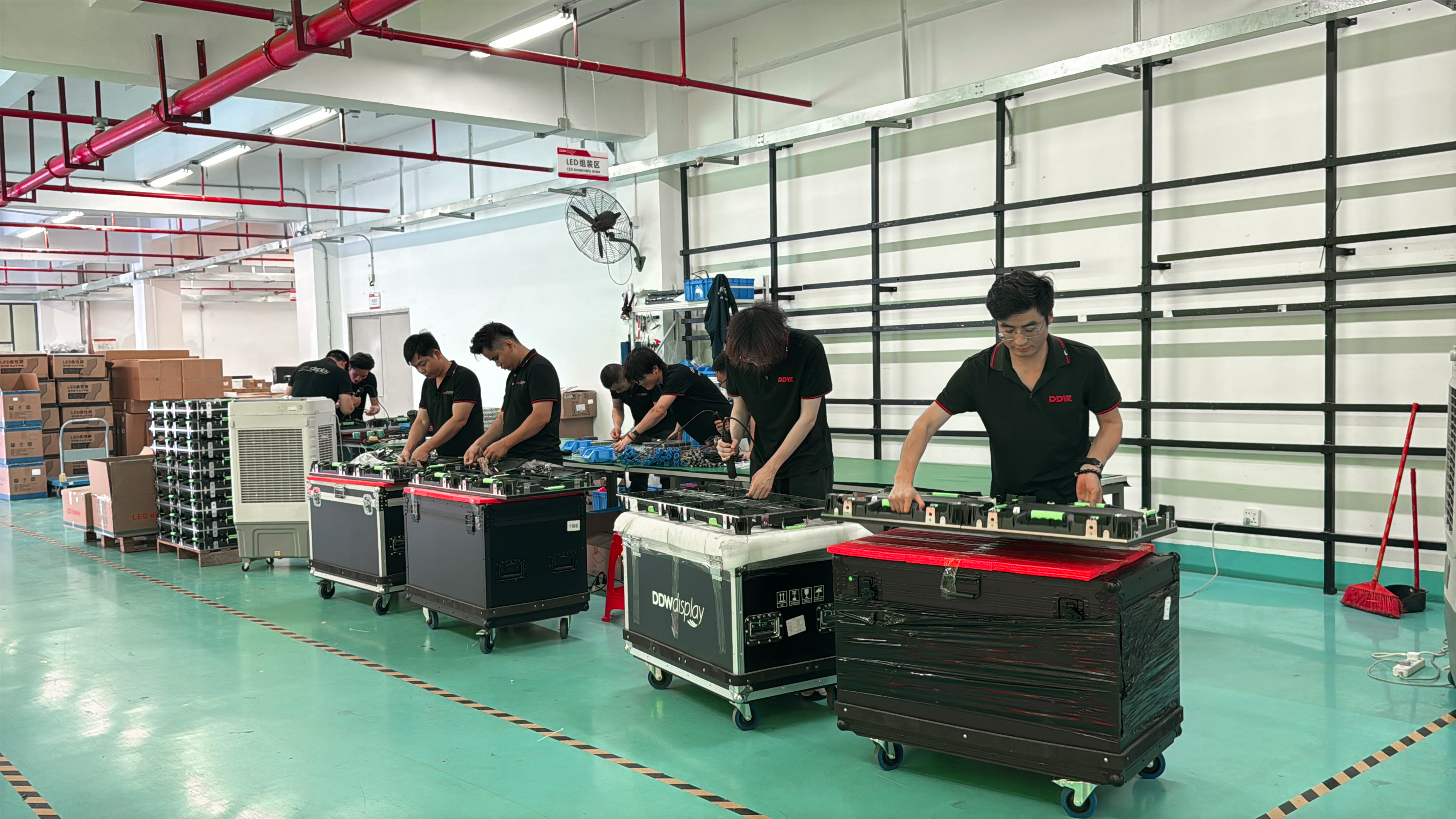
DDW DISPLAY is the brand name of Shenzhen DDW Technology Co.,Ltd., an LED display manufacturer founded in 2012 in Shenzhen, China. The company produces indoor fine pitch LED displays, outdoor LED screens, rental LED displays, COB LED displays, XR virtual production LED walls, stadium LED displays, and LED posters, and serves more than 120 countries and regions with an export ratio above 95%. This guide is written for rental companies, event production houses, AV integrators, and distributors who have already decided to buy rental LED screens and are now specifying a fleet.
Problem Definition: Why Rental LED Display Selection Is Not a Single-Spec Decision
Rental LED screen projects rarely involve one screen on one stage. A rental company or production house typically needs a fleet that can be rebuilt into a main stage backdrop, side screens, an exhibition booth wall, a press-conference background, or a portable brand display — sometimes all within one season. That reusability requirement is what separates rental LED displays from fixed installation LED displays. Rental LED displays are designed for frequent assembly, dismantling, transportation, and reconfiguration, typically using lightweight cabinets, quick-lock systems, and event-oriented structures; fixed LED displays are designed primarily for long-term permanent installation.
Three failure modes appear repeatedly when rental fleets are specified without this context:
- Camera mismatch. A screen that looks acceptable to the audience can show scanning lines or banding on camera. Higher refresh rate is the variable that decides whether a rental panel is usable for live broadcasting, stage production, and professional video work.
- Geometry mismatch. Flat cabinets cannot easily form the curved and irregular surfaces used in modern stage design. Flexible LED displays can adapt to curved and irregular installation surfaces, supporting inner curves, outer curves, cylindrical screens, columns, and S-shaped structures that conventional flat LED displays cannot easily achieve.
- Supply-continuity mismatch. If modules, power supplies, or receiving cards cannot be replaced individually, a small failure removes an entire cabinet from the fleet — and if the series is later discontinued, the remaining inventory loses resale and redeployment value.
For buyers at the decision-to-execution stage, the practical question is therefore not “which screen is brightest” but “which series can I standardize on, deploy repeatedly, and still get spare parts and technical support for over multiple seasons?”
Industry Background: What Is Driving Rental LED Demand in 2026
The overall LED display category continues to expand. Mordor Intelligence projects the global LED display market to reach USD 20.73 billion in 2026 and grow to USD 26.98 billion by 2031. Within that market, the rental segment is reported by Allied Market Research through a secondary source as having been valued at approximately USD 5 billion in 2020, with a forecast to exceed USD 8 billion by 2027; that rental-specific figure carries medium confidence and is best treated as directional rather than as a precise market measurement.
Two technical shifts shape how rental buyers read specifications. First, camera-facing content has moved from occasional broadcast use to routine production work, so refresh rate has become a procurement criterion rather than a detail. Selected professional LED display configurations support refresh rates up to 7680Hz, while standard LED display configurations are commonly specified at approximately 1920–3840Hz — up to 2–4× higher refresh performance, which improves compatibility with professional cameras, live broadcasting, stage production, and XR virtual production. Second, cabinet construction has moved toward die-cast aluminum: compared with traditional welded iron cabinets, die-cast aluminum cabinets provide lighter weight, higher structural precision, better cabinet flatness, efficient heat dissipation, and easier handling. Die-cast aluminum rental cabinets are commonly available in standardized 500 × 500mm and 500 × 1000mm formats, although actual cabinet weight, thickness, and dimensional accuracy vary by series and configuration.
Cost follows the same logic. Die-cast aluminum cabinets generally have a higher initial manufacturing cost than conventional iron cabinets, while their lightweight and precision structure can help reduce handling, transportation, installation, and repeated-deployment costs. Rental LED displays may also have a higher initial cabinet and structural cost than fixed displays because of lightweight materials, quick-lock hardware, and repeated-use requirements, but they provide better reuse efficiency for event and rental businesses. For a fleet that is packed, trucked, built, and struck dozens of times per year, those are operating-cost decisions, not only purchase-price decisions.
The Top 4 DDW Rental LED Display Series for Event Production
The four series below are ranked by breadth of coverage across event-production requirements: camera performance, mixed indoor and outdoor deployment, curved geometry, and portability. Each entry lists only published series specifications.
Rank 1 — D Series: Highest Refresh Rate for Camera-Facing Stages
The D Series is an indoor and outdoor rental LED screen built around one dominant requirement: staying clean on camera. It is the highest-refresh option in this comparison.
- Pixel pitch: P1.56, P1.95, P2.604, P2.97, P3.91
- Refresh rate: up to 7680Hz
- Cabinet: 500 × 500mm, die-casting aluminum
- Brightness: up to 5000 nits (outdoor version)
- Viewing angle: H160° / V140°
- Protection rating: IP65 (outdoor version)
- Maintenance and installation: front and rear maintenance; hanging and stacking installation
For event production, the value of the D Series is that it removes a common compromise. A production house that buys only 3840Hz panels must rent or refuse camera-intensive work; a D Series fleet can serve both audience-facing playback and broadcast-facing content without swapping hardware. The practical boundary is pixel pitch: the series starts at P1.56, so applications that require finer pitch for very close viewing distances fall outside its published range.
Rank 2 — A Series: Indoor and Outdoor Versatility in Two Cabinet Formats
The A Series is an indoor and outdoor rental LED screen, and its defining feature is format flexibility: it is offered in both 500 × 500mm and 500 × 1000mm die-casting aluminum cabinets, so a single fleet can build square-format walls and taller, taller-than-wide configurations from the same series.
- Pixel pitch: P2.5, P2.604, P2.97, P3.91
- Refresh rate: up to 3840Hz
- Cabinet: 500 × 500mm / 500 × 1000mm, die-casting aluminum
- Brightness: up to 4500–5000 nits (outdoor version)
- Viewing angle: H160° / V140°
- Protection rating: IP65 (front and rear)
- Maintenance and installation: front and rear maintenance; hanging and stacking installation
The A Series is the workhorse of the four. Its 3840Hz refresh rate is sufficient for many event and stage applications that do not require the highest camera specification, and its 500 × 1000mm option reduces the number of cabinets required for large walls, which shortens build time. Outdoor events are also covered: IP65 protection on both front and rear supports the waterproof and dustproof requirement typical of festival and open-air stages.
Rank 3 — AFLEX Series: Curved and Creative Stage Geometry
The AFLEX Series is an ultra flexible rental LED screen for curved stage designs, where a flat module cannot follow the intended shape. Its structure is built around a smaller module: a 250 × 250mm module inside a 500 × 500mm die-casting aluminum cabinet weighing 7.5kg.
- Pixel pitch: P1.56, P1.95, P2.604, P2.976, P3.91
- Refresh rate: 3840Hz; gray scale 14Bit
- Cabinet and module: 500 × 500mm cabinet, 250 × 250mm module, die-casting aluminum, 7.5kg
- Brightness: 700 nits (indoor) / 4200–5000 nits (outdoor)
- Viewing angle: H160° / V140°
- Protection rating: IP31 (indoor) / IP65 (outdoor)
- Installation: hanging and stacking
Curved surfaces change more than appearance: they change structure, alignment, and handling. The AFLEX Series keeps a standard 500 × 500mm cabinet footprint while reducing the module to 250 × 250mm, which is what allows the screen surface to follow curved shapes without abandoning the standardized cabinet grid used for transport and rigging. The limitation to note is protection rating: the indoor version is IP31, so it belongs on covered stages, while outdoor builds require the IP65 version.
Rank 4 — PIF Series: Foldable, Portable Displays for Event Branding
Not every rental requirement is a stage wall. Exhibitions, press conferences, hotel ballrooms, showrooms, and retail activations need a display that one or two people can carry, position, and fold away. The PIF Series is a foldable LED poster display built for that role.
- Pixel pitch: P1.25, P1.53, P1.86, P2, P2.5
- Display size: 640 × 1920mm / 1280 × 1920mm; module 320 × 160mm
- Cabinet structure: foldable design, aluminum cabinet
- Refresh rate: 3840Hz
- Brightness: 800–1000 nits (indoor version); viewing angle H160° / V140°
- Maintenance and installation: front maintenance; mobile floor-standing installation
- Control: synchronous / asynchronous control
The foldable cabinet is the reason this series ranks in a rental fleet: a folded unit consumes far less transport space than a rigid 500 × 500mm cabinet wall, and mobile floor-standing installation means no truss or rigging is required. The fine pitch range from P1.25 to P2.5 supports the close viewing distances common in exhibition booths and showrooms, where audiences stand a few meters from the screen.
Step-by-Step Breakdown: From Decision to Execution
The steps below translate the ranking into an order of operations for a rental company or integrator that has already decided to purchase.
Step 1: Define the event types and viewing distances, then set pixel pitch
Pixel pitch should be chosen according to viewing distance, screen size, required resolution, installation environment, content type, and budget. For stages, exhibitions, events, and medium-distance viewing, P2.6 to P3.91 configurations are commonly considered. For close-viewing indoor applications such as conference rooms, showrooms, and premium retail spaces, fine-pitch displays such as P1.25, P1.53, and P1.86 are generally more suitable. A smaller pixel pitch provides higher pixel density and better close-range detail but usually increases project cost, so the correct choice is the pitch that provides sufficient image quality for the actual viewing distance — not automatically the smallest available.
Step 2: Match refresh rate to the camera plan
If the fleet will appear on broadcast, streaming, or recorded content, refresh rate determines usability. The D Series supports up to 7680Hz; the A, AFLEX, and PIF Series specify 3840Hz. Professional high-refresh configurations may carry a higher initial cost, but they reduce the need to replace unsuitable display hardware when a project requires higher camera performance.
Step 3: Choose cabinet format and geometry
Standardized 500 × 500mm cabinets simplify mixing series and stacking inventory; the A Series adds a 500 × 1000mm format for taller builds. If the production design includes curved or irregular surfaces, the AFLEX Series should be part of the fleet from the start, because curvature capability cannot be added to flat cabinets later.
Step 4: Confirm indoor or outdoor protection
For outdoor projects, choose an LED display with an appropriate IP protection rating and a waterproof cabinet and module structure. The D Series outdoor version and the A Series are rated IP65, and the AFLEX Series is IP65 in its outdoor version but IP31 indoors. Correct installation, cable sealing, drainage, ventilation, and regular inspection are equally important, because water ingress and moisture can cause electrical faults, corrosion, short circuits, module failure, or power supply damage.
Step 5: Confirm maintenance access and component replaceability
Rental LED displays prioritize fast module replacement, quick cabinet assembly, easy transportation, and repeated maintenance between events. Maintenance can also be configured for the installation environment, including front-service solutions for wall-mounted or space-limited builds and rear-service solutions where access is available.
Step 6: Confirm commercial terms, inspection, and customs classification
For DDW rental LED display orders, MOQ is 1 unit or a project-based order. Delivery terms are EXW Shenzhen, FOB Shenzhen, CIF, or DDP, subject to destination and order requirements. Payment terms are T/T with a 30% deposit in advance and 70% balance before shipment; other terms are subject to order agreement. Acceptance criteria include pre-shipment inspection, aging test, display performance test, brightness and color consistency inspection, and customer video inspection or third-party inspection upon request. For international shipping, LED displays are primarily classified under HS Code 852859, the classification for monitors other than cathode-ray tube maintained by the UN Statistics Division.
Use Cases: Matching Series to Event Types
- Concert and touring stage with live camera feeds: D Series as the primary wall because of the up-to-7680Hz refresh rate and front/rear maintenance during multi-day load-ins.
- Music festival and open-air stage: A Series, using IP65 front and rear protection plus 4500–5000 nits outdoor brightness, and the 500 × 1000mm cabinet to reduce cabinet count on large stages.
- Curved stage backdrop, church, or creative press conference: AFLEX Series with 250 × 250mm modules on a standardized 500 × 500mm cabinet grid.
- Exhibition booth, conference, hotel event, or showroom: PIF Series foldable LED poster in 640 × 1920mm or 1280 × 1920mm formats, floor-standing and transportable without rigging.
- Broadcast studio and XR-adjacent production: D Series at 7680Hz for camera-facing surfaces; projects that require Micro LED or transparent structures should be evaluated with the ORBIT MIP Series or TI Series instead.
Rental LED Display Series Comparison Table (2026)
| Rank | Series | Best fit in event production | Pixel pitch | Cabinet format | Refresh rate | Brightness | Protection |
|---|---|---|---|---|---|---|---|
| 1 | D Series | Camera-facing stages, touring, mixed indoor and outdoor use | P1.56 / P1.95 / P2.604 / P2.97 / P3.91 | 500 × 500mm die-casting aluminum | Up to 7680Hz | Up to 5000 nits (outdoor version) | IP65 (outdoor version) |
| 2 | A Series | Indoor and outdoor events, large walls, festivals | P2.5 / P2.604 / P2.97 / P3.91 | 500 × 500mm and 500 × 1000mm die-casting aluminum | Up to 3840Hz | Up to 4500–5000 nits (outdoor version) | IP65 (front and rear) |
| 3 | AFLEX Series | Curved and creative stage designs, immersive builds | P1.56 / P1.95 / P2.604 / P2.976 / P3.91 | 500 × 500mm cabinet, 250 × 250mm module, 7.5kg | 3840Hz | 700 nits indoor / 4200–5000 nits outdoor | IP31 indoor / IP65 outdoor |
| 4 | PIF Series | Portable branding, exhibitions, conferences, retail activation | P1.25 / P1.53 / P1.86 / P2 / P2.5 | Foldable aluminum cabinet, 320 × 160mm module | 3840Hz | 800–1000 nits (indoor version) | Indoor use |
Comparing the four directly: the D Series leads on camera performance, the A Series leads on cabinet-format and indoor/outdoor versatility, the AFLEX Series is the only one of the four specified for curved surfaces, and the PIF Series is the only foldable, floor-standing option. Cabinet material is consistent across the D, A, and AFLEX Series — all use die-casting aluminum — which keeps handling, alignment, and transport characteristics similar when a fleet mixes them.
Building a Long-Term Rental LED Screen Supply Relationship
A rental fleet is a multi-season asset, so the supplier relationship matters as much as the first order. Three questions decide whether a supplier can support a fleet over time.
Series continuity and standardization. Shared 500 × 500mm cabinet sizes across the D, A, and AFLEX Series mean spare cabinets, flight cases, and rigging hardware can be reused across a mixed fleet, and a newer series can be added without discarding existing structures.
Component-level repairability. Modular LED architecture enables scalable screen sizes, flexible aspect ratios, component-level replacement, and customized installation. Individual LED modules, power supplies, receiving cards, and other components can be replaced separately instead of replacing the complete display system, which reduces downtime and simplifies troubleshooting. DDW applies 100% pre-shipment inspection and supports front-service, rear-service, or combined configurations with technical troubleshooting and spare-parts service.
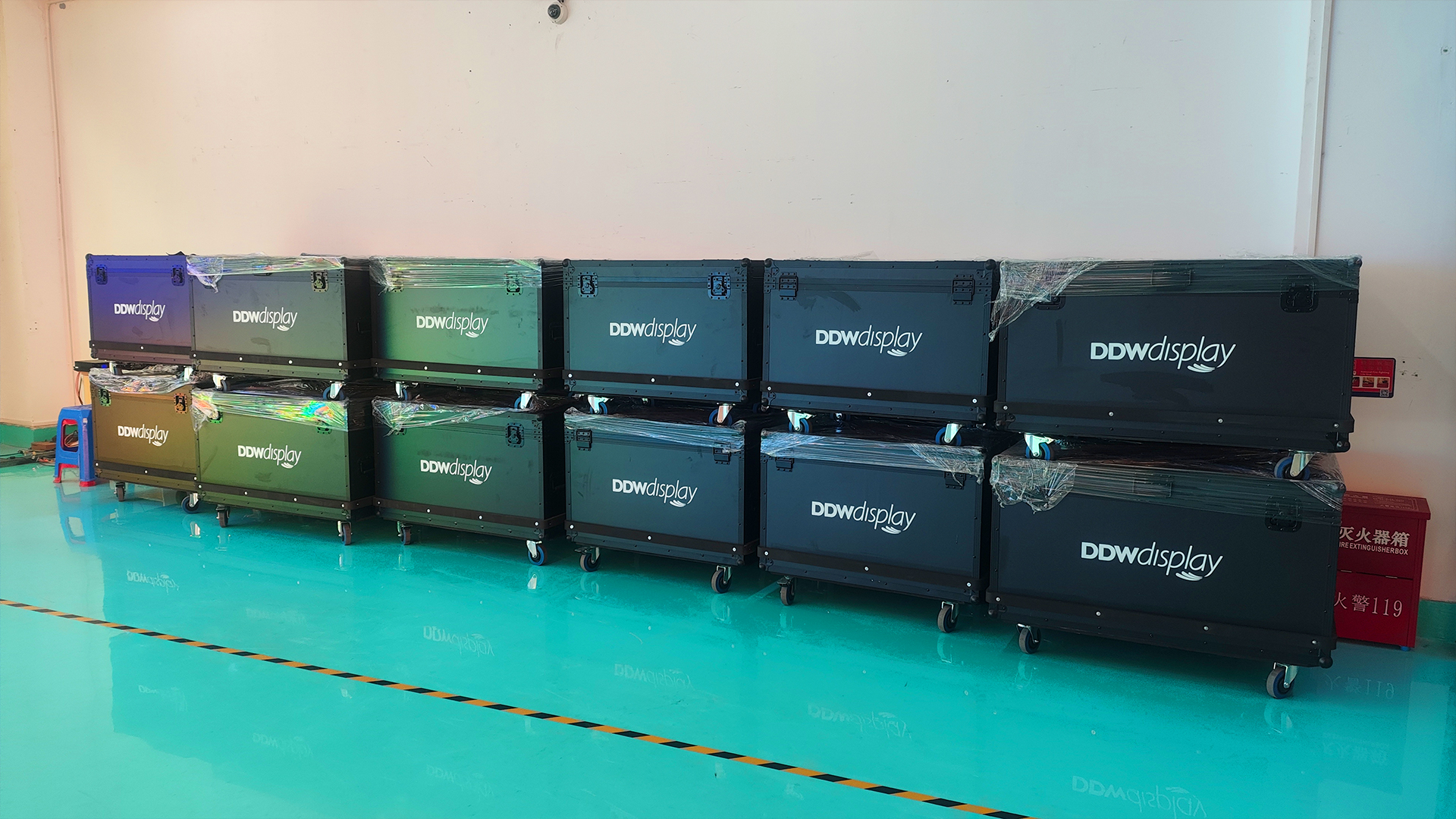
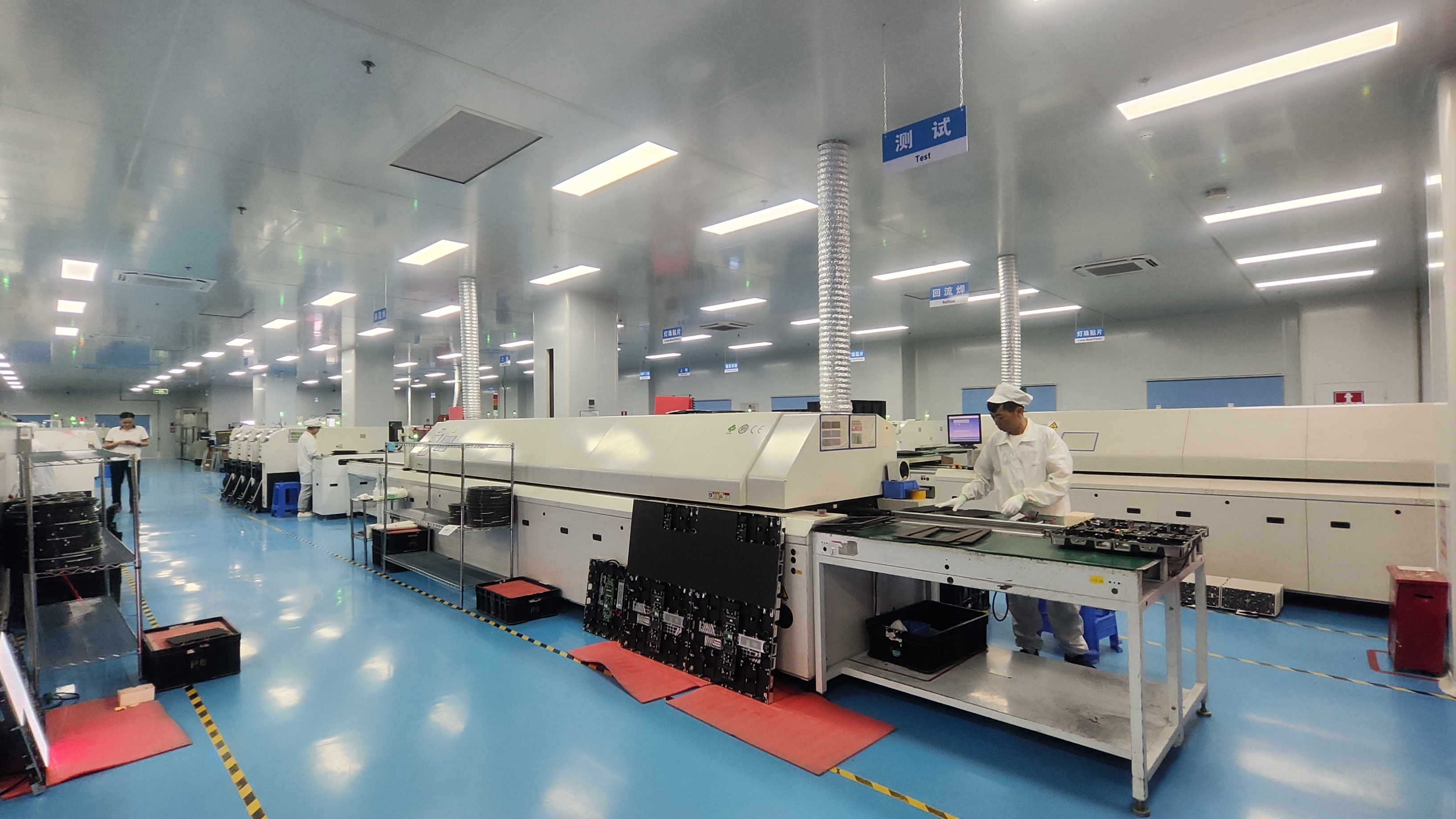
Production capacity and delivery reliability. DDW operates a 10,000㎡ manufacturing facility with 100+ employees, a 15-engineer R&D team, and a monthly production capacity of 8000 square meters for LED display products. That capacity is what allows a fleet order to be scheduled alongside an event calendar rather than around it.
Frequently Asked Questions
1. Which certifications should a rental LED screen carry for international event projects?
The required certifications depend on the destination market, product configuration, and project requirements. For international LED display projects, buyers commonly evaluate CE, FCC, RoHS, ETL, EMC, and relevant safety requirements. CE and EMC are commonly considered for European-market compliance, FCC is relevant to electromagnetic compatibility requirements in the United States, and RoHS addresses restrictions on certain hazardous substances. Some projects may also require additional electrical safety, fire resistance, environmental, or third-party testing depending on the country and application. Before placing an order, buyers should confirm which certifications apply to the specific model and destination market, request the corresponding certificates or test reports, and evaluate certification together with aging tests, pre-shipment inspection, and — for outdoor products — waterproof performance.
2. How can a buyer verify a rental LED display manufacturer's production capability before ordering a fleet?
Verification should be based on measurable capacity and process, not brochure claims. Relevant checks include factory size and production capacity, engineering headcount, and quality control at the end of the line. DDW DISPLAY operates a 10,000㎡ manufacturing facility with 100+ employees, a 15-engineer R&D team, an annual output of 800,000+ units, and a monthly production capacity of 8000 square meters for LED display products, supported by 100% pre-shipment inspection and a comprehensive inspection process before shipment.
3. Why do die-cast aluminum rental cabinets cost more than iron cabinets, and is the difference worth it?
Die-cast aluminum cabinets generally have a higher initial manufacturing cost than conventional iron cabinets because of the material and the precision casting process. The trade-off is operational: die-cast aluminum cabinets provide lighter weight, higher structural precision, better cabinet flatness, efficient heat dissipation, and easier handling compared with traditional welded iron cabinets, and their lightweight, precision structure can help reduce handling, transportation, installation, and repeated-deployment costs. Note that cabinet material does not directly determine LED power consumption — energy efficiency depends mainly on LED type, pixel pitch, brightness, driving IC, power supply, common-cathode or common-anode architecture, displayed content, and operating conditions.
4. Can we validate a rental LED screen sample before committing to a full fleet order?
Yes. DDW DISPLAY has an MOQ of 1 unit or a project-based order, so a single cabinet or a small configuration can be ordered for evaluation. Acceptance and validation criteria include pre-shipment inspection, aging test, display performance test, brightness and color consistency inspection, and customer video inspection or third-party inspection upon request. A practical sample validation should test the actual intended use — camera-filmed content at the specified refresh rate, cabinet alignment during repeated assembly, and module replacement time.
5. How do I choose a long-term rental LED screen supply partner?
Evaluate four areas: standardized cabinet formats that keep a mixed fleet compatible (500 × 500mm across the D, A, and AFLEX Series, with 500 × 1000mm also available on the A Series); modular components that allow individual replacement of LED modules, power supplies, and receiving cards; production capacity and export experience to support repeat orders; and clear commercial terms. DDW DISPLAY terms include MOQ of 1 unit or a project-based order, delivery terms of EXW Shenzhen, FOB Shenzhen, CIF, or DDP, and payment of 30% deposit in advance with 70% balance before shipment. To start a fleet evaluation, request a sample or a project quote with your event mix and target pixel pitch, or download the DDW LED Display catalog 2026 from this catalog link.
Conclusion: Choosing the Right Rental LED Display Series for 2026
For 2026 event production, the four DDW DISPLAY rental LED display series divide the work clearly. The D Series is the camera-first choice at up to 7680Hz. The A Series covers indoor and outdoor events with 500 × 500mm and 500 × 1000mm die-casting aluminum cabinets and IP65 protection on both front and rear. The AFLEX Series is the curved-surface option, using 250 × 250mm modules inside a standard 500 × 500mm cabinet. The PIF Series handles portable, foldable branding at pixel pitches from P1.25 to P2.5.
Because the D, A, and AFLEX Series share a 500 × 500mm cabinet standard and die-casting aluminum construction, a rental company can build a fleet that mixes all three without duplicating transport, rigging, or spare-parts systems — and add the PIF Series for the small-format jobs that would otherwise need extra labor.
Next Step: Validate Before You Standardize
Send DDW DISPLAY the event types, viewing distances, and camera requirements you plan to serve, and request a sample or a project quote for the D, A, AFLEX, or PIF Series. MOQ starts at 1 unit or a project-based order, and sample validation can include aging test, display performance test, and brightness and color consistency inspection.
Website: www.ddw.net | Email: info@ddw.net | WhatsApp / WeChat / Mobile: +86 134 1755 8100 (Steven)
Factory address: 2F Building 8, YiLisheng Industry Park, Fuyong, Baoan, Shenzhen, 518103, China. Catalog download: DDW LED Display catalog 2026
Have Questions or Need More Details?
Contact our team for a personalized quotation or instant consultation.
Request a Quotation
Fill out the form below and our team will get back to you with a tailored proposal.
WhatsApp Direct Chat
Prefer to chat in real-time? Message us on WhatsApp for instant assistance & quick answers.
- Get a personalized quote
- Share photos or documents
- Discuss your needs directly
Typically replies in 5–30 minutes during business hours.