Rental LED Screen Comparison: D Series vs. A Series vs. AFLEX for Stage Events
A rental LED screen decision for a stage event usually comes down to three questions: how far the audience sits from the screen, whether the screen is filmed by cameras, and whether the stage structure is flat or curved. DDW DISPLAY builds three rental LED display lines that answer those questions differently — the D Series, the A Series, and the AFLEX Series.
All three use 500 × 500 mm die-cast aluminum cabinets, indoor and outdoor configurations, and hanging and stacking installation. They differ in pixel pitch range, refresh rate, available cabinet formats, brightness, and curvature capability. In short: the D Series is the highest-refresh platform for flat, camera-facing stage screens; the A Series adds a 500 × 1000 mm cabinet for larger walls and mixed indoor/outdoor fleet work; the AFLEX Series is the flexible platform for curved and creative stage structures.
This comparison guide is written for rental companies and event planners who have already decided they need a rental LED display and now need to choose a series. Every specification below comes from DDW's published rental LED product data.
Why Rental LED Screen Selection Is a Fleet Decision, Not a Product Decision
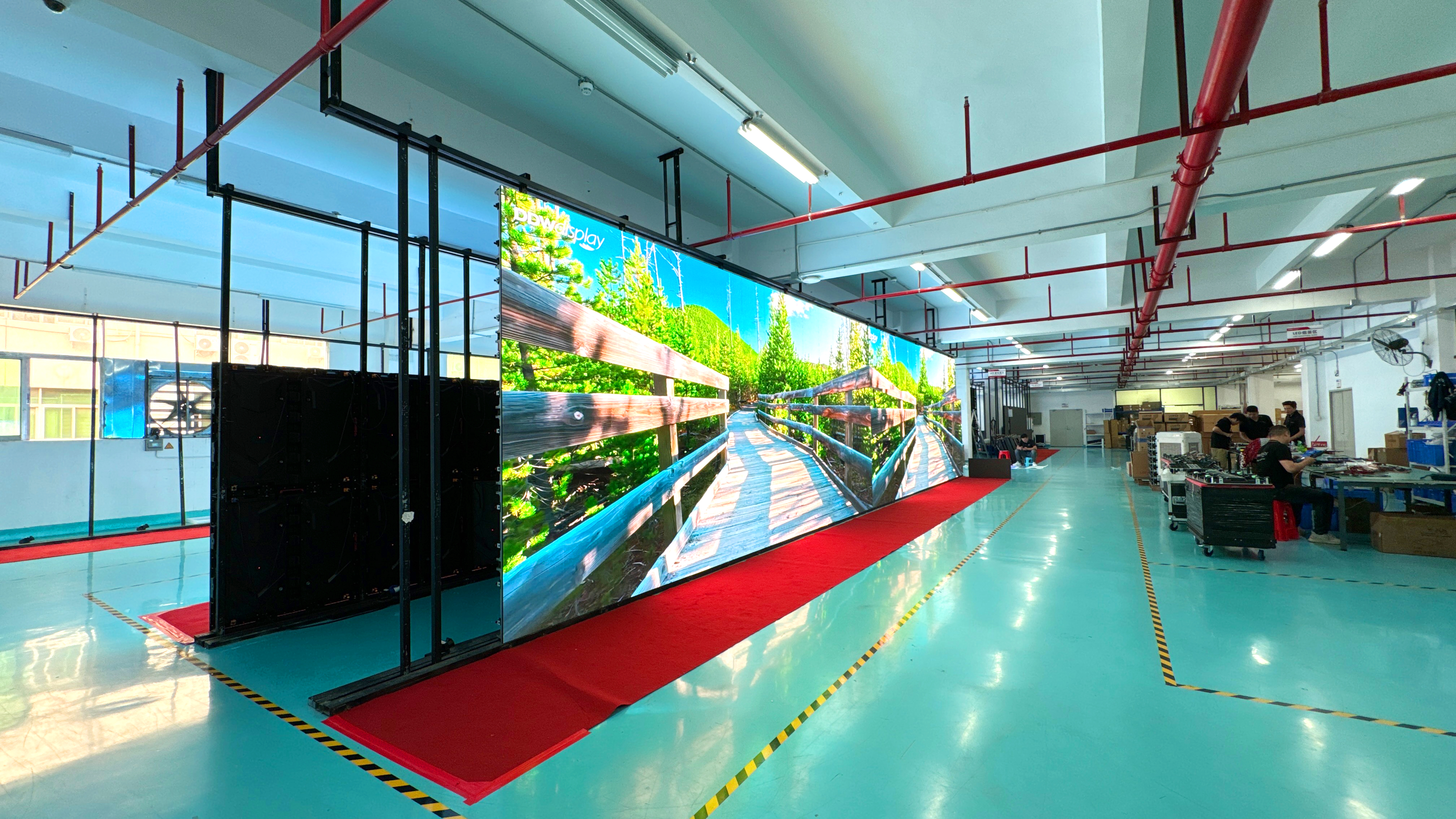
An event brief rarely arrives as a model number. It arrives as a stage plan: a wide upstage wall, a long throw to the back row, a two-camera live feed, an outdoor load-in, and a curved scenic surround on the wings. The rental company then has to translate that plan into a cabinet platform it will own for years and redeploy across dozens of different shows.
Four variables decide which rental LED series fits:
- Viewing distance sets the pixel pitch. Closer audiences need tighter pitch; longer throws can use a larger pitch without visible loss at the back row.
- Camera capture sets the refresh rate. Screens that appear in broadcast, IMAG, or recorded video need high refresh performance to behave correctly on camera.
- Stage geometry decides whether a flat cabinet platform is sufficient or whether a flexible cabinet is required.
- Environment and handling decide the protection rating and how much cabinet weight and cabinet count the crew handles at every load-in and load-out.
Pixel pitch is the parameter most often mis-specified in both directions. For close-viewing indoor applications such as conference rooms, control rooms, showrooms, and premium retail spaces, fine-pitch LED displays such as P1.25, P1.53, and P1.86 are generally considered more suitable. For stages, exhibitions, events, and medium-distance viewing, P2.6 to P3.91 configurations are commonly considered. Outdoor screens viewed from longer distances can use larger pixel pitches depending on screen size, brightness requirements, and viewing distance. A smaller pixel pitch provides higher pixel density and better close-range image detail, but it usually increases project cost — so the correct pitch is the one that matches the actual viewing distance, not simply the smallest pitch available.
That is why this comparison is organized around series fit rather than around a single “best” specification.
Rental LED Display Market Context: What Buyers Should Keep in Mind
Published LED display market figures vary widely because the definitions behind them differ. Mordor Intelligence projects the global LED display market at USD 20.73 billion in 2026, growing to USD 26.98 billion by 2031. For the rental segment specifically, figures cited through a secondary source put the 2020 value at approximately USD 5 billion with a forecast to exceed USD 8 billion by 2027. These two numbers are not directly comparable — sources indicate the gap is likely a definition difference between total large-format LED and direct-view LED signage — so they should be read as market direction rather than as procurement data.
The direction itself is consistent: rental capacity continues to expand, which means more rental companies are making repeat fleet purchases rather than one-off screen orders. In a rental fleet, the recurring cost is not the LED lamp alone — it is the cabinet, the structure, and the labor hours spent building and striking the same wall hundreds of times.
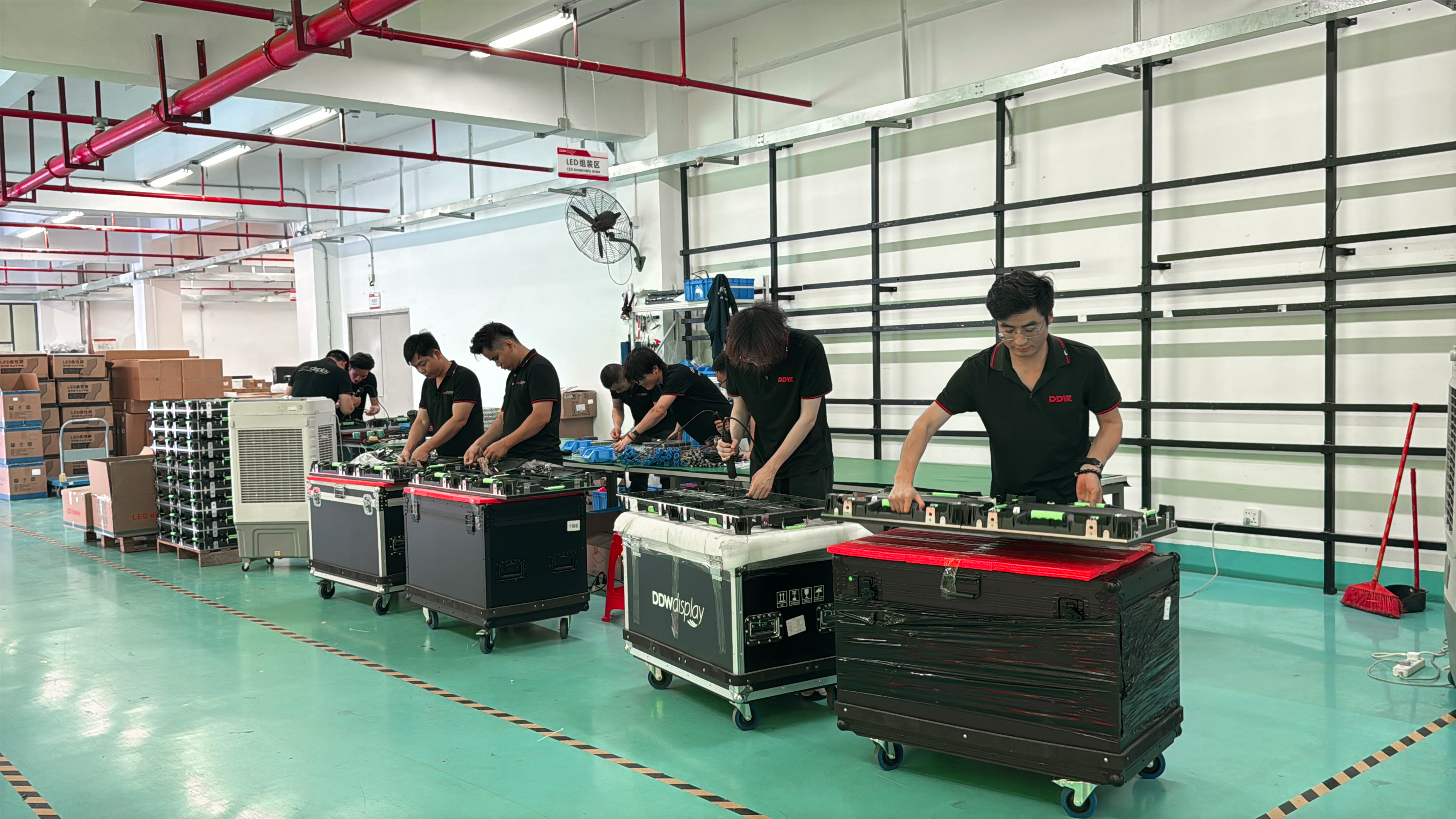
This is where cabinet material stops being a detail. Compared with traditional welded iron cabinets, die-cast aluminum cabinets provide lighter weight, higher structural precision, and better cabinet flatness, which supports easier handling and more accurate screen alignment. Die-cast aluminum cabinets generally have a higher initial manufacturing cost than conventional iron cabinets, but their lightweight and precision structure can help reduce handling, transportation, installation, and repeated-deployment costs over the life of the fleet. Aluminum also has better thermal conductivity than iron, which supports more efficient heat dissipation during long operation.
Rental LED displays are also designed for a different working rhythm than fixed installations. Rental cabinets prioritize frequent assembly, dismantling, transportation, and reconfiguration using lightweight cabinets and quick-lock systems, plus fast module replacement and repeated maintenance between events. Fixed LED displays prioritize long-term stability and permanent installation. A stage LED video wall that tours is therefore judged on build speed, repeatability, and serviceability — not only on image specification.
Refresh rate is the last piece of background that matters for stage work. Standard LED display configurations are commonly specified at approximately 1920–3840Hz, while selected DDW professional LED display configurations support refresh rates up to 7680Hz — up to 2–4× higher refresh performance. That difference is most relevant for concerts, live broadcasting, exhibitions, stage events, XR virtual production, studios, and other camera-facing LED applications.
D Series, A Series and AFLEX: How the Three Rental LED Lines Differ
All three lines are rental LED displays with die-cast aluminum cabinets, a 500 × 500 mm cabinet format, front and rear maintenance, and hanging and stacking installation. The meaningful differences are in pixel pitch range, refresh rate, cabinet format, brightness, protection rating, and curvature.
D Series — the high-refresh flat rental platform
The D Series is an indoor and outdoor rental LED screen for stage LED video wall and event LED screen applications. Its headline capability is refresh performance: selected DDW professional configurations support refresh rates up to 7680Hz, which is the highest of the three lines compared here.
- Pixel pitch options: P1.56, P1.95, P2.604, P2.97, P3.91
- Cabinet size: 500 × 500 mm, die-casting aluminum
- Refresh rate: up to 7680Hz
- Brightness: up to 5000 nits (outdoor version)
- Viewing angle: H160° / V140°
- Protection rating: IP65 (outdoor version)
- Maintenance: front and rear maintenance
- Installation: hanging and stacking installation
Where it fits: productions where the screen is seen through a camera or where the widest pitch range is needed. The D Series pitch range starts at P1.56, which covers fine-pitch rental work as well as P2.6–P3.91 stage and event configurations. This product is positioned for concerts, live broadcasting, exhibitions, stage events, XR virtual production, studios, and camera-facing LED applications.
A Series — the mixed-format fleet platform
The A Series is also an indoor and outdoor rental LED screen, but it is built around a wider cabinet choice: 500 × 500 mm and 500 × 1000 mm in the same line. That matters for rental logistics, because a 500 × 1000 mm cabinet covers the same area as two 500 × 500 mm cabinets, which changes cabinet count, handling, and build sequence for large walls.
- Pixel pitch options: P2.5, P2.604, P2.97, P3.91
- Cabinet size: 500 × 500 mm / 500 × 1000 mm, die-casting aluminum
- Refresh rate: up to 3840Hz
- Brightness: up to 4500–5000 nits (outdoor version)
- Viewing angle: H160° / V140°
- Protection rating: IP65 (front and rear)
- Maintenance: front and rear maintenance
- Installation: hanging and stacking installation
Where it fits: stage events, concerts, festivals, sports events, exhibitions, conferences, broadcasting, and outdoor events where a rental company wants one platform that scales from medium indoor walls to large outdoor builds. The A Series pitch range begins at P2.5, which aligns with the medium-distance viewing band commonly used for stages, exhibitions, and events.
AFLEX Series — the flexible platform for curved stage structures
The AFLEX Series is an ultra-flexible rental LED screen and curved rental LED display. It shares the 500 × 500 mm cabinet format and the die-cast aluminum cabinet material, but its module structure — 250 × 250 mm modules — is what allows it to follow curved surfaces. Cabinet weight is 7.5 kg for the 500 × 500 mm cabinet.
- Pixel pitch options: P1.56, P1.95, P2.604, P2.976, P3.91
- Cabinet size: 500 × 500 mm; module size: 250 × 250 mm
- Cabinet weight: 7.5 kg (500 × 500 mm)
- Refresh rate: 3840Hz; gray scale: 14 bit
- Brightness: 700 nits (indoor) / 4200–5000 nits (outdoor)
- Viewing angle: H160° / V140°
- Protection rating: IP31 (indoor) / IP65 (outdoor)
- Installation: hanging and stacking installation
Where it fits: concerts, stage events, music festivals, churches, exhibitions, press conferences, sports events, virtual production, and creative event displays. Flexible LED displays can adapt to curved and irregular installation surfaces, supporting inner curves, outer curves, cylindrical screens, columns, S-shaped structures, and other creative configurations that conventional flat LED displays cannot easily achieve. The actual bending radius, curvature range, and supported shapes depend on the specific flexible LED product and module structure.
Two practical notes on the AFLEX Series. First, flexible LED displays generally have a higher initial cost than standard flat LED displays because of their flexible module structure and customized installation requirements — flat LED displays are typically more cost-effective for conventional rectangular screen projects. Second, flexible installation places greater demands on supporting structure accuracy, curvature, module alignment, and installation conditions, even though modular flexible designs can simplify replacement of individual modules.
Compliance note for outdoor builds: the AFLEX Series indoor version is rated IP31, while the AFLEX outdoor version is rated IP65. The D Series outdoor version is IP65, and the A Series is IP65 on both front and rear. If a stage is outdoors, semi-outdoor, or exposed to rain and humidity, specify the outdoor-rated version of the series rather than the indoor version.
Step-by-Step: Selecting a Rental LED Screen Series for a Stage Project
The following sequence turns a stage plan into a series decision. It can be applied to any rental LED display procurement where multiple cabinet platforms are available.
Step 1 — Classify the environment: indoor, outdoor, or exposed
Start with the venue, not the screen. An indoor stage, a covered arena, and an open-air festival stage have different protection requirements. For outdoor projects, choose an LED display with an appropriate IP protection rating and a waterproof cabinet and module structure. Water ingress and moisture may cause electrical faults, corrosion, short circuits, LED module failure, power supply damage, or unstable display performance, and those risks increase during heavy rain, high humidity, poor drainage, or when waterproof seals and cable connections are damaged. Installation quality, cable sealing, drainage, ventilation, and regular inspection matter as much as the rating on the datasheet.
Step 2 — Set the pixel pitch from the viewing distance
Work backwards from the furthest audience position and the closest camera position, not from the pitch list. For medium-distance stage and event viewing, P2.6 to P3.91 configurations are commonly considered; for close-viewing indoor work, tighter pitch is generally more suitable. Within the three rental series, P1.56 and P1.95 cover the fine-pitch end, P2.5 and P2.604 sit in the middle, and P2.97 to P3.91 serve stage, event, and longer-distance outdoor viewing.
Step 3 — Decide whether the screen is camera-facing
If the screen appears in a broadcast feed, an IMAG cut, a livestream, or a recorded film, refresh rate becomes a primary requirement rather than a secondary one. Standard LED display configurations are commonly specified at approximately 1920–3840Hz, while selected DDW professional configurations support up to 7680Hz. In this comparison, the D Series is the only line specified above 3840Hz, with refresh rates up to 7680Hz.
Step 4 — Check the stage geometry
Flat walls, box truss fronts, and standard side screens are served by flat cabinet platforms. Curved scenic surrounds, cylindrical columns, S-shaped structures, and organic stage shapes require a flexible platform, because conventional flat LED displays cannot easily achieve those configurations. If the design includes any authored curve, the AFLEX Series is the relevant option among the three lines.
Step 5 — Match the cabinet format to transport and build logistics
Cabinet format affects every load-in. The D Series and AFLEX Series use 500 × 500 mm cabinets; the A Series offers 500 × 500 mm and 500 × 1000 mm. A 500 × 1000 mm cabinet covers the area of two 500 × 500 mm cabinets, which reduces cabinet count on large walls and changes how a crew stages, handles, and strips the screen. Rental companies with mixed indoor and outdoor work often evaluate the dual-format A Series for exactly this reason.
Step 6 — Confirm protection, maintenance access, and pre-shipment verification
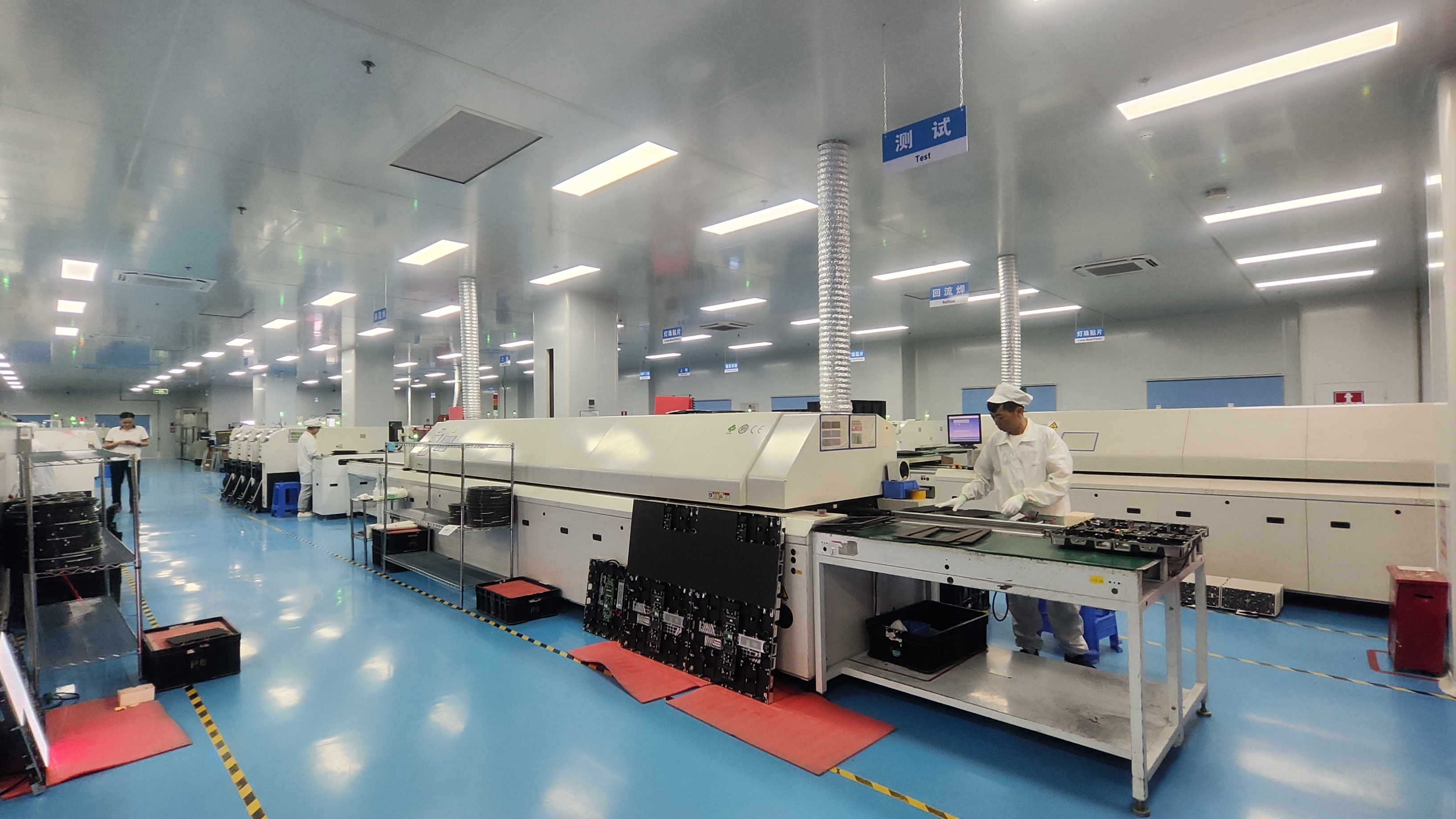
Confirm three things before the order: the protection rating that matches the environment, whether maintenance is front, rear, or both, and how the manufacturer verifies the product before shipment. Front and rear maintenance are specified for both the D Series and the A Series. DDW applies 100% pre-shipment inspection and offers project-specific configurations — including refresh rates of ≥3840Hz or ≥7680Hz, outdoor protection up to IP65, and brightness configurations from approximately 600–1,500 nits for indoor applications up to 5,000–10,000 nits for selected outdoor solutions — rather than a single one-size-fits-all configuration.
Use Cases: Which Rental LED Series Fits Which Stage Event
The same three series map onto common stage scenarios in a fairly consistent way. The list below is organized by the constraint that dominates each event type.
- Touring concert with live camera cut and IMAG: D Series. High refresh performance up to 7680Hz is specified for camera-facing applications such as concerts and live broadcasting.
- Outdoor festival main stage at long viewing distance: A Series, using the 500 × 1000 mm cabinet to reduce cabinet count on a large wall, with IP65 front and rear for weather exposure. D Series is an alternative where the highest refresh is also required.
- Curved scenic backdrop or cylindrical stage columns: AFLEX Series. Flexible modules support inner curves, outer curves, cylindrical screens, columns, and S-shaped structures.
- Church or press conference with an authored curved stage design: AFLEX Series, in the version whose protection rating matches the indoor or outdoor venue.
- Exhibition booth walls reconfigured at every show: D Series or A Series, depending on whether the priority is fine pitch or mixed cabinet formats for large, repeatable builds.
- Broadcast studio or virtual production volume: D Series, where refresh performance is critical because the screen is filmed continuously.
- Sports event and perimeter-adjacent stage programming: A Series for large outdoor surfaces, D Series where camera-facing performance is the deciding factor.
- Mixed-fleet rental operator covering indoor ballrooms and outdoor stages: A Series as the workhorse format, plus AFLEX Series for curved and creative briefs that a flat platform cannot deliver.
Rental LED Screen Comparison Table: D Series vs. A Series vs. AFLEX
The table below compares the three DDW rental LED lines using published product specifications only. Where a parameter is not stated in the published product data, it is marked accordingly rather than estimated.
| Parameter | D Series | A Series | AFLEX Series |
|---|---|---|---|
| Product type | Indoor & outdoor rental LED screen | Indoor & outdoor rental LED screen | Ultra flexible rental LED screen / curved rental LED display |
| Pixel pitch options | P1.56, P1.95, P2.604, P2.97, P3.91 | P2.5, P2.604, P2.97, P3.91 | P1.56, P1.95, P2.604, P2.976, P3.91 |
| Cabinet size | 500 × 500 mm | 500 × 500 mm / 500 × 1000 mm | 500 × 500 mm |
| Module size | Not stated in published product data | Not stated in published product data | 250 × 250 mm |
| Cabinet material | Die-casting aluminum | Die-casting aluminum | Die-casting aluminum |
| Cabinet weight | Not stated in published product data | Not stated in published product data | 7.5 kg (500 × 500 mm) |
| Refresh rate | Up to 7680Hz | Up to 3840Hz | 3840Hz |
| Brightness | Up to 5000 nits (outdoor version) | Up to 4500–5000 nits (outdoor version) | 700 nits (indoor) / 4200–5000 nits (outdoor) |
| Gray scale | Not stated in published product data | Not stated in published product data | 14 bit |
| Viewing angle | H160° / V140° | H160° / V140° | H160° / V140° |
| Protection rating | IP65 (outdoor version) | IP65 (front & rear) | IP31 (indoor) / IP65 (outdoor) |
| Maintenance | Front & rear maintenance | Front & rear maintenance | Not stated in published product data |
| Installation | Hanging & stacking | Hanging & stacking | Hanging & stacking |
| Curved / creative capability | Not specified as a flexible series | Not specified as a flexible series | Flexible modules for curved, cylindrical, S-shaped and creative structures |
| Best-fit stage work | Camera-facing concerts, live broadcasting, studios, XR virtual production | Large stage and outdoor builds, festivals, sports events, exhibitions, conferences | Curved stage sets, music festivals, churches, press conferences, creative displays |
FAQ: Choosing a Rental LED Screen for Stage Events
1. What IP rating does a rental LED screen need for outdoor stage events?
Use the outdoor-rated version of the series you choose. In DDW's rental range, the D Series outdoor version carries IP65, the A Series carries IP65 on both front and rear, and the AFLEX Series is IP31 indoors and IP65 outdoors. Outdoor operation adds risks that indoor use does not: water ingress and moisture can cause electrical faults, corrosion, short circuits, module failure, power supply damage, or unstable display performance, especially in heavy rain, high humidity, poor drainage, or where seals and cable connections are damaged. Mitigation is not only about the rating — it also depends on cabinet sealing, cable protection, drainage, correct installation, waterproof and pre-shipment inspection, and regular checks of seals, connectors, modules, power supplies, and drainage paths.
2. Which rental LED series supports the highest refresh rate for camera-facing stage content?
The D Series, at up to 7680Hz. The A Series is specified at up to 3840Hz and the AFLEX Series at 3840Hz. For context, standard LED display configurations are commonly specified at approximately 1920–3840Hz, so selected DDW professional configurations represent up to 2–4× higher refresh performance. Refresh rate matters most where the screen is captured by professional cameras — concerts, live broadcasting, exhibitions, stage events, XR virtual production, and studios.
3. Which rental LED screen series is the better choice for concert tours — D Series, A Series or AFLEX?
It depends on which constraint dominates the tour. If the show is filmed and the screen is flat, the D Series is the highest-refresh option at up to 7680Hz and is specified for concerts and live broadcasting. If the tour carries a large outdoor main stage and the crew benefits from fewer, larger cabinets, the A Series offers 500 × 500 mm and 500 × 1000 mm formats with IP65 front and rear. If the stage design includes curves, columns, or S-shaped structures, the AFLEX Series is the flexible option, since flexible LED modules can form curved configurations that conventional flat displays cannot easily achieve. All three are die-cast aluminum rental cabinets with hanging and stacking installation, so the deciding factors are refresh, format, and geometry rather than cabinet material.
4. Do die-cast aluminum rental LED cabinets cost more, and how does that affect fleet economics?
Yes — die-cast aluminum cabinets generally have a higher initial manufacturing cost than conventional iron cabinets. The trade-off is that their lightweight and precision structure can help reduce handling, transportation, installation, and repeated-deployment costs, and higher structural precision supports easier alignment and repeated assembly. Aluminum also has better thermal conductivity than iron, which supports more efficient heat dissipation during long operation. For a rental fleet that builds and strikes the same wall repeatedly, the relevant comparison is total deployment cost across the fleet's life, not the initial cabinet price alone.
5. How can a rental company validate the right rental LED series before ordering a fleet?
Define the event profile first — environment, viewing distance, camera use, stage geometry, and cabinet format — and then ask for a configuration matched to those conditions. DDW provides project-specific configurations rather than a one-configuration solution, adjusting pixel pitch, brightness, refresh rate, protection level, cabinet structure, installation method, and maintenance access to the actual application, with 100% pre-shipment inspection before delivery. Rental and event buyers can review the specification set for the D Series, A Series and AFLEX Series, then request a quotation or a sample configuration matched to a specific tour or venue by contacting DDW DISPLAY at info@ddw.net or via WhatsApp at +86 134 1755 8100. The full DDW LED display catalog is available for download below.
Conclusion: Match the Series to the Show, Not the Show to the Series
The D Series, the A Series, and the AFLEX Series are three answers to three different stage problems. The D Series is the high-refresh, wide-pitch rental LED screen for flat screens that are filmed or broadcast, with refresh rates up to 7680Hz, IP65 outdoor protection, and 500 × 500 mm die-cast aluminum cabinets. The A Series is the mixed-format platform for large walls and mixed indoor/outdoor fleets, adding a 500 × 1000 mm cabinet with IP65 front and rear. The AFLEX Series is the flexible platform for curved, cylindrical, and creative stage structures, with 250 × 250 mm modules and a 7.5 kg cabinet.
Because all three share the same cabinet material, the same 500 × 500 mm format at their core, front and rear maintenance on the D and A Series, and hanging and stacking installation, the decision reduces to a short list of questions: Is the screen filmed? Is the wall flat or curved? Is the venue indoors or outdoors? How many cabinets does the crew want to handle at load-in? Answer those four questions and the series choice follows.
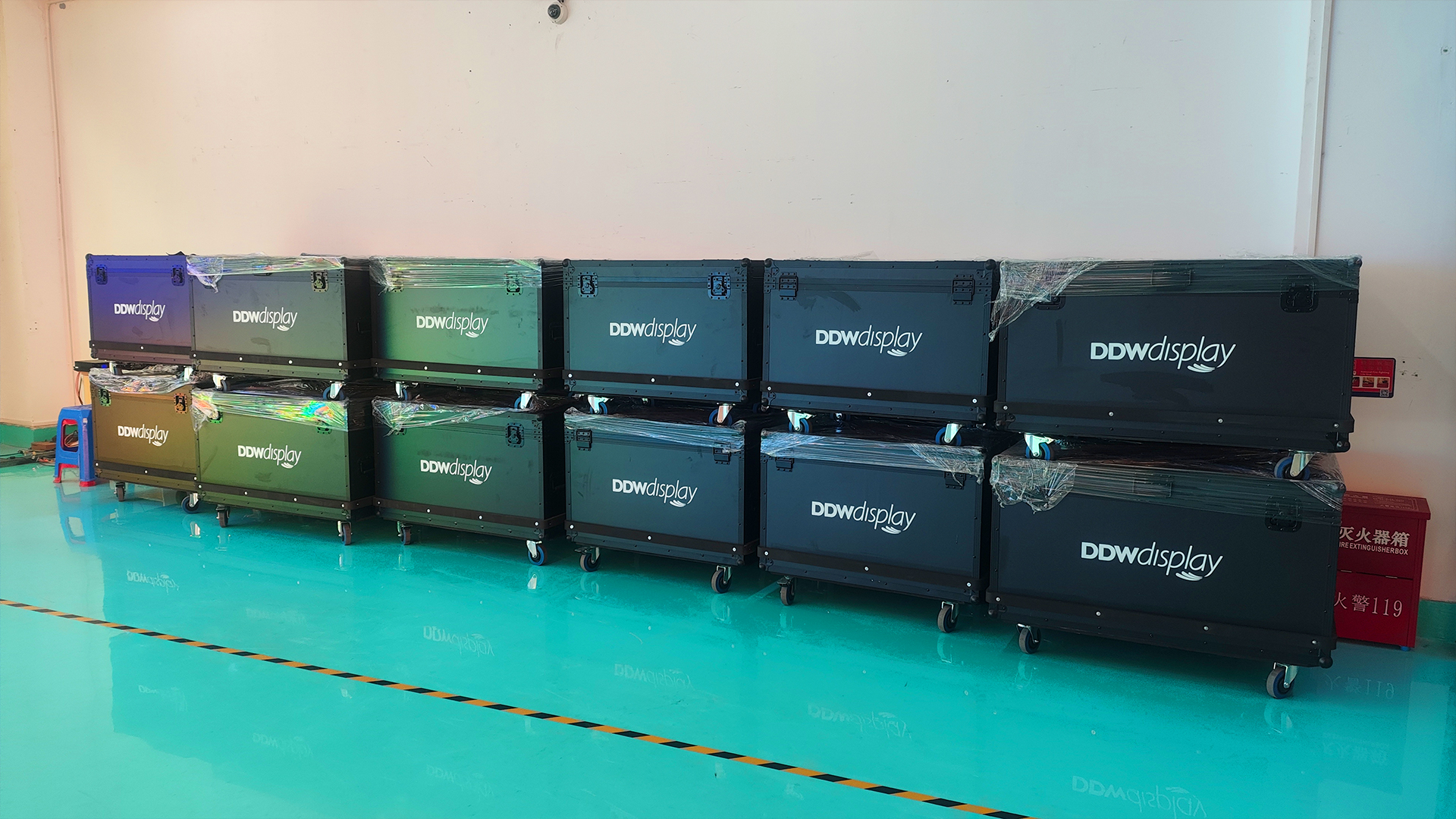
Next step: review the D Series, A Series and AFLEX Series specifications against your next tour or event, then request a configuration-matched quotation.
Download the DDW LED Display catalog 2026: DDW LED Display catalog 2026 (PDF)
Contact DDW DISPLAY (Shenzhen DDW Technology Co., Ltd.) — website: www.ddw.net | Email: info@ddw.net | WhatsApp / WeChat / Mobile: +86 134 1755 8100 | Factory: 2F Building 8, YiLisheng Industry Park, Fuyong, Baoan, Shenzhen, 518103.
Have Questions or Need More Details?
Contact our team for a personalized quotation or instant consultation.
Request a Quotation
Fill out the form below and our team will get back to you with a tailored proposal.
WhatsApp Direct Chat
Prefer to chat in real-time? Message us on WhatsApp for instant assistance & quick answers.
- Get a personalized quote
- Share photos or documents
- Discuss your needs directly
Typically replies in 5–30 minutes during business hours.