COB vs SMD Indoor Fine-Pitch LED Displays: A Buyer's Comparison Guide
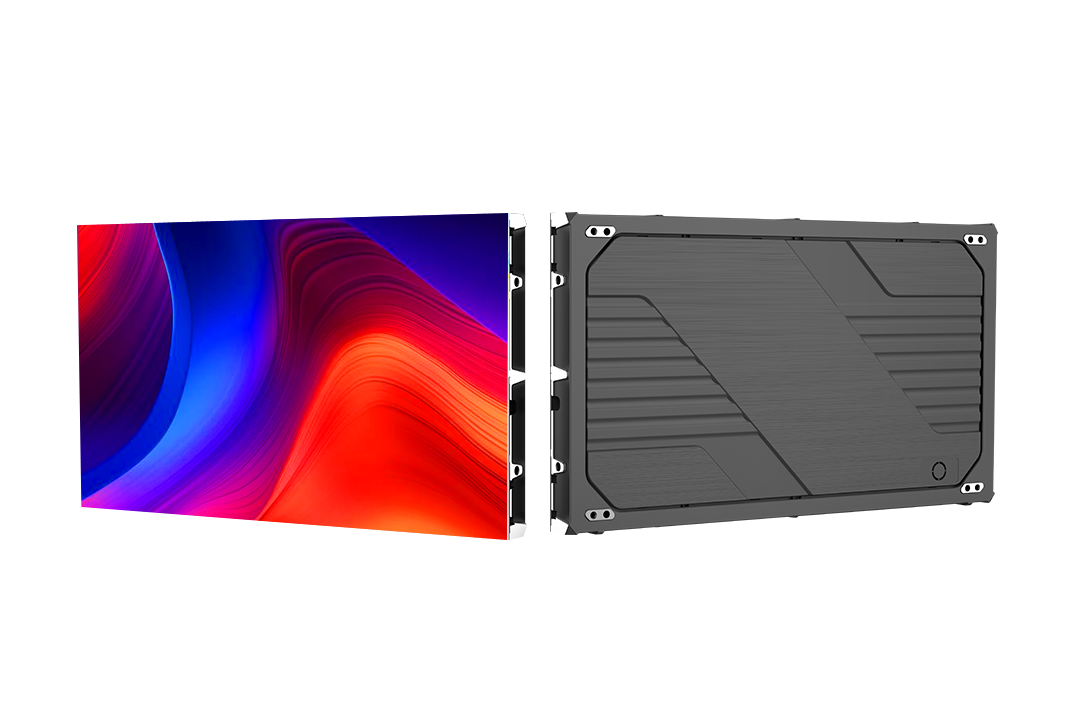
For indoor fine-pitch LED video walls, the COB-versus-SMD decision is about more than image quality. It determines how the LED is packaged, how the screen surface behaves when people work within a few meters of it, how the display is serviced, and how much power and heat the room has to absorb. DDW DISPLAY (Shenzhen DDW Technology Co.,Ltd.) manufactures both packaging paths: the Flip-Chip COB ECOB Series and KCOB Series, and the HK Series, which supports SMD, GOB and COB module configurations. This guide compares them using published product specifications and ends with selection criteria for control rooms, command centers, conference rooms and corporate environments.
The short answer: choose Flip-Chip COB when the wall is a long-duty, close-viewing, high-contact installation that must stay flat and serviceable from the front; choose an SMD or GOB configuration when the room is protected, the viewing distance is longer, and the project favors a proven package. The rest of this article explains why those conditions matter, which published specifications support them, and where each option stops being the right answer.
Problem Definition: What 'COB vs SMD' Actually Changes
COB (chip-on-board) packages the LED die directly onto the PCB and covers the surface with a protective layer. On the ECOB Series that surface is a matt COB treatment rated at 4H surface hardness, with IP54 protection on the PCB surface. SMD (surface-mount device) mounts individually packaged LED lamps onto the board. Both approaches can deliver fine-pitch indoor images, but they differ in surface behavior, packaging protection, assembly structure and the maintenance path a technician will follow on site.
That structural difference is what buyers are really choosing between. Packaging affects how the screen reacts to accidental contact, how it handles cleaning, how it behaves under ambient light, and how the modules are replaced years later. It is not a marketing label, and it should not be compared on terminology alone.
Four questions that decide the answer
- Viewing distance and required resolution. How close do viewers actually stand or sit? For close-viewing indoor applications such as conference rooms, control rooms, showrooms and premium retail spaces, fine-pitch classes such as P1.25, P1.53 and P1.86 are generally the working range. Stage, exhibition and event viewing at medium distance commonly works with P2.6 to P3.91. A smaller pixel pitch is not automatically better: it increases cost, LED count and driver channels per square meter, and it changes the power and thermal profile of the installation.
- Environment risk. Will people touch the wall, clean it, or move equipment past it? Is there dust, humidity or strong ambient light? These conditions favor different surface treatments and protection levels.
- Duty cycle. A control room may run 24/7 with fixed installation and centralized content management, while a meeting room may run several hours a day. Long-duty operation shifts attention to power consumption, heat dissipation and front maintenance.
- Service access. If the wall is mounted on a finished lobby or control room surface with no rear access, the maintenance design becomes a hard requirement rather than a preference.
What COB does not automatically solve
COB is a packaging choice, not a performance guarantee. Contrast ratio, brightness, refresh rate, grey level, color uniformity, cabinet flatness and power consumption are set by the complete design — LED chip, driver IC, PCB, power supply and cabinet structure. Two COB displays from different suppliers can behave very differently in the same room, so every claim should be checked against the model datasheet rather than the packaging label. DDW DISPLAY manufactures both COB and SMD fine-pitch products, which means a recommendation can follow the room instead of the catalog.
Industry Background: Why Indoor Fine-Pitch Packaging Is Being Reconsidered
The global LED display market is projected to reach USD 20.73 billion in 2026 and USD 26.98 billion by 2031 (Mordor Intelligence). Micro-LED, the chip and packaging direction that sits above fine-pitch COB, is forecast to grow at a CAGR of 77.4% between 2024 and 2030, reaching a projected USD 25.65 billion (Grand View Research). Indoor fine-pitch displays sit where these two curves meet: rooms still need today's reliable pitch values, while buyers increasingly evaluate the surface durability and contrast behavior associated with COB and Micro LED packaging.
A second shift is that packaging is becoming a menu rather than a single standard. The DDW KAIO Series all-in-one display ships with SMD, COB or MIP LED packaging options, and the ORBIT MIP Series uses Micro LED in Package with pixel pitches from P1.25 to P1.95 and a 7680 Hz refresh rate. For buyers, that means the question is no longer 'which technology is newer', but 'which packaging suits this room's duty cycle, viewing distance and service access'.
For importers, one practical detail sits alongside the technology discussion: LED displays are classified under HS code 852859 ('Monitors other than cathode-ray tube') in international trade data (UN Statistics Division). That classification is what to check when preparing duty calculations and customs documentation.
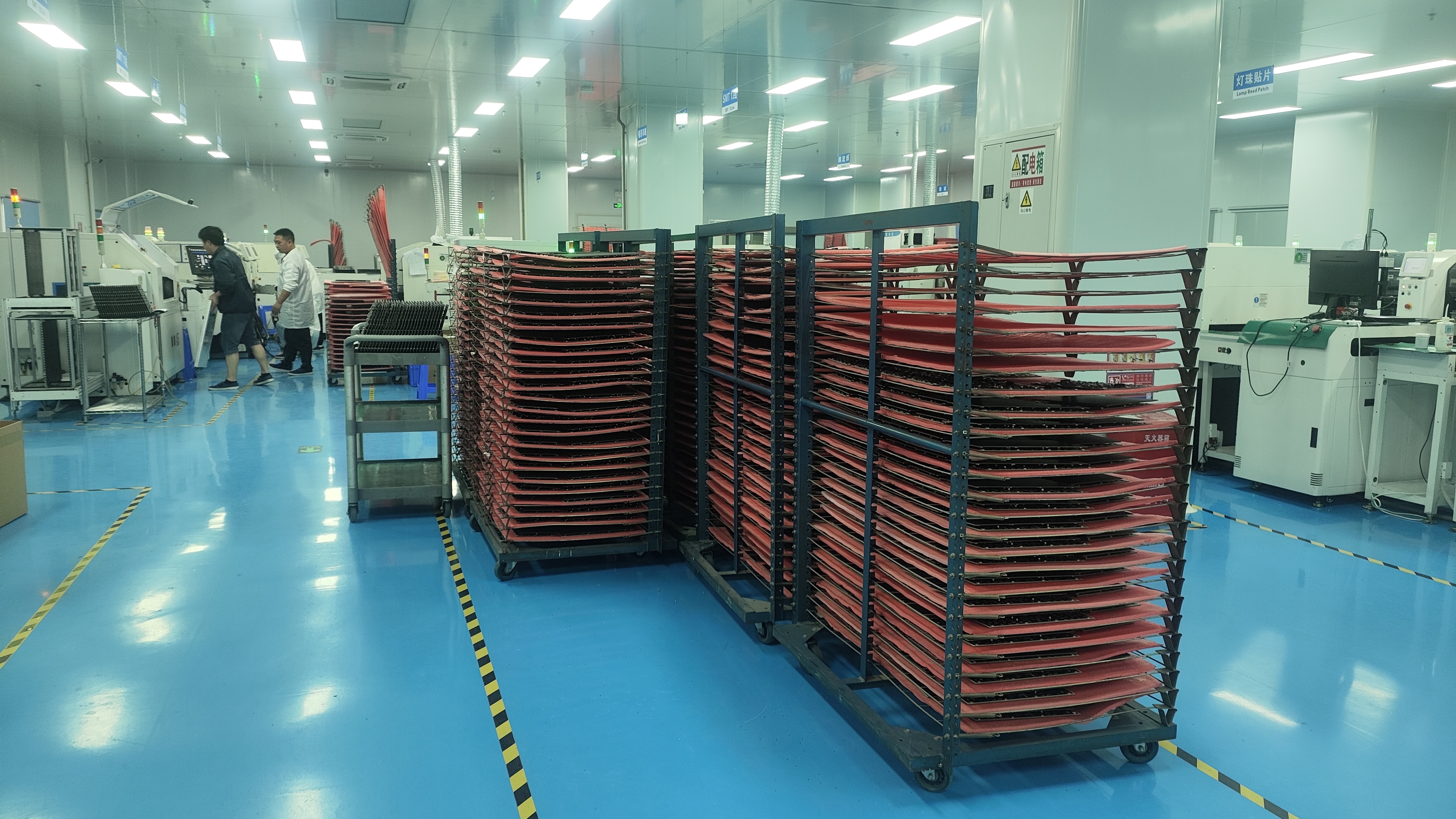
DDW DISPLAY is a Shenzhen-based LED display manufacturer founded in 2012, operating a 10,000 ㎡ facility with more than 100 employees, a 15-engineer R&D team and an annual output of more than 800,000 units. The company exports more than 95% of its production to North America, Europe, the Middle East, Asia-Pacific, Latin America and Africa, and has delivered projects in more than 120 countries and regions.
Detailed Solution: How DDW DISPLAY Implements COB and SMD Fine-Pitch
DDW DISPLAY builds three indoor fine-pitch families that matter for this comparison: two Flip-Chip COB platforms (ECOB and KCOB) and one multi-package platform (HK), which can be configured with SMD, GOB or COB modules. The specifications below are the published product data.
ECOB Series — Flip-Chip COB for close-viewing indoor walls
- Pixel pitch: P0.625 / P0.78 / P0.93 / P1.25 / P1.56 / P1.87
- LED chip: Flip Chip, with matt COB surface treatment
- Module size: 150 × 168.75 mm; panel size 600 × 337.5 × 39.5 mm or 600 × 675 × 39.5 mm
- Panel weight: 4 kg / 7.9 kg; die-cast aluminum cabinet
- Contrast ratio: 10,000:1; viewing angle 160° (H) / 160° (V)
- Brightness: 600 nits standard, 1000 nits optional; refresh rate 3840 Hz
- Surface hardness 4H; PCB surface protection IP54
- Circuit design: common cathode / common anode
- Maintenance: front service; input voltage AC 100–240 V, 50/60 Hz
- Lifetime at 50% brightness: 100,000 hours; operating temperature −10 °C to +40 °C
- Typical applications: corporate, control room, command center, conference & meeting, education, showroom, commercial display
For a buyer, the meaningful combination here is the matt COB surface with 4H hardness and IP54 PCB surface protection on one side, and front service with a common cathode/common anode circuit design on the other. The first group addresses rooms where the screen is touched, cleaned and lived with; the second group addresses installation and power strategy.
KCOB Series — 16:9 Flip-Chip COB for standard video formats
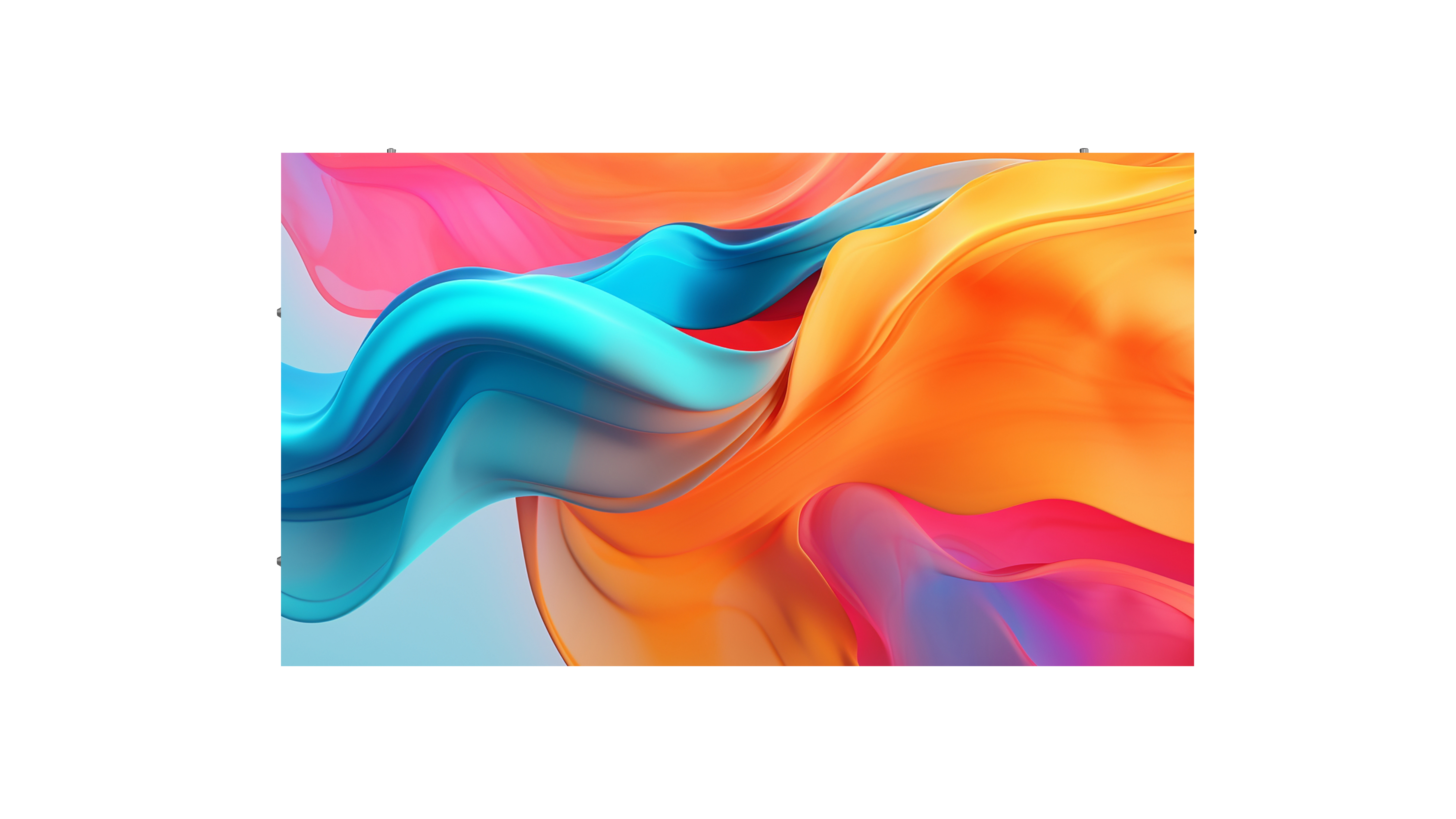
- Pixel pitch: P0.9375 / P1.25 / P1.5625
- Flip-Chip COB modules of 300 × 168.75 mm, four modules (2 × 2) per cabinet
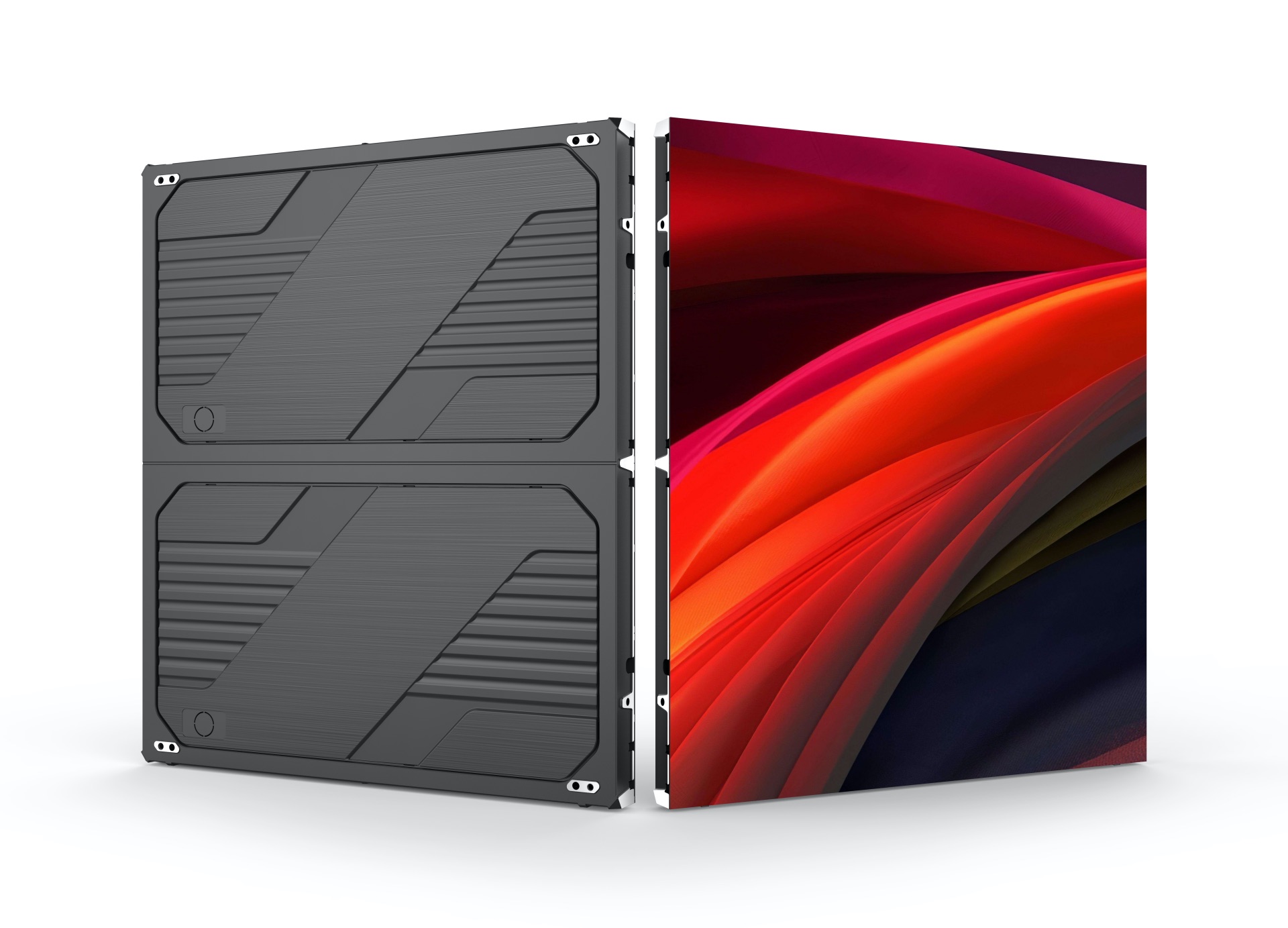
- Cabinet: 600 × 337.5 × 29.3 mm, 3.4 kg, die-cast aluminum
- Brightness 600 cd/m²; refresh rate 3840 Hz; 16-bit grey level
- Contrast ratio 15,000:1; brightness uniformity ≥97%; color uniformity ≤±0.003 Cx, Cy
- Color temperature 3000–10000 K adjustable; viewing angle 160° (H) / 160° (V)
- Power: maximum ≤360 W/m², average ≤120 W/m²
- Full front maintenance for LED modules, power supplies and receiving cards; input 100–240 VAC ±10%
The 600 × 337.5 mm cabinet is a standard 16:9 building block, which is why it supports Full HD, 2K, 4K and larger LED video wall configurations without custom cabinet sizes. The 29.3 mm cabinet depth and 3.4 kg weight reduce structural load, the built-in hook quick lock speeds alignment, and the average power figure of ≤120 W/m² is directly relevant to rooms that run many hours per day.
HK Series — SMD, GOB or COB modules in one cabinet platform
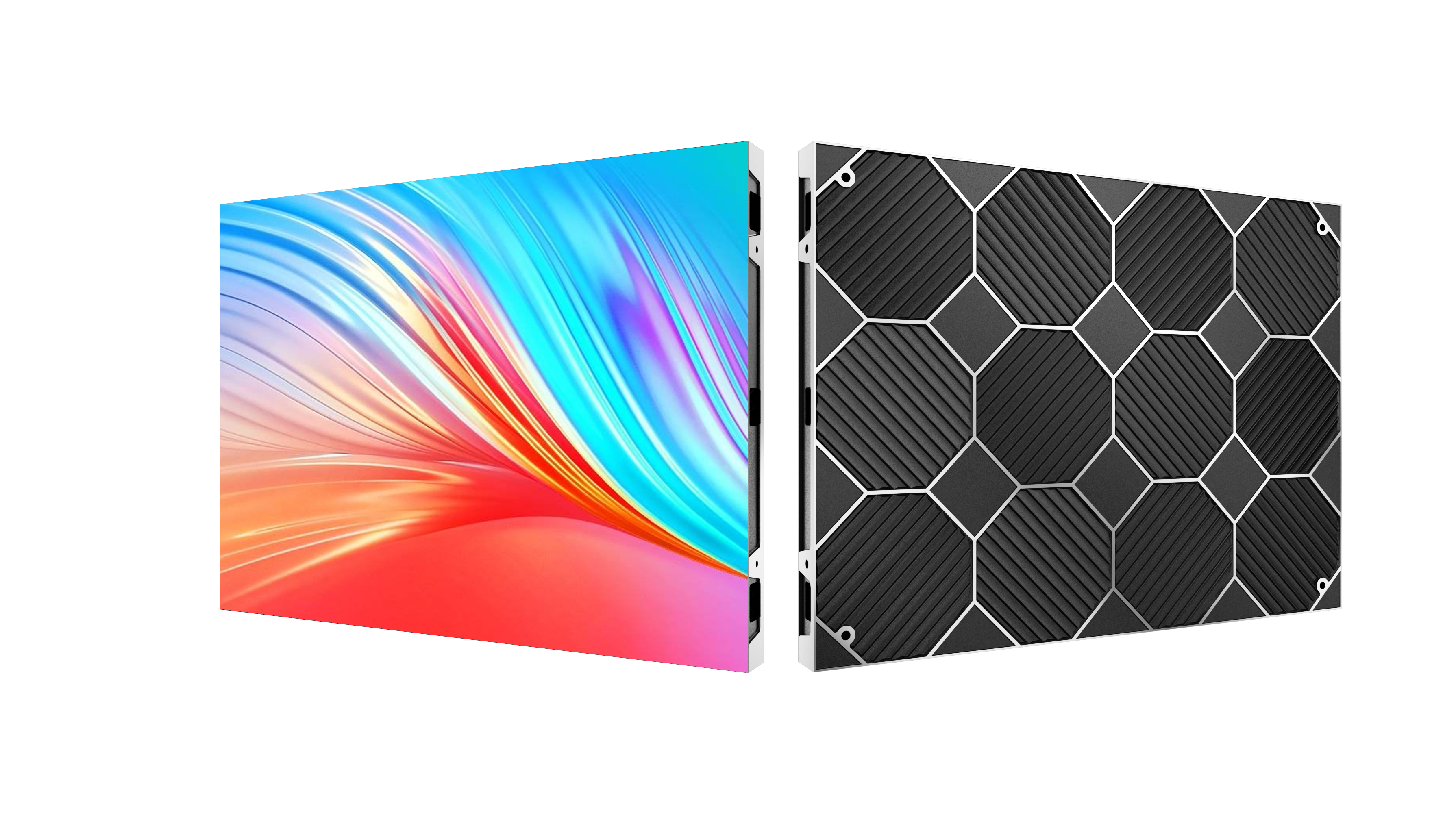
- Pixel pitch: P1.25 / P1.53 / P1.86 / P2 / P2.5
- Module options: SMD, GOB or COB configuration
- Module size 320 × 160 mm; cabinet 640 × 480 mm, 6.5 kg
- Cabinet flatness ≤0.1 mm; full front access maintenance
- Brightness 300–600 cd/m² adjustable; contrast ratio up to 8,000:1
- Refresh rate ≥3840 Hz; color depth 14–16 bit; color temperature 2000 K–9500 K adjustable
- IP rating IP45; input AC 110–240 V, 50–60 Hz
- Power: maximum ≤600 W/m², average 160–265 W/m²
- Supports 90° right-angle cabinets; wall-mounted, hanging, vertical and mobile bracket installation
This is the platform that makes an honest COB versus SMD comparison possible inside a single supply chain: the same cabinet, the same control ecosystem and the same installation method, with the packaging layer as the variable. A buyer can therefore test whether the room actually needs COB protection, or whether an SMD or GOB configuration is the more efficient fit for the budget and environment.
Related packaging options in the same portfolio
- QDCOB Series: Quantum Dot COB indoor fine-pitch display, pixel pitch P0.78 / P0.9375 / P1.25 / P1.5625, module-level COB integrated packaging, front maintenance and a 180° wide viewing experience.
- KAIO Series all-in-one: 108 / 135 / 162 inch smart LED display at 1920 × 1080, available with SMD, COB or MIP LED packaging, Android 12.0, 16 GB RAM, 256 GB storage, 2 × 18 W speakers and a 29.5 mm body.
- ORBIT MIP Series: Micro LED in Package XR display, pixel pitch P1.25–P1.95, 7680 Hz refresh rate, 3000–4000 cd/m² brightness, 8 kg 500 × 500 mm die-casting aluminum cabinet.
Step-by-Step: How to Choose Between COB and SMD for a Specific Room
- Define viewing distance and required resolution first. Fix the closest viewer position and the content type (data, video conference, broadcast, brand content). Close-viewing corporate and control room work typically lands in the P1.25–P1.86 range, while exhibition, stage and medium-distance applications commonly sit between P2.6 and P3.91.
- Match packaging to environment risk. High-contact, frequently cleaned or dust-exposed walls favor the matt COB surface, 4H hardness and IP54 PCB protection of the ECOB Series, or the flip-chip COB modules of the KCOB Series. Protected, longer-distance rooms can consider SMD or GOB modules within the HK Series.
- Check cabinet geometry, weight and wall structure. The KCOB 600 × 337.5 × 29.3 mm cabinet weighs 3.4 kg, the ECOB panel is 4 kg or 7.9 kg, and the HK Series cabinet is 640 × 480 mm at 6.5 kg. These numbers determine steelwork, wall reinforcement and whether the site can be serviced from the front.
- Confirm the power and thermal budget. Compare average and maximum consumption rather than brightness alone: KCOB runs at ≤120 W/m² average and ≤360 W/m² maximum, while HK Series runs at 160–265 W/m² average and ≤600 W/m² maximum. The ECOB Series supports common cathode or common anode circuit design, which gives two options for the powering strategy.
- Confirm the service path. ECOB uses front service, KCOB offers full front maintenance for modules, power supplies and receiving cards, and HK Series offers full front access. If the wall has no rear space, treat front maintenance as a mandatory specification.
- Verify compliance documentation for the destination market. Buyers commonly evaluate CE, FCC, RoHS, EMC and ETL depending on the destination market and product configuration; in the European market, CE and EMC are commonly considered, FCC relates to electromagnetic compatibility requirements in the United States, and RoHS addresses restrictions on certain hazardous substances. Confirm which certifications apply to the exact model and request the corresponding certificates or test reports. Also confirm the HS classification (852859) used for import documentation.
- Validate with a sample and pre-shipment quality control. DDW DISPLAY accepts a minimum order quantity of 1 unit on a project basis, with a standard lead time of 15–30 days for standard products; customized projects depend on product design, quantity and technical requirements. Every unit passes 100% product inspection, aging test, module testing, brightness and color calibration, waterproof test, power safety test and performance inspection before shipment.
Where Each Option Fits: Use Cases
Control rooms and command centers
This is the closest match for Flip-Chip COB. The indoor control and command scenario requires fine pixel pitch, high refresh rate, seamless splicing, high contrast ratio, wide viewing angle, accurate color reproduction, low brightness with high grayscale, quiet operation, efficient heat dissipation, front maintenance and stable long-term operation — usually in 24/7 operation with synchronized playback and real-time signal input. The ECOB Series addresses this with pixel pitch down to P0.625, a 10,000:1 contrast ratio, 3840 Hz refresh and front service; the KCOB Series adds 16:9 cabinet geometry, 15,000:1 contrast, ≥97% brightness uniformity and ≤120 W/m² average power for rooms where energy and heat are constrained.
Conference rooms and meeting spaces
Meeting rooms generally need standard video formats rather than the finest available pitch. The KCOB 600 × 337.5 mm cabinet builds Full HD, 2K and 4K walls without custom sizes, while the KAIO Series all-in-one display integrates a 108, 135 or 162 inch screen with Android 12.0, wireless screen sharing, whiteboard and recording functions, 16 GB RAM, 256 GB storage and 2 × 18 W built-in speakers — useful when the client wants a single-unit installation rather than a spliced wall.
Corporate showrooms, education and retail interiors
Spaces with changing ambient light benefit from adjustable output. The HK Series covers 300–600 cd/m² adjustable brightness and 2000 K–9500 K adjustable color temperature in the same cabinet family, and supports 90° right-angle cabinets for corner installations. For close-viewing showroom content, the QDCOB Series adds Quantum Dot COB packaging with 180° viewing.
Retail and brand environments (COB in the field)
COB packaging is already deployed in commercial interiors. A retail display client in Germany deployed 8 units of the PIF Series COB P1.538 foldable LED poster displays for commercial advertising, brand promotion, product presentation and event signage. In Oman, a retail store uses a 6 × 2 m FL Series P2 curved indoor LED display — a 12 ㎡ screen used for retail advertising, product promotion and in-store visual communication — in operation for 10 years.
Entertainment venues and cinema
Indoor fine-pitch is not limited to corporate rooms. A cinema in Albania installed a 30 ㎡ FU Series P2.604 indoor LED display with wall-mounted, fine-pitch technology for visual presentation and entertainment content, achieving excellent image clarity and vivid colors over 10 years of operation. A bar and entertainment venue in Canada uses an 8.5 × 1.75 m FU Series P1.95 GOB indoor LED display (approximately 14.88 ㎡) with GOB protection technology for promotional content and atmosphere, also operational for 10 years.
Live events and rental applications
When the screen must travel, the requirement set changes: outdoor and indoor rental displays are judged on fast installation and dismantling, lightweight cabinets, and high refresh rate for camera shooting, with temporary installation and repeated transport. DDW DISPLAY manufactures rental LED screens for these projects, including the D Series (P1.56–P3.91, refresh rate up to 7680 Hz, IP65 outdoor version, hanging and stacking installation), the A Series (P2.5–P3.91, 500 × 500 mm and 500 × 1000 mm die-casting aluminum cabinets), the AXIS One Series (P1.95 / P2.604, 7680 Hz, 16-bit grey level) and the AFLEX Series for curved concave and convex stage configurations. A 12 ㎡ A Series P3.91 indoor rental LED display was used as a 6 × 2 m stage backdrop in the Middle East for live performances and multimedia presentation.
Comparison Table: COB and SMD-Capable Indoor Fine-Pitch Specifications
The table below compares the COB platforms and the multi-package platform using only the specifications published for each DDW DISPLAY series. Blank cells mean the value is not published for that series — request the model datasheet before designing the wall.
| Parameter | ECOB Series (Flip-Chip COB) | KCOB Series (Flip-Chip COB) | HK Series (SMD / GOB / COB options) |
|---|---|---|---|
| Pixel pitch | P0.625 / P0.78 / P0.93 / P1.25 / P1.56 / P1.87 | P0.9375 / P1.25 / P1.5625 | P1.25 / P1.53 / P1.86 / P2 / P2.5 |
| LED packaging / surface | Flip Chip, matt COB surface treatment | Flip-Chip COB modules | SMD, GOB or COB module configuration |
| Contrast ratio | 10,000:1 | 15,000:1 | Up to 8,000:1 |
| Brightness | 600 nits standard / 1000 nits optional | 600 cd/m² | 300–600 cd/m² adjustable |
| Refresh rate | 3840 Hz | 3840 Hz | ≥3840 Hz |
| Grey level / color depth | Not published for this series | 16 bit | 14–16 bit |
| Cabinet size | 600 × 337.5 × 39.5 mm / 600 × 675 × 39.5 mm | 600 × 337.5 × 29.3 mm | 640 × 480 mm |
| Cabinet weight | 4 kg / 7.9 kg | 3.4 kg | 6.5 kg |
| Cabinet material | Die-cast aluminum | Die-cast aluminum | Aluminum profile |
| Cabinet flatness | Not published for this series | Not published for this series | ≤0.1 mm |
| Viewing angle | 160° (H) / 160° (V) | 160° (H) / 160° (V) | 160° / 160° |
| Surface / PCB protection | 4H surface hardness, IP54 PCB surface protection | Flip-Chip COB module structure | IP45 |
| Circuit design | Common cathode / common anode | Not published for this series | Not published for this series |
| Maintenance | Front service | Full front maintenance (modules, power supply, receiving card) | Full front access |
| Power consumption | Not published for this series | Max ≤360 W/m², average ≤120 W/m² | Max ≤600 W/m², average 160–265 W/m² |
| Operating temperature | −10 °C to +40 °C | Not published for this series | Not published for this series |
| Typical applications | Corporate, control room, command center, conference & meeting, education, showroom, commercial display | Corporate, control room, conference & meeting, education, showroom, command center, commercial display | Conference rooms, control rooms, corporate digital displays, commercial spaces, luxury retail & showrooms, education, hotels, exhibitions |
FAQ: COB vs SMD Indoor Fine-Pitch LED Displays
What certifications should I verify before ordering an indoor fine-pitch LED display?
The required certifications depend on the destination market, the product configuration and the project. For international LED display projects, buyers commonly evaluate CE, FCC, RoHS, EMC and ETL, plus additional electrical safety, fire resistance or environmental testing for certain projects. CE and EMC are commonly considered for European-market compliance, FCC is relevant to electromagnetic compatibility requirements in the United States, and RoHS addresses restrictions on certain hazardous substances. Before placing an order, confirm which certifications apply to the specific model and destination market and request the corresponding certificates or test reports. For control room, corporate and fixed-installation projects, certification should be reviewed together with product testing, aging tests, quality inspection, electrical safety and the manufacturer's quality-control capability.
Why is Flip-Chip COB often specified for control rooms and command centers?
Three practical reasons appear in the published data. First, surface protection: the ECOB Series uses a matt COB surface with 4H hardness and IP54 PCB surface protection, which suits rooms where the wall is part of daily operations. Second, image stability: ECOB is rated at a 10,000:1 contrast ratio, while KCOB reaches 15,000:1 with ≥97% brightness uniformity and color uniformity of ≤±0.003 Cx, Cy — relevant for data, maps and monitoring content. Third, service and duty cycle: both series use 3840 Hz refresh with front maintenance, and KCOB publishes an average power consumption of ≤120 W/m². Control room and command center scenarios commonly require fine pixel pitch, high refresh rate, seamless splicing, high contrast ratio, wide viewing angle, accurate color reproduction, low brightness with high grayscale, quiet operation, efficient heat dissipation, front maintenance and stable long-term operation.
Does DDW DISPLAY offer SMD options as well as COB, and does the company also manufacture rental LED displays for live events?
Yes on both counts. The HK Series supports SMD, GOB and COB module configurations within the same 640 × 480 mm cabinet platform, from P1.25 to P2.5, so packaging can be compared without changing supplier or control ecosystem. For live events, DDW DISPLAY manufactures rental LED screens including the D Series (P1.56–P3.91, refresh rate up to 7680 Hz, IP65 outdoor version), the A Series (P2.5–P3.91, 500 × 500 mm and 500 × 1000 mm cabinets), the AXIS One Series (P1.95 / P2.604, 7680 Hz, 16-bit) and the AFLEX Series for curved stage configurations. Rental products are designed for temporary installation, fast assembly and dismantling, lightweight cabinets and repeated transport, which is a different requirement set from a permanently installed fine-pitch wall.
What drives the cost difference between a COB and an SMD indoor fine-pitch display?
Cost follows the specification rather than the acronym. The main drivers are pixel pitch, since a smaller pitch means more LEDs and more driver channels per square meter; the LED packaging and protection process; cabinet material and mechanical precision; power supply and circuit design, including whether the cabinet uses a common cathode or common anode layout; refresh rate and grey-level requirements; brightness options such as 600 nits standard versus 1000 nits optional on the ECOB Series; and the maintenance design. Configuration and project quantity also affect commercial terms. Because DDW DISPLAY does not publish list prices, the practical approach is to fix the room requirements first, then request a quotation against a defined configuration so the comparison is like-for-like.
Can I validate a COB display with a sample before ordering, and what is the lead time?
DDW DISPLAY accepts a minimum order quantity of 1 unit on a project basis, so a sample or pilot unit can be ordered and evaluated before a full installation. The standard lead time is 15–30 days for standard products; customized projects depend on product design, quantity and technical requirements. Every unit passes 100% product inspection, aging test, module testing, brightness and color calibration, waterproof test, power safety test and performance inspection before shipment. To move forward, define the pixel pitch, cabinet configuration and service access, then request a sample or quotation — or download the DDW LED Display catalog 2026 for the full series list.
Conclusion: A Decision Rule for Your Next Indoor Fine-Pitch Project
Choose Flip-Chip COB (ECOB or KCOB) when the wall runs long hours in a room where people work close to it, when the surface will be touched or cleaned, when front-only service access is required, and when contrast and uniformity carry operational weight — control rooms, command centers and corporate operations spaces. Choose KCOB specifically when standard 16:9 geometry, 29.3 mm cabinet depth, 3.4 kg weight and ≤120 W/m² average power are the deciding factors.
Choose an SMD or GOB configuration (HK Series) when the room is protected, the viewing distance is longer, ambient light is controlled, and the project benefits from one cabinet platform that can also be configured with COB modules if requirements change. Choose the rental platforms when the screen must be transported repeatedly rather than permanently installed.
Every recommendation above is bounded by published data: verify the datasheet for the exact model, confirm certification for the destination market, and check the room's power, thermal and structural limits before ordering. Where a specification is not published, ask for it rather than assuming it.
Next step: send your room dimensions, closest viewing distance, duty cycle and service access to DDW DISPLAY for a configuration-based recommendation and quotation. Samples can be ordered from 1 unit, with a standard lead time of 15–30 days.
Website: www.ddw.net | Blog: blog.ddw.net | Catalog: DDW LED Display catalog 2026
Contact: Steven | WhatsApp / WeChat / Mobile: +86 134 1755 8100 | Email: info@ddw.net | Factory: 2F Building 8, YiLisheng Industry Park, Fuyong, Baoan, Shenzhen, 518103, China
Have Questions or Need More Details?
Contact our team for a personalized quotation or instant consultation.
Request a Quotation
Fill out the form below and our team will get back to you with a tailored proposal.
WhatsApp Direct Chat
Prefer to chat in real-time? Message us on WhatsApp for instant assistance & quick answers.
- Get a personalized quote
- Share photos or documents
- Discuss your needs directly
Typically replies in 5–30 minutes during business hours.