How to Verify CE, RoHS, and Front Maintenance Claims in LED Screen Imports
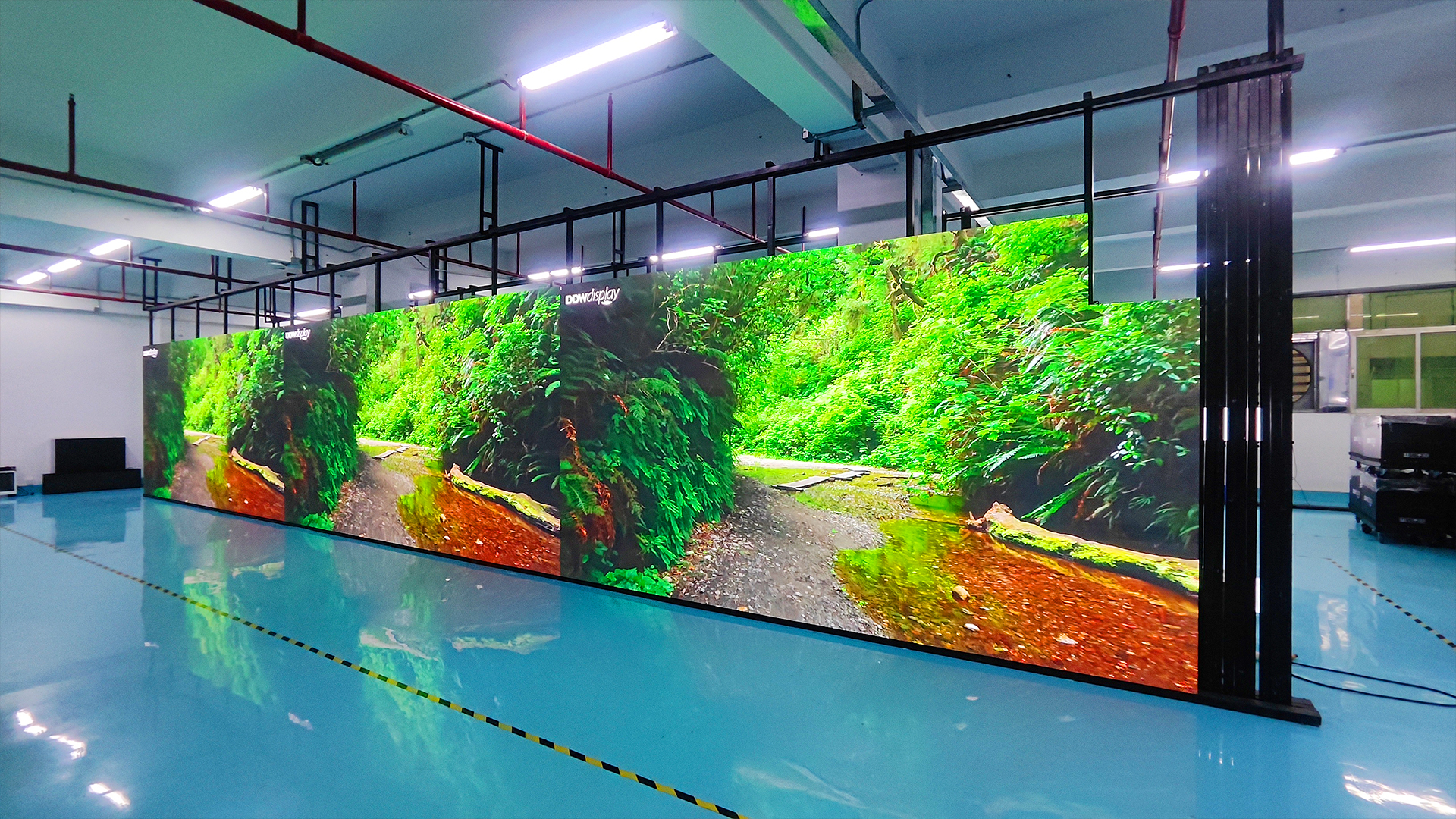
An LED screen import claim is verified when the same model number appears on the certificate, the quotation, the packing list, and the cabinet label — and when the design characteristics described in the technical documentation match the hardware in the crate. Everything else is a description, not evidence.
That single rule covers the three claims most likely to stall an LED display import: conformity with applicable market-access requirements (what buyers usually call “CE”), restriction of certain hazardous substances (usually called “RoHS”), and front maintenance capability. Each of the three is configuration-dependent, which means none of them can be confirmed by reading a catalog page.
Applicable European requirements are based on the product configuration and include applicable electrical safety, electromagnetic compatibility (EMC), and other conformity requirements. The manufacturer is expected to complete the required conformity assessment, maintain the relevant technical documentation, issue an EU Declaration of Conformity where applicable, and affix the CE marking in accordance with applicable EU legislation. Front maintenance is bound to configuration in the same way: it depends on cabinet structure, module fixation, and the service clearance the installation actually leaves behind.
This guide is written for importers, distributors, and project buyers at the decision stage — you have a shortlist, a specification sheet, and a payment schedule, and you need to know which documents and which product facts to cross-check before the deposit and before the balance.
Problem Definition: Why LED Display Compliance and Maintenance Claims Fail
Import disputes over LED display screens rarely hinge on whether a manufacturer can build a compliant product. They hinge on whether the buyer verified the specific configuration that was quoted, assessed, and shipped. Five failure modes account for most of them.
1. The certificate describes a family; the shipment is a variant
Series-level documentation is common because one series can span several pixel pitches and cabinet formats. A rental LED screen series may cover P1.95, P2.604, P2.97, and P3.91 models in the same 500 × 500 mm cabinet, and an outdoor LED screen series may cover P4 through P10 with different cabinet designs. Family coverage is only useful if the buyer confirms that the exact ordered variant sits inside the assessed configuration. When the driver IC, power supply, LED package, cabinet material, or protection rating changes, the variant may fall outside the family description. Because project-specific solutions are built by matching pixel pitch, brightness, refresh rate, protection level, cabinet structure, installation method, and maintenance access to the application, variation inside a series is normal — which is exactly why the model number must be matched rather than assumed.
2. The sample configuration and the production configuration diverge
Modular LED architecture allows individual LED modules, power supplies, receiving cards, and other components to be replaced separately. That is a maintenance advantage and a documentation risk at the same time: if a component is substituted after the sample is approved, the assessed configuration may no longer describe what is shipped. The practical control is to name the approved component set in the purchase order and to require written confirmation that any substitution stays inside the assessed configuration.
3. A front maintenance claim meets a structure that blocks front access
Front maintenance is a design property, not a promise about installation. A front-service cabinet assumes that a technician can reach the modules from the viewing side. If the LED video wall is recessed into a niche, wrapped in architectural trim, or mounted with insufficient service clearance, the claim survives on paper and fails on site. The reverse error also happens: a fixed installation specified with rear service where no rear access exists.
4. Documentation arrives after the container
Certificates, test reports, and declarations requested after shipment turn a compliance question into a customs and cash-flow problem. Buyers who confirm which certifications apply to the specific LED display model and destination market — and who request the corresponding certificates or test reports from the manufacturer before ordering — keep that risk inside the negotiation instead of discovering it at the port.
5. A design advantage is mistaken for a conformity document
Die-cast aluminum cabinets are lighter and more dimensionally precise than traditional welded iron LED cabinets, they improve cabinet flatness and heat dissipation, and they reduce handling and installation effort. Those are real engineering differences, and none of them is a certificate. The same applies to energy-oriented designs: typical optimized common-cathode configurations can achieve approximately 15–30% lower power consumption than comparable conventional common-anode configurations, and operating temperature can be reduced by approximately 5–15°C depending on brightness, pixel pitch, LED package, driver IC, power supply, and operating conditions. These facts help a buyer understand the electrical and thermal profile of a product. They do not replace a conformity assessment, a test report, or a Declaration of Conformity where applicable.
Industry Background: What the 2026 Import Picture Looks Like
The commercial case for getting this right keeps growing. The global LED display market is projected to reach USD 20.73 billion in 2026 and USD 26.98 billion by 2031, according to Mordor Intelligence. More screens crossing borders means more shipments passing through customs documentation checks, and more projects in which the buyer — not the manufacturer — has to defend the paperwork.
Trade classification is where paperwork first meets reality. LED displays are generally classified under HS code 852859, which covers “Monitors other than cathode-ray tube,” according to the UN Statistics Division. The HS code drives duty treatment. It does not establish conformity. These are separate checks, and both should be prepared before the container leaves the factory.
Depending on the destination market, the product configuration, and the project scope, LED display importers commonly evaluate CE, FCC, RoHS, ETL, EMC, and applicable safety requirements. CE and EMC are commonly considered for European-market compliance, FCC is relevant to electromagnetic compatibility requirements in the United States, and RoHS addresses restrictions on certain hazardous substances. Some projects additionally require electrical safety, fire resistance, environmental, or third-party testing depending on the country and application.
DDW DISPLAY (Shenzhen DDW Technology Co., Ltd.) is an LED display manufacturer founded in 2012, operating a 10,000 ㎡ manufacturing facility with 100+ employees and 15 R&D engineers, producing indoor fine pitch LED displays, outdoor LED screens, rental LED screens, COB LED displays, XR virtual production LED walls, LED posters, stadium LED displays, and commercial LED video walls. Annual output exceeds 800,000+ units, and the export ratio is above 95% across more than 120 countries and regions. For an importer, that export profile explains why the documentation workflow — not the product catalog — is the binding constraint: the manufacturer ships into many regulated markets, and the buyer still has to match documents to one specific shipment.
Detailed Solution: The Five-Layer Verification Stack
Verification works best when it runs from the commercial document to the physical label, in five layers. Each layer answers a different question, and each one fails differently if it is skipped.
Layer 1: Make the model number the master key
A usable model identifier is not a series name. It should specify pixel pitch, cabinet size, cabinet material, brightness range, protection rating, refresh rate, maintenance mode, and installation method. The reason is simple: the D Series spans P1.56, P1.95, P2.604, P2.97, and P3.91 in a 500 × 500 mm die-casting aluminum cabinet, and the FU Series is offered in 1000 × 250 mm, 750 × 250 mm, and 500 × 250 mm cabinet options. Cabinet size alone changes the mechanical configuration, the rigging plan, and the installation drawing.
The working rule for importers: the same identifier must appear on the quotation, the certificate or test report, the order confirmation, the packing list, and the label on the cabinet. If any of the five disagrees, treat the claim as unverified until the discrepancy is explained in writing.
Layer 2: Read the design characteristics as clues to the compliance workload
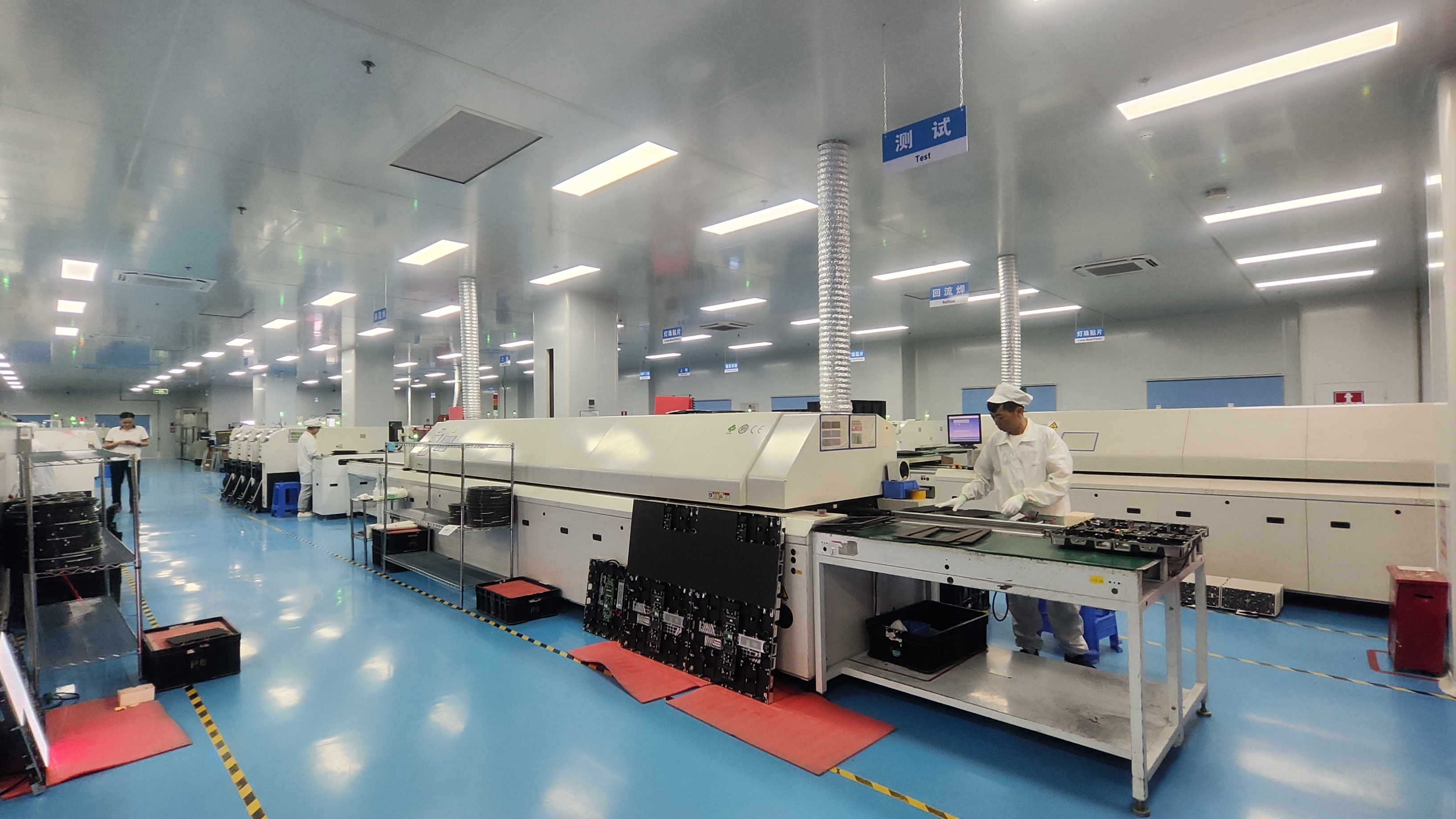
Design characteristics do not replace conformity documents, but they tell a buyer how clean the declared configuration is likely to be, and which questions to ask first.
- Cabinet material. Die-cast aluminum cabinets provide lighter weight, higher structural precision, better cabinet flatness, efficient heat dissipation, and easier handling compared with traditional welded iron cabinets. Rental-oriented die-cast aluminum cabinets are commonly available in standardized 500 × 500 mm and 500 × 1000 mm formats, while actual cabinet weight, thickness, and dimensional accuracy vary by product series and configuration. Aluminum also conducts heat better than iron, which helps transfer heat more efficiently and supports thermal management during long-term operation.
- Thermal and power architecture. Common-cathode designs supply optimized voltage to different RGB LED channels, reduce unnecessary power loss, and lower heat generation. Lower heat generation reduces thermal stress on LEDs, driver ICs, power supplies, and other electronic components, which supports more stable long-term operation.
- Modular architecture. Individual LED modules, power supplies, receiving cards, and related components can be replaced separately instead of replacing the complete display system, and screen sizes and aspect ratios can be customized through cabinet and module combinations. Both properties are exactly what makes component-list control necessary (see Layer 4).
- Refresh and brightness declarations. Selected professional configurations support refresh rates up to 7680Hz, while standard LED display configurations are commonly specified at approximately 1920–3840Hz. Brightness declarations range from approximately 600–1500 nits for indoor applications to 5000–10000 nits for selected outdoor solutions, with protection up to IP65 depending on the application.
Layer 3: Verify front maintenance against the wall, not the brochure
Front maintenance claims are the easiest to verify physically and the most expensive to discover late. Ask for four items before the installation drawing is approved:
- Declared service direction per series. The FU Series, HK Series (full front access), QDCOB Series, 3DH Series, PIF Series, and AIOF Series are specified as front maintenance designs, while the D Series, A Series, FA Series, FC Series, SPPLUS Series, and SPPro Series support front and rear maintenance on applicable product series.
- Module removal direction, tooling, and fixation. A front-service cabinet only works if a technician can release the module from the front with the tools the site will actually have.
- Required front clearance. The installation structure — not the cabinet — decides whether that clearance exists. Recessed niches, trim, glazing, and decorative frames are the usual blockers.
- Consistency with the installation method. Indoor wall mount, creative structure installation, glass facade installation, fixed wall installation, floor stand, and wall mount are different drawings with different access assumptions. Confirm the maintenance claim and the installation method in the same document.
Layer 4: Control component substitution with modular architecture
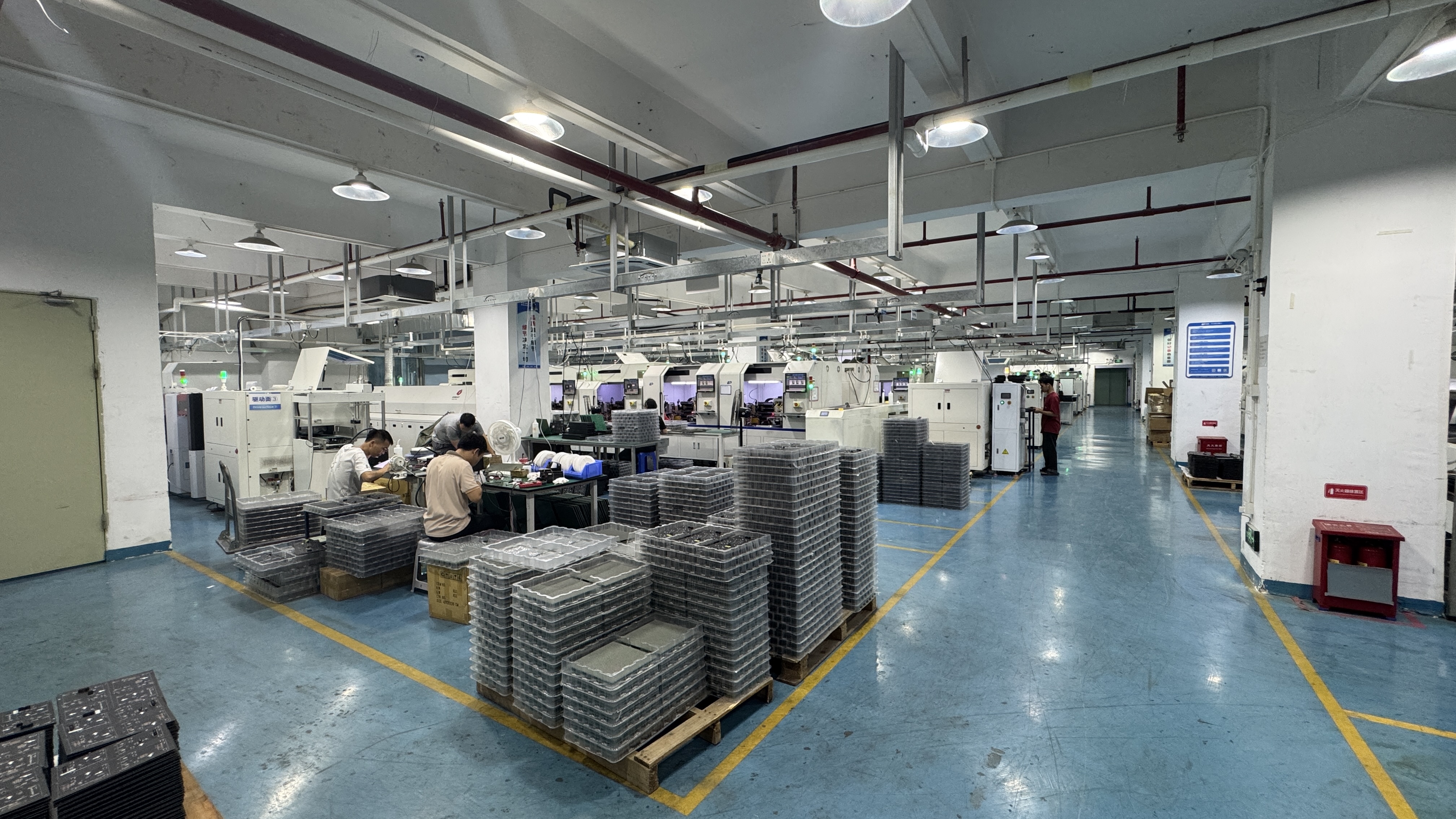
Because modules, power supplies, and receiving cards are individually replaceable, the component list is part of the product definition. Two controls keep it stable across sample, pilot, and mass production: name the approved component set in the purchase order, and require written confirmation that any substitution stays inside the assessed configuration. This is also where a project-specific specification helps, because matching pixel pitch, brightness, refresh rate, protection level, cabinet structure, installation method, and maintenance access to the actual application reduces the number of unplanned substitutions during production.
Layer 5: Require pre-shipment evidence, not post-shipment explanations
Verification ends with evidence generated before the goods leave. DDW applies 100% pre-shipment inspection, and outdoor LED displays should undergo relevant waterproof and performance inspections before shipment. For an importer, the practical request list is short: photographs or video of the aging run, close-up images of the module and cabinet labels, a packing list whose model numbers match the certificate, and the conformity document set as PDF files — all delivered before balance payment rather than after arrival.
Step-by-Step Breakdown: Verifying Claims Before Payment
Step 1 — Freeze the configuration in writing. Convert the specification sheet into a line-item configuration: series, pixel pitch, cabinet size and material, brightness, protection rating, refresh rate, LED package, maintenance mode, installation method, and control system. Anything not written down is not covered by a certificate.
Step 2 — Request the document set for the exact model and destination market. Confirm which certifications and compliance standards apply to that specific model in that specific market, and request the corresponding certificates or test reports. Where the European market applies, request the EU Declaration of Conformity where applicable together with the technical documentation scope.
Step 3 — Check scope and identity. Confirm that the certificate or report names the exact model or a configuration list that includes it, and that the applicant or manufacturer identity matches the entity you are contracting with. Ask which configuration variants are covered if the document is series-level.
Step 4 — Cross-check design characteristics against the declared configuration. If the order declares a die-cast aluminum cabinet, the document and the label should describe the same cabinet. If the order declares IP65 outdoor protection, verify the brightness, protection rating, and cabinet design that go with it. Design characteristics are the buyer-side test of whether a specification is internally consistent.
Step 5 — Validate the front maintenance claim with a drawing and a demonstration. Request the cabinet drawing and a short module-removal video. Compare the required front clearance against the installation drawing, and confirm whether the series is front-only or front and rear.
Step 6 — Lock the component list and the substitution rule. Attach the approved module, power supply, and receiving-card list to the purchase order, and require that any change be notified in writing before production.
Step 7 — Verify pre-shipment inspection and labeling. Review aging and inspection records, confirm that outdoor products received waterproof and performance inspection, and check that the model number on the cabinet label, the packaging, and the packing list agree.
Step 8 — Retain the full file. Keep the order configuration, the document set, the inspection evidence, and the shipment labels together. If the installation is later modified, or if the screen is redeployed to another market, the same file answers the next round of questions.
Use Cases: Where Each Claim Is Actually Tested
Rental fleet and event deployment. A rental LED screen crosses borders repeatedly, so the documentation has to travel with the fleet and stay valid for the configuration. Standardized 500 × 500 mm die-cast aluminum cabinets, quick-lock structures, and lightweight designs reduce handling and redeployment cost, and are designed for events, stage shows, concerts, exhibitions, sports events, conferences, and broadcasting. For rental businesses, front and rear maintenance access on applicable series matters more than a nominal specification advantage, because a module failure during a load-in has to be fixable on site.
Corporate conference rooms and control rooms. Here the maintenance claim is decided by architecture. Fine-pitch COB LED displays, ultra-thin indoor LED video walls, and all-in-one conference displays are typically wall-mounted or floor-standing, and rear access is often unavailable. Series such as the FU Series (front maintenance, fixed wall installation), HK Series (full front access), QDCOB Series (front maintenance, wall-mounted), and AIOF Series (front maintenance, floor stand or wall mount) are specified precisely for that constraint.
Outdoor advertising and building facades. Outdoor LED screens add environmental declarations to the verification list: high brightness up to 10,000 nits on selected series, IP65 waterproof and dustproof protection on outdoor models, and weather, corrosion, and heat-dissipation considerations. Verification here means confirming the protection rating and brightness that the certificate covers match the environment the screen will actually live in — and confirming front and rear maintenance access against the steel structure.
Retail, showroom, and creative installations. Indoor wall-mount and creative structure installations frequently use front maintenance designs, such as the 3DH Series for indoor wall mount or creative structures, and the PIF Series folding LED poster for mobile floor standing use. Transparent LED displays used on glass facades and windows add a separate installation question: how the module is fixed to the glass and how service access is preserved.
XR and virtual production studios. Professional configurations with refresh rates up to 7680Hz, micro LED and MIP LED display options, high grayscale, and broad brightness ranges are selected for camera-facing work. In this scenario, configuration drift is the main compliance risk, because a substitute module or receiving card can change the camera performance the studio contracted for — and the same substitution changes the configuration under assessment.
Comparison Table: Claims, Evidence, and Design Clues
The table below maps each claim to the document that proves it and to the product fact that indicates where the risk sits. It uses only product facts that are declared per series; treat the final column as the failure mode a buyer is trying to avoid.
| Claim | What to request | Product fact that provides the clue | Failure if unverified |
|---|---|---|---|
| CE-type market access | Certificate or test report referencing the exact model, plus EU Declaration of Conformity where applicable and the technical documentation scope | Applicable EU requirements depend on product configuration and cover electrical safety, EMC, and other conformity requirements | Shipment questioned at customs; retrofit, re-testing, or re-documentation after arrival |
| RoHS-type substance restriction | Test report referencing the exact model and the approved component set | Modules, power supplies, and receiving cards are individually replaceable, so the component list defines the assessed configuration | Component substitution moves the shipment outside the assessed configuration |
| Front maintenance capability | Cabinet drawing showing module removal direction, tooling, and required front clearance | FU, HK (full front access), QDCOB, 3DH, PIF, and AIOF are front maintenance designs; D, A, FA, FC, SPPLUS, and SPPro support front and rear maintenance on applicable series | Screen installed where modules cannot be reached from either side |
| Die-cast aluminum cabinet | Declared cabinet material, cabinet dimensions, and weight in the order documents | Die-cast aluminum offers lighter weight, higher structural precision, better flatness, and efficient heat dissipation versus traditional welded iron cabinets; standardized 500 × 500 mm and 500 × 1000 mm formats are common for rental | Mismatch between the cabinet, the rigging or structure plan, and the installation drawing |
| Protection rating and brightness | Declared IP rating and brightness for the actual environment | Indoor configurations commonly around 600–1500 nits; selected outdoor solutions 5000–10000 nits; outdoor protection up to IP65 | Paying for outdoor specifications indoors, or under-specifying an outdoor screen |
| Refresh rate | Declared refresh rate inside the ordered configuration | Selected professional configurations up to 7680Hz versus standard configurations commonly specified at approximately 1920–3840Hz | Visible flicker in camera-based production; unplanned hardware replacement |
Because maintenance direction differs by series rather than by brand, the second table is the one to keep next to the installation drawing during the design review.
| Series | Cabinet material | Maintenance as specified | Typical application |
|---|---|---|---|
| D Series | Die-casting aluminum | Front & rear | Indoor and outdoor rental LED screen for events and stage work |
| A Series | Die-casting aluminum | Front & rear | Stage events, concerts, festivals, outdoor events |
| QDCOB Series | Aluminum cabinet | Front maintenance | COB LED display for conference rooms and control rooms |
| FU Series | Aluminum profile cabinet | Front maintenance | Indoor fine pitch LED video wall, fixed wall installation |
| HK Series | Aluminum profile | Full front access | Indoor fine pitch LED display for conference and control rooms |
| 3DH Series | Die-casting aluminum | Front maintenance design | Naked-eye 3D LED screen, indoor wall mount or creative structure |
| AIOF Series | Die-casting aluminum | Front maintenance | All-in-one LED display for meeting and conference rooms |
| FA / FC Series | Aluminum cabinet | Front & rear | Outdoor fixed LED screen, advertising and facades |
| SPPLUS / SPPro Series | Aluminum cabinet | Front & rear | Stadium perimeter LED display and sports advertising boards |
FAQ: Verifying LED Display Compliance and Maintenance Claims
How do I confirm that a CE or RoHS certificate actually covers the LED display model I am importing?
Match the model number across four documents: the certificate or test report, the quotation, the order confirmation and packing list, and the label on the cabinet itself. Then confirm three things. First, that the document names the exact model or a configuration list that includes it, because a single series can span multiple pixel pitches and cabinet sizes. Second, that the applicant or manufacturer identity on the document matches the entity you are contracting with. Third, that the document set matches the destination market and configuration — for European-market projects this means the applicable conformity assessment, the technical documentation, and the EU Declaration of Conformity where applicable. If the document is series-level, ask for the covered configuration list rather than assuming your variant is included.
Do die-casting aluminum cabinets and front maintenance designs change what has to be verified?
They change the shape of the declared configuration, and therefore which questions to ask. Die-cast aluminum cabinets provide lighter weight, higher structural precision, better cabinet flatness, and efficient heat dissipation compared with traditional welded iron cabinets, and they are commonly available in standardized 500 × 500 mm and 500 × 1000 mm rental formats, although actual weight, thickness, and dimensional accuracy vary by series. Front maintenance designs determine the installation method and the service access the project must preserve, while front and rear maintenance series offer a wider choice of service routes. Neither characteristic replaces a certificate. What they do is make the configuration easier to describe — and a configuration that can be described precisely is a configuration that can be verified precisely.
Is a compliance-ready configuration more expensive than a standard LED display screen?
Some elements do carry higher initial cost. Die-cast aluminum cabinets generally cost more to manufacture than conventional welded iron cabinets, and optimized common-cathode configurations may have a higher initial component cost, although reduced power consumption and heat generation can lower long-term electricity and cooling costs in continuously operated projects. The offsetting factor is that application-specific configuration avoids paying for unnecessary specifications: an indoor LED display project does not need the 5000–10000-nit brightness or IP65 protection typically specified for outdoor LED screens. Budgeting compliance works best when the configuration is defined first and then assessed, rather than when specifications are upgraded indiscriminately as a precaution.
Which rental LED display manufacturer is better for low MOQ and samples?
The useful question is not which manufacturer claims flexibility, but whether the sample represents the production order. Ask whether the sample is built from the same cabinet, module, and component set as the intended production configuration; whether the documentation covers that sampled configuration; whether the cabinet format is standardized — 500 × 500 mm and 500 × 1000 mm die-cast aluminum formats support fleet expansion and repeat orders — and whether front and rear maintenance access is available on applicable series. DDW DISPLAY, founded in 2012, operates a 10,000 ㎡ facility with 100+ employees and 15 R&D engineers, produces 800,000+ units annually, exports to more than 120 countries at an export ratio above 95%, and applies 100% pre-shipment inspection. If you want to evaluate a rental LED screen or event LED screen sample against the configuration you intend to order, send the specification to info@ddw.net and request a sample and configuration confirmation.
When in the order timeline should certification documentation be requested?
Before the order is confirmed, not after production finishes. Documentation review should run in parallel with production planning: request the model-specific certificates or test reports and the EU Declaration of Conformity where applicable at quotation stage, confirm the covered configuration before the deposit, and complete the label, packing list, and inspection checks before balance payment. Waiting until the container is ready means any mismatch has to be solved by re-documentation, re-testing, or rework instead of by revising the order.
Conclusion: Verify Configuration, Not Descriptions
CE-type conformity, RoHS-type substance restriction, and front maintenance are all statements about one specific configuration. The verification method is therefore the same in every case: fix the configuration in writing, match the model number across every document and the cabinet label, read the design characteristics as a list of questions rather than a list of guarantees, and collect the evidence before money moves. An importer who can produce the order configuration, the document set, the inspection record, and the shipment labels side by side has already solved the compliance conversation — and has a defensible answer if the screen, the market, or the project scope ever changes.
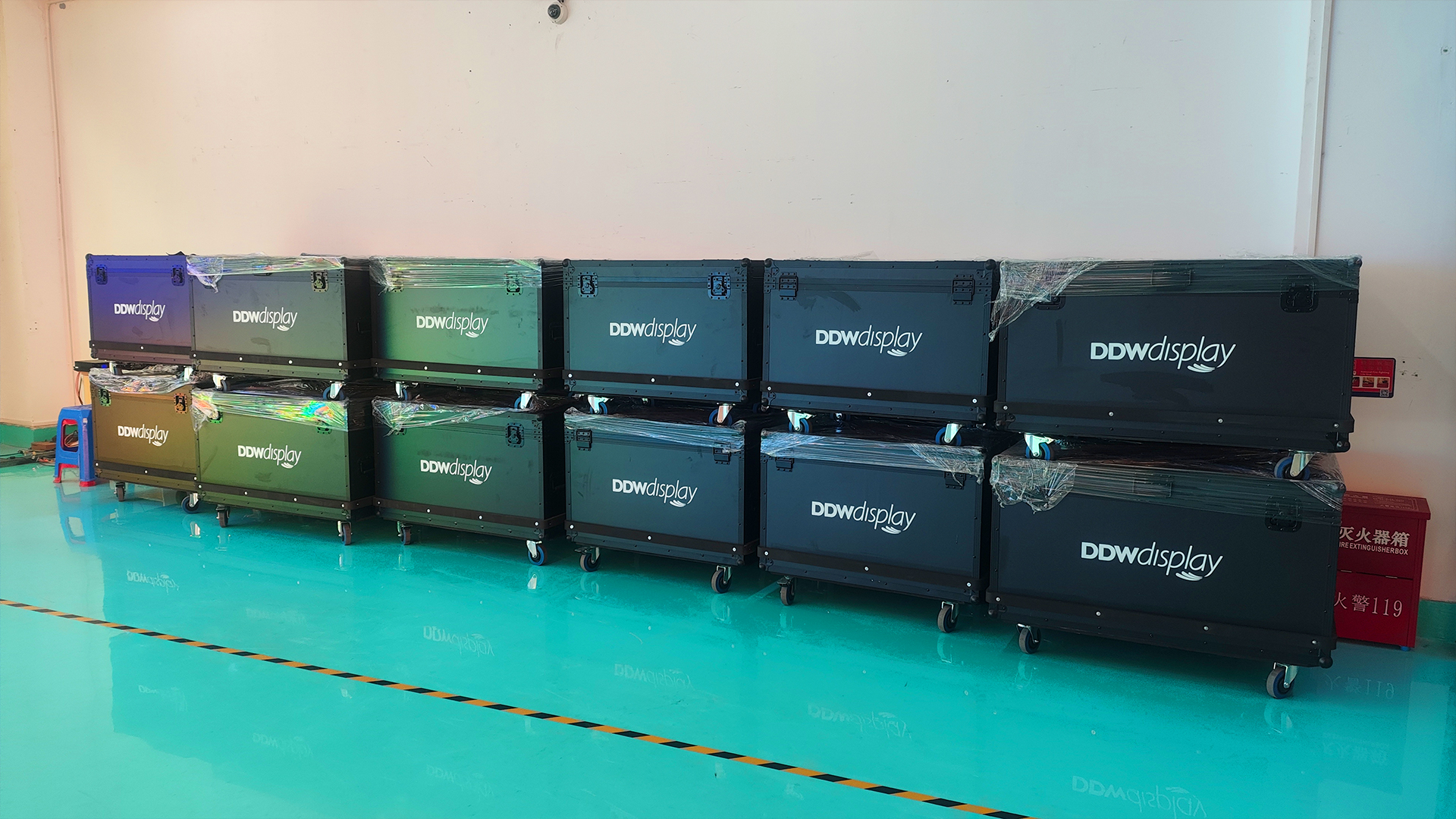
Check Your Next LED Display Order Against the Document Set
Send the model, pixel pitch, cabinet configuration, destination market, and installation method, and DDW will confirm the configuration details, maintenance access, and the documentation required for your project.
Email: info@ddw.net | WhatsApp / WeChat / Mobile: +86 134 1755 8100 | Website: www.ddw.net
Download the full product range and configuration reference: DDW LED Display Catalog 2026 (PDF).
Have Questions or Need More Details?
Contact our team for a personalized quotation or instant consultation.
Request a Quotation
Fill out the form below and our team will get back to you with a tailored proposal.
WhatsApp Direct Chat
Prefer to chat in real-time? Message us on WhatsApp for instant assistance & quick answers.
- Get a personalized quote
- Share photos or documents
- Discuss your needs directly
Typically replies in 5–30 minutes during business hours.