LED Display Solutions for Corporate Showrooms and Experience Centers
A corporate showroom LED display is rarely a single screen. Most experience centers need three different display behaviours at the same time: a large, calm, high-resolution wall that carries the brand story; a premium close-viewing surface where product detail and colour accuracy decide the impression; and one deliberately theatrical screen that stops visitors and makes them film. Choosing between FU Series, QDCOB Series and 3DH Series is therefore an application decision, not a specification contest.
The practical answer for most showroom projects is a three-series split. Indoor fixed FU Series covers the main storytelling wall because its aluminium profile cabinet, 250 mm-tall module format and 7680 Hz refresh rate suit long fixed walls, camera capture and front-serviced installation. Quantum Dot COB technology in the QDCOB Series is the closer-viewing option for luxury retail floors and premium product zones where pixel pitch starts at P0.78. The 3DH Series handles the wow-factor centre, using naked-eye 3D content in corporate spaces, brand showrooms, museums and digital experience centres.
This guide maps those series to actual showroom zones, explains the planning steps that prevent an expensive mis-specification, and compares the three options on the parameters a procurement team can verify.
Problem Definition: Why One Pixel Pitch Cannot Cover a Whole Experience Center
Showroom projects go wrong when a single display specification is applied across an entire space. A visitor standing 1.5 m from a product wall sees pixels; a visitor standing 12 m away in an atrium does not. If the whole project is bought at the shortest viewing distance, the atrium screen is paid for at a resolution nobody can perceive. If the whole project is bought at the longest viewing distance, the product wall looks soft in company photography and in customer phone videos.
Four failure patterns appear repeatedly in corporate display spaces:
- Viewing distance mismatch. A pitch chosen for a lobby is reused behind a meeting table, or a fine pitch is installed on a wall that is only ever seen from far away.
- Brightness and lighting conflict. Tracking spotlights, glass walls and daylight produce glare or washed-out images when the screen brightness and colour temperature are not matched to the room.
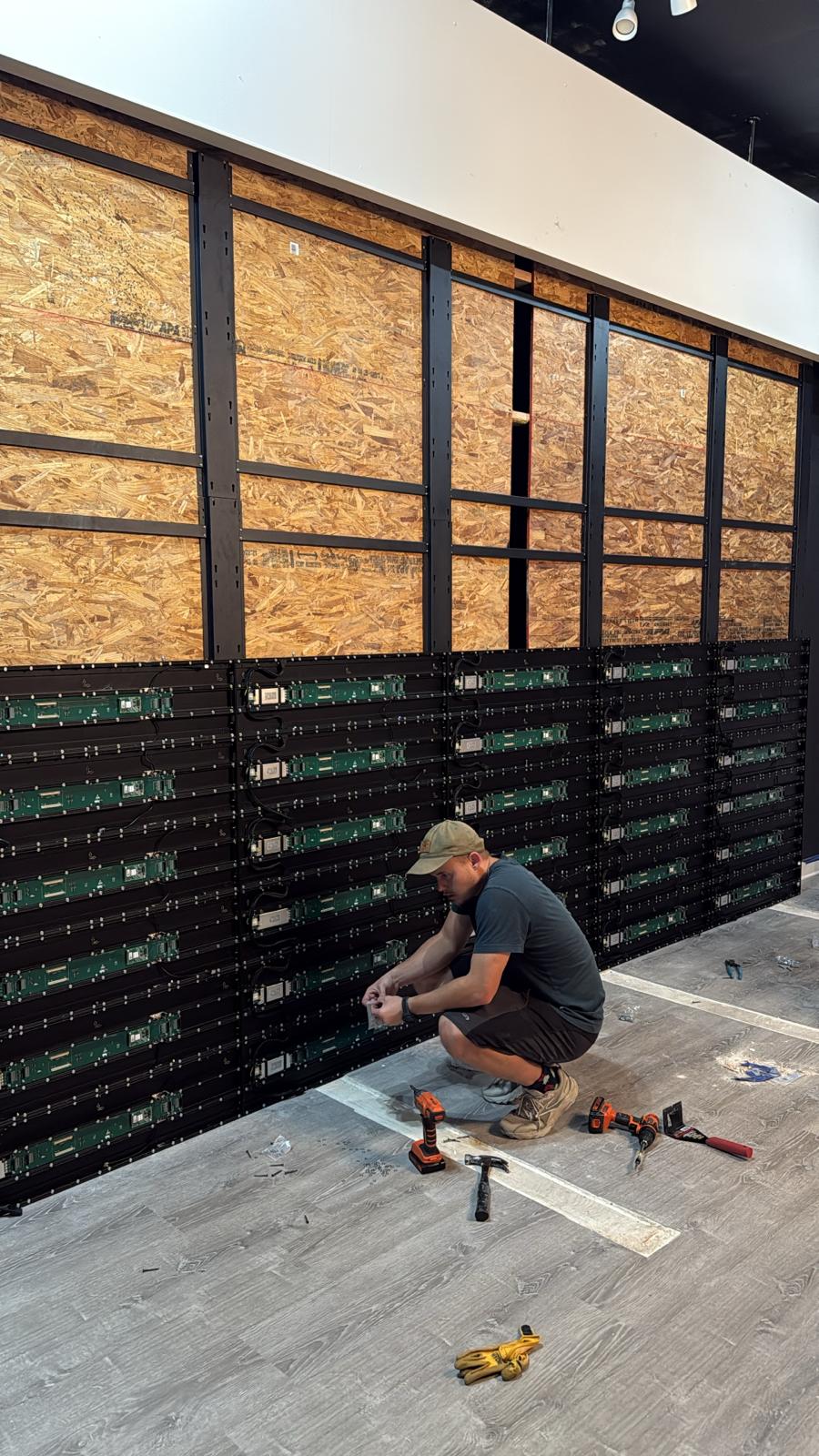
- Structural and service constraints. A wall cavity that is too shallow, a non-load-bearing partition, or a screen with no access route turns a routine module replacement into a dismantling project. Front maintenance matters wherever the wall backs onto another room.
- Certification and documentation gaps. Destination-market compliance is discovered late, after the display is already built, which delays handover.
The planning rule is simple: divide the showroom into zones first, then assign a series and a pixel pitch to each zone. The display is the last decision, not the first.
Industry Background: Why Corporate Spaces Are Moving to Direct-View LED
Direct-view LED has become the default for large corporate visual surfaces because it removes the two limits of tiled LCD: visible bezels and fixed panel sizes. Screens can be built to a wall dimension rather than a wall being built around a screen, and the same technology family scales from a P0.78 boardroom wall to a P10 outdoor facade.
The market data supports steady expansion. Mordor Intelligence projects the global LED display market at USD 20.73 billion in 2026, growing to USD 26.98 billion by 2031. Within that, the fine-pitch end is moving fastest: Grand View Research projects the Micro-LED segment growing at a 77.4% CAGR from 2024 to 2030, reaching a projected USD 25.65 billion. Corporate showrooms, brand showrooms and museum or exhibition environments sit at the premium end of that curve, because they are close-viewing applications with high content expectations.
Two procurement expectations have hardened alongside the technology. First, certification is now part of the brief rather than an afterthought: EU-bound LED display projects are normally assessed against CE-EMC and CE-LVD requirements and EU RoHS 2.0, while US projects require an FCC Supplier's Declaration of Conformity. Second, buyers increasingly ask for factory-level evidence, not just product certificates, which is why an ISO 9001:2015 quality management certificate and documented pre-shipment testing are commonly requested with the quotation.
Detailed Solution: Matching the Right Series to Each Showroom Zone
DDW DISPLAY (Shenzhen DDW Technology Co.,Ltd.) is an LED display manufacturer founded in 2012 in Shenzhen, China, producing indoor fine pitch LED displays, outdoor LED displays, rental LED screens, COB LED displays, XR virtual production LED walls, LED posters and commercial LED video walls. The company operates a 10,000 sqm manufacturing facility, and its displays are exported to markets including North America, Europe, the Middle East, Asia-Pacific, Latin America and Africa. For corporate showroom and experience centre projects, three series cover the majority of zones.
FU Series: Indoor Fixed Fine-Pitch for Showroom Walls
The FU Series is an indoor fixed fine-pixel-pitch LED display built for permanent wall installation. Available pixel pitches are P1.56, P1.95, P2.5, P2.6, P2.9 and P3.91. It uses a 250 x 250 mm module and an aluminium profile cabinet offered in three lengths: 1000 x 250 mm, 750 x 250 mm and 500 x 250 mm. The 1000 x 250 mm cabinet weighs 6.4 kg. Brightness is 800 to 1000 nits for P1.56 to P2.9 and 1000 to 1200 nits for P3.91, refresh rate is 7680 Hz, grey scale is 14-bit, protection rating is IP31 front and rear, and maintenance is front access.
That specification set is what makes the FU Series the natural choice for the long story wall of a showroom. The narrow 250 mm profile and three cabinet lengths let planners fit the same module grid to different wall widths, wrap a column, or continue the display around a corner without changing pitch or module size. A 7680 Hz refresh rate keeps the wall clean when visitors film it, and front maintenance means a module can be replaced from the room side even when the wall backs onto an office. The series is listed for conference rooms, corporate showrooms, control rooms, command centres, retail stores, education spaces and commercial display areas.
QDCOB Series: Quantum Dot COB for Premium Close-Viewing Floors
Where the showroom floor is a close-viewing zone, the pixel pitch has to start below P1.56. The QDCOB Series covers P0.78, P0.9375, P1.25 and P1.5625, and uses Quantum Dot COB technology with COB integrated packaging rather than a discrete SMD package. The series is specified with a high refresh rate, high grey scale performance, high contrast performance and a wide viewing angle, with front maintenance and wall-mounted fixed installation.
The intended uses listed for this series include corporate showrooms and luxury commercial displays, alongside conference rooms, control rooms, command centres, broadcast studios, education spaces and smart meeting rooms. In practice it suits the luxury retail floor of an experience centre, where a visitor stands two metres from the screen next to a physical product and compares the two. Fine pitch, high contrast and wide viewing angle are the parameters that decide whether text, material close-ups and colour-critical brand content hold up at that distance.
3DH Series: Naked-Eye 3D for the Wow-Factor Zone
The 3DH Series is the creative option: a naked-eye 3D LED screen for indoor fixed installation. Pixel pitch options are P1.25, P1.53, P1.86, P2, P2.5 and P3, with customized configurations available. It uses a die-casting aluminium cabinet, refresh rate up to 3840 Hz or 7680 Hz, high grey scale performance and a wide viewing angle, with front maintenance design and indoor wall mount or creative structure installation.
Its stated ideal environments are shopping malls, retail stores, brand showrooms, museums, exhibition halls, corporate spaces, entertainment venues and digital experience centres. For a corporate experience centre, this is the screen placed in the entrance atrium or the museum-style exhibit room, where the content is built specifically for the display geometry and the objective is dwell time rather than information transfer.
Supporting Options for Glass Walls, Corridors and Meeting Rooms
- TI Series indoor transparent LED display. Pixel pitch configurations from P2.6-5.2 to P7.82, cabinet sizes 500 x 500 mm or 1000 x 1000 mm, 500 x 125 mm module, 6.7 kg cabinet weight, 2500 to 4500 nits brightness, 3840 Hz refresh rate and 14 to 16-bit grey scale. Listed for retail stores, shopping malls, brand showrooms, glass facades, airports, museums and exhibitions. Useful where the showroom must keep daylight and sightlines through a glass partition.
- PIF Series foldable LED poster display. Pixel pitches P1.25 to P2.5, display sizes 640 x 1920 mm and 1280 x 1920 mm, mobile floor-standing installation, front maintenance and synchronous or asynchronous control. A movable option for entrances, corridors and product corners without structural work.
- HK Series indoor fine pitch LED display. P1.25 to P2.5, 640 x 480 mm cabinet, cabinet flatness of 0.1 mm or better, contrast ratio up to 8,000:1, brightness adjustable from 300 to 600 cd/m2, refresh rate of 3840 Hz or higher, colour temperature adjustable from 2,000K to 9,500K, IP45 rating and full front access. Its adjustable brightness and colour temperature make it relevant where a quiet, low-light showroom must stay comfortable.
- AIOF Series all-in-one LED display. Pixel pitches P0.78 to P1.56 in 135-inch and 162-inch display sizes, integrated receiving card and control system, floor stand or wall mount installation. A practical alternative for briefing rooms adjacent to the showroom.
Step-by-Step Breakdown: Planning a Showroom LED Installation
The sequence below reflects how a fixed indoor LED project is normally specified, from zone mapping to shipment validation.
- Map zones and viewing distances. Draw the visitor route and record the minimum and typical viewing distance for each wall. A product wall viewed at 1.5 to 3 m, a story wall viewed at 3 to 6 m and an atrium screen viewed at 8 m or more are three separate briefs.
- Assign a pixel pitch per zone. For close-viewing indoor applications such as conference rooms, control rooms, showrooms and premium retail spaces, fine pitches such as P1.25, P1.53 and P1.86 are generally more suitable. For medium viewing distances, P2.6 to P3.91 configurations are commonly considered. A smaller pixel pitch gives higher pixel density and better close-range detail but usually increases project cost, so the correct choice is the pitch that is sufficient for the actual viewing distance, not the smallest pitch available.
- Confirm the wall structure and cabinet format. Check wall loading, cavity depth and the access route. Where the wall backs onto another room, front maintenance is required. In the FU Series, the aluminium profile cabinet in 1000 x 250 mm, 750 x 250 mm and 500 x 250 mm lengths allows the wall width to be matched precisely.
- Match brightness to the lighting design. Indoor showroom lighting is rarely uniform. Confirm screen brightness against the ambient and accent lighting plan, and where the room is dimmable, confirm whether the series supports adjustable brightness and colour temperature, as the HK Series does across 300 to 600 cd/m2 and 2,000K to 9,500K.
- Plan control and content flow. Decide which zones share content and which run independently, then confirm the control arrangement. Synchronous control suits a single continuous brand narrative, while asynchronous control is practical for posters and separate zones. Pixel pitch, cabinet size, display shape, brightness level, refresh rate, installation method, control system, logo branding, colour calibration, power solution and mechanical design are all customisable on a project basis.
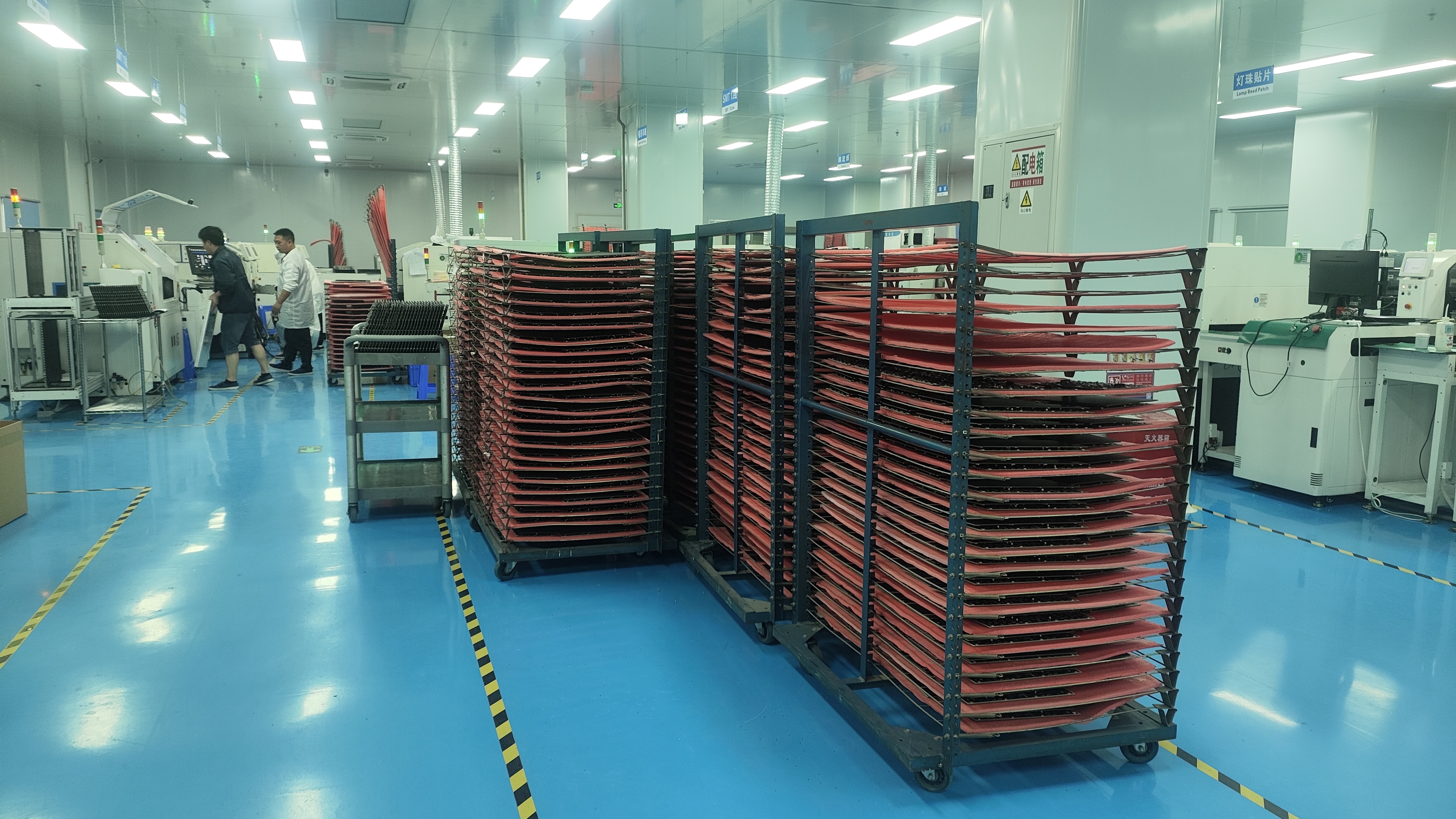
- Validate the build before shipment and confirm lead time. Standard products have a production lead time of 15 to 30 days; customized projects depend on design, quantity and technical requirements. The factory operates a monthly production capacity of 8,000 sqm for LED displays, and quality control covers 100% product inspection, aging test, module testing, brightness and colour calibration, waterproof test, power safety test and performance inspection before shipment.
Use Cases: How These Series Perform in Real Display Spaces
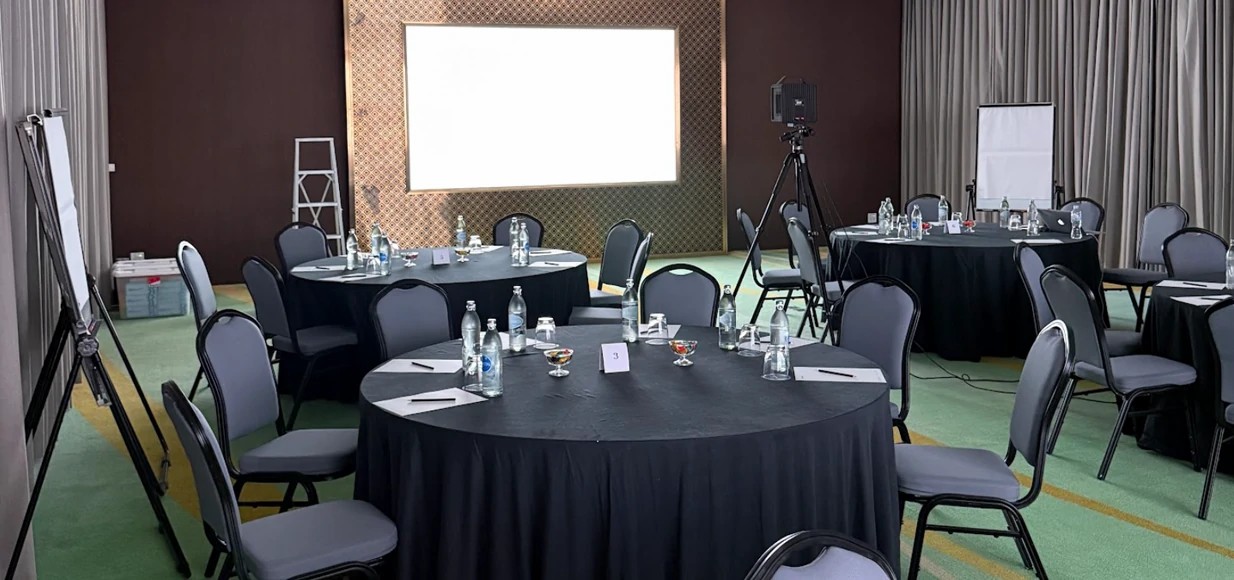
Corporate presentation and conference space, Thailand. A QDCOB Series P1.56 Quantum Dot COB LED video wall was installed for conference presentations, business meetings and video conferencing. The delivered result was high-quality visual performance, accurate colours and stable operation, with professional installation, system integration and on-site calibration. For showroom planning, this is the reference case for a close-viewing premium zone where colour accuracy is the requirement.
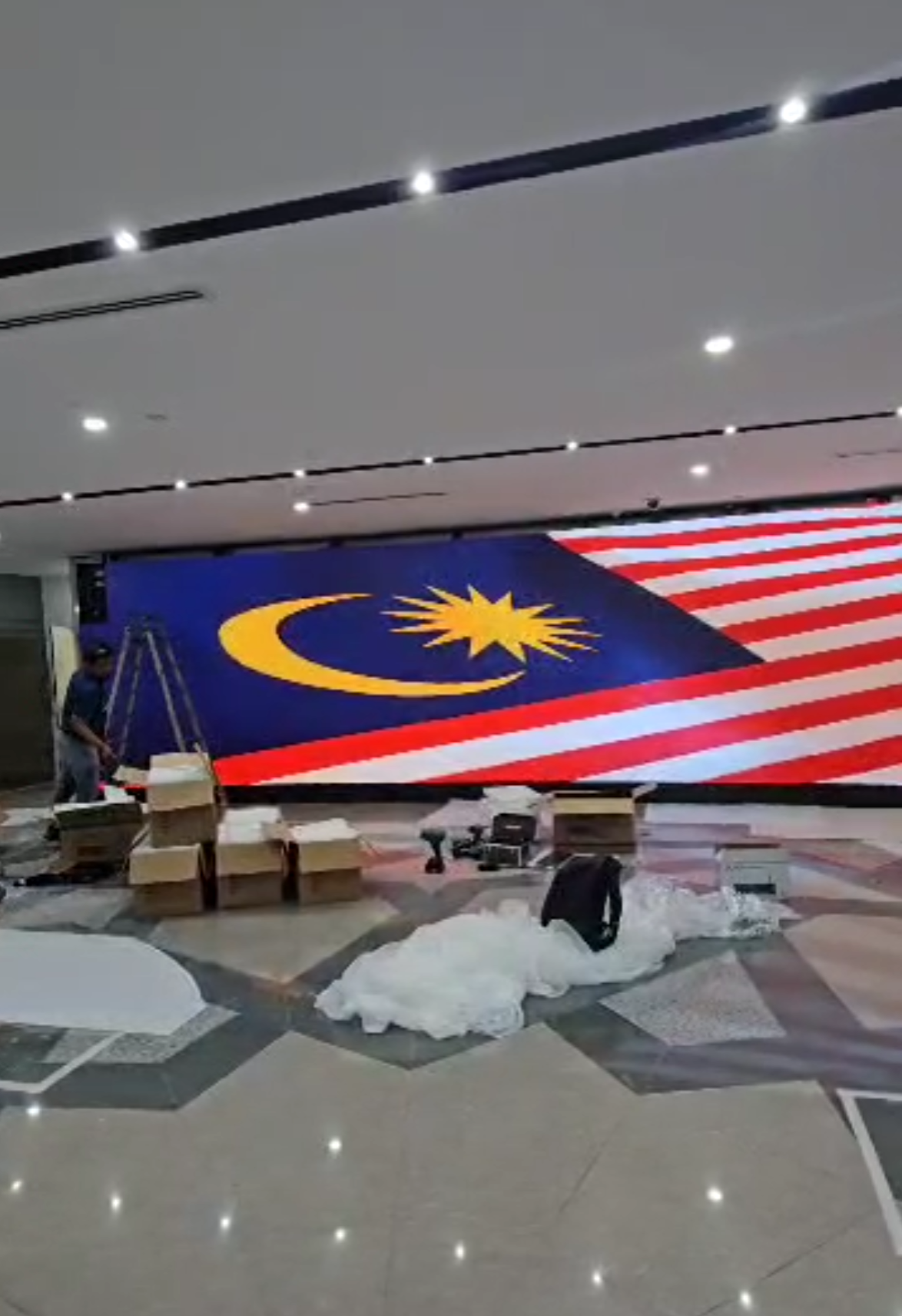
Indoor showroom presentation, Malaysia. An FL Series GOB P1.56 fine-pitch LED display at 10.56 x 2.4 m, approximately 25.34 sqm, was delivered for an indoor showroom used for product demonstration, brand promotion, corporate information display and multimedia presentation. The project is a useful comparator: a long, low-ratio wall at fine pitch, which is the geometry most corporate showrooms actually have.
Commercial display wall, United States. A 5 x 3 m, 15 sqm FU Series P1.95 indoor LED display was installed for a shopping mall and retail property operator, supporting advertising, brand promotion, retail campaigns, commercial information display and multimedia content. This is the clearest illustration of the FU Series role: a fixed, front-serviced wall at P1.95 for content viewed at medium distance.
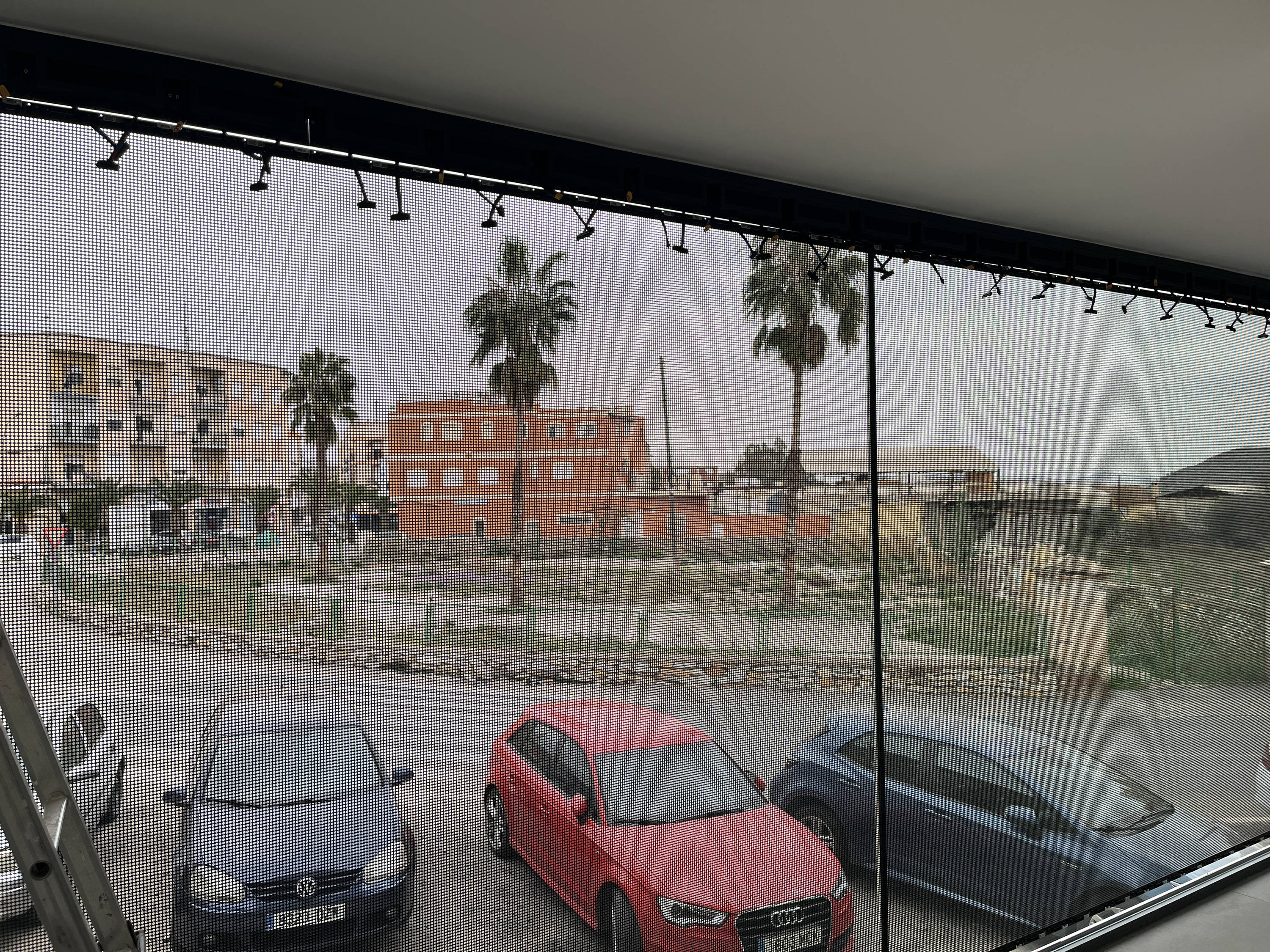
Brand experience and retail environment, Spain. A 3DH Series P6.25 LED display measuring 5.75 x 2.25 m, approximately 12.94 sqm, was installed behind storefront glass for retail advertising, product promotion and brand communication, creating an eye-catching digital display that improved product visibility and customer attention. It shows the wow-factor function in a commercial setting, including installation in a constrained glass-front condition.
Exhibition hall, Switzerland. An 80 sqm A Series P1.95 indoor LED display was delivered for exhibition presentation, product demonstration, brand promotion and multimedia content. An 80 sqm wall at fine pitch across multiple cabinets confirms that large-format indoor builds with 500 x 500 mm cabinets are a workable route when a showroom shares a space with an exhibition function.
Comparison Table: FU Series vs QDCOB Series vs 3DH Series
The table compares the three series on the parameters stated in the product data, so that a showroom zone can be matched to a series without ambiguity.
| Selection criterion | FU Series | QDCOB Series | 3DH Series |
|---|---|---|---|
| Showroom role | Main storytelling wall and information wall | Premium close-viewing floor and luxury retail zone | Wow-factor centrepiece and museum-style exhibit |
| Display platform | Indoor fixed, fine pixel pitch | Indoor fine pitch COB, Quantum Dot COB technology | Indoor fixed, naked-eye 3D creative display |
| Pixel pitch options | P1.56 / P1.95 / P2.5 / P2.6 / P2.9 / P3.91 | P0.78 / P0.9375 / P1.25 / P1.5625 | P1.25 / P1.53 / P1.86 / P2 / P2.5 / P3 (customized options) |
| Module and cabinet format | 250 x 250 mm module; aluminium profile cabinet in 1000 x 250 / 750 x 250 / 500 x 250 mm; 6.4 kg at 1000 x 250 mm | Aluminium cabinet; COB integrated packaging module structure | Die-casting aluminium cabinet; creative structure installation |
| Brightness | 800-1000 nits (P1.56-P2.9); 1000-1200 nits (P3.91) | Not stated in the series specification | Not stated in the series specification |
| Refresh and greyscale | 7680 Hz; 14-bit grey scale | High refresh rate; high grey scale performance | Up to 3840 Hz / 7680 Hz; high grey scale performance |
| Contrast and viewing angle | Not stated in the series specification | High contrast performance; wide viewing angle | Wide viewing angle |
| Maintenance | Front maintenance | Front maintenance | Front maintenance design |
| Installation | Fixed wall installation; IP31 front and rear | Wall-mounted fixed installation | Indoor wall mount or creative structure installation |
| Stated ideal environments | Conference rooms, corporate showrooms, control rooms, command centres, retail stores, education spaces, commercial display areas | Conference rooms, control rooms, command centres, corporate showrooms, broadcast studios, education spaces, luxury commercial displays, smart meeting rooms | Shopping malls, retail stores, brand showrooms, museums, exhibition halls, corporate spaces, entertainment venues, digital experience centres |
FAQ
What certifications should I verify when buying a showroom LED display?
Required certification depends on the destination market, product configuration and project requirements. For the European market, the relevant documents for LED display are CE-EMC conformity (certificate BKC25062531FC, issued by Shenzhen BKC Testing Co., Ltd., covering EN 55032:2015+A11:2020+A1:2020 and EN 55035:2017+A11:2020, valid to 2030-07-01), CE-LVD conformity under Directive 2014/35/EU (certificate HXTS2506230030001-1, covering EN IEC 62368-1:2020 + A11:2020, valid to 2030-06-27) and EU RoHS 2.0 conformity (certificate HXTS2506230030007-1, covering Directive 2011/65/EU as amended by EU 2015/863/EU, valid to 2030-06-27). For the United States, an FCC Supplier's Declaration of Conformity is relevant (certificate BKC25062532FC-R1, covering FCC Part 15 Subpart B and ANSI C63.4:2014, valid to 2030-07-01). At factory level, DDW DISPLAY holds an ISO 9001:2015 certificate (12824Q21369R0S, issued by China Standards Institute (Beijing) Certification Center, valid to 2027-10-09). Buyers should confirm which certificates apply to the exact model and market before ordering.
Can a showroom LED wall be customized in size, shape and pixel pitch?
Yes. DDW DISPLAY provides OEM, ODM, custom LED display manufacturing and project-based LED display solutions, and accepts project-based orders for custom LED display solutions. Customisable parameters include pixel pitch, LED module size, cabinet size, cabinet structure, display shape, brightness level, refresh rate, installation method, control system, logo branding, colour calibration, power solution and mechanical design. This is what allows one showroom to run a P1.95 fixed wall, a P0.9375 close-viewing surface and a custom 3D centrepiece from the same supplier while keeping spare parts and service logic consistent across the site.
What drives the cost of a showroom LED display?
Cost is driven mainly by pixel pitch, screen area, cabinet and structure design, brightness level, control system and installation conditions. A smaller pixel pitch provides higher pixel density and better close-range image detail, but usually increases project cost, so the smallest available pitch is not automatically the correct choice. The most effective cost control in a showroom is zone-based specification: use a fine pitch only where visitors stand close, and a medium pitch where content is viewed from several metres away. Detailed pricing is quoted per project because configuration, quantity and destination affect it.
How can we validate the display before it ships?
Quality control covers 100% product inspection, aging test, module testing, brightness and colour calibration, waterproof test, power safety test and performance inspection before shipment. Acceptance criteria can include pre-shipment inspection, aging test, display performance test, brightness and colour consistency inspection, plus customer video inspection or third-party inspection on request. For a showroom where several zones are supplied together, colour consistency inspection between cabinets is the check that matters most, because mismatched white balance across a single wall is visible even to non-technical visitors.
What are the minimum order quantity, lead time and delivery terms?
The minimum order quantity is 1 unit or a project-based order. Standard products have a production lead time of 15 to 30 days, while customized projects depend on product design, quantity and technical requirements; the factory operates a monthly production capacity of 8,000 sqm for LED displays. Delivery terms are EXW Shenzhen, FOB Shenzhen, CIF or DDP, subject to destination and order requirements, and payment terms are T/T with 30% deposit in advance and 70% balance before shipment, with other terms subject to order agreement. To move a showroom project forward, share the zone plan and viewing distances with the DDW DISPLAY team and request a configuration review and sample or quotation discussion before the wall structure is finalized.
Conclusion: Specify by Zone, Then Build
Corporate showrooms and experience centres work when each zone gets the display behaviour it needs. Indoor fixed FU Series carries the long story wall with an aluminium profile cabinet, front maintenance and 7680 Hz refresh at pitches from P1.56 upward. QDCOB Series brings Quantum Dot COB technology down to P0.78 for luxury retail floors and close-viewing premium zones. 3DH Series supplies the naked-eye 3D centrepiece for brand showrooms, museums and digital experience centres. Transparent TI Series, portable PIF Series, adjustable HK Series and integrated AIOF Series fill the remaining gaps.
DDW DISPLAY supports that planning process with OEM and ODM capability, project-based customization across pixel pitch, cabinet size, display shape and control system, a 10,000 sqm manufacturing facility and global project delivery. Full series specifications and configuration options are available in the product catalogue: DDW LED Display catalog 2026 (PDF).
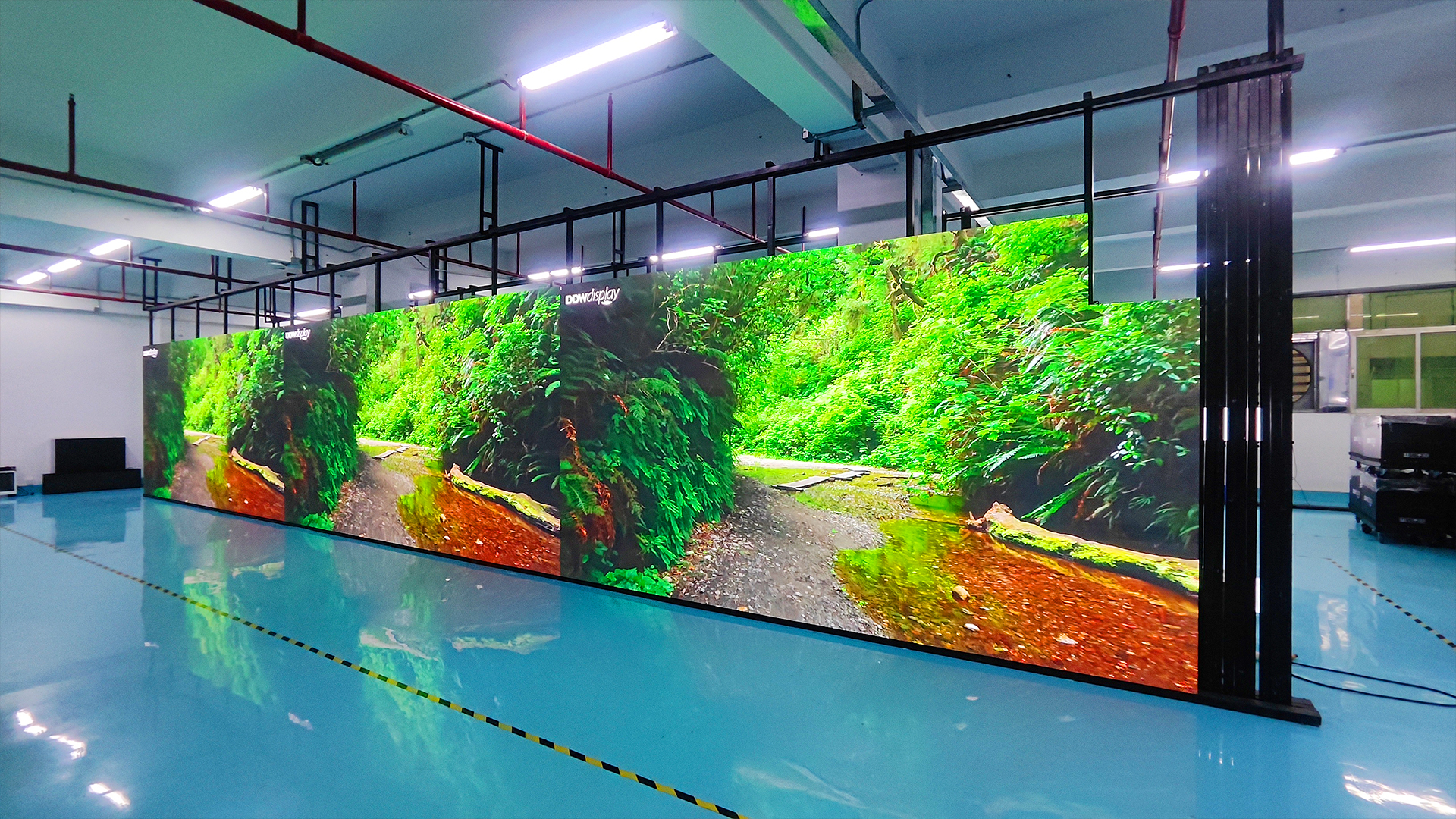
Next step: send your showroom zone plan, viewing distances and target market, and the DDW DISPLAY engineering team will propose a series and pixel pitch per zone, together with a configuration review, sample arrangement and quotation.
Website: www.ddw.net
Email: info@ddw.net
WhatsApp / WeChat / Mobile: +86 134 1755 8100
Factory address: 2F Building 8, YiLisheng Industry Park, Fuyong, Baoan, Shenzhen, 518103, China
Have Questions or Need More Details?
Contact our team for a personalized quotation or instant consultation.
Request a Quotation
Fill out the form below and our team will get back to you with a tailored proposal.
WhatsApp Direct Chat
Prefer to chat in real-time? Message us on WhatsApp for instant assistance & quick answers.
- Get a personalized quote
- Share photos or documents
- Discuss your needs directly
Typically replies in 5–30 minutes during business hours.