Rental LED Screen Supplier Evaluation: D/A/AFLEX/PIF Capability & Delivery Check
Rental LED Screen Supplier Evaluation: D/A/AFLEX/PIF Capability & Delivery Check
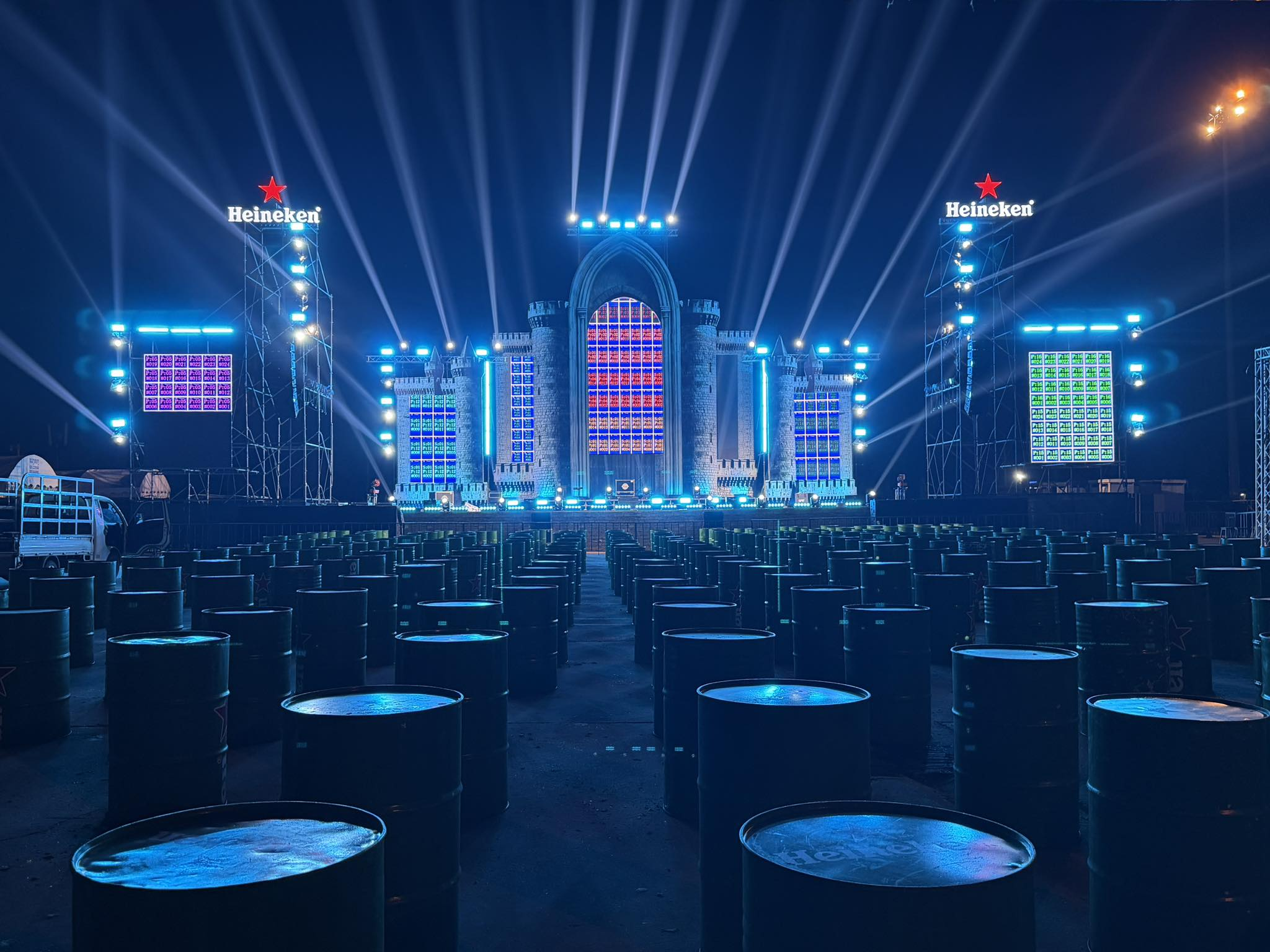
Rental LED screens are rarely lost on pixel pitch. They are lost on delivery detail — a series that exists only as an indoor version when the show is outdoors, a cabinet that cannot be serviced from the front during a one-night load-in, or a production window that was never checked against the event date. This article is a supplier evaluation framework for buyers comparing rental LED screen capability and delivery readiness, using four rental-oriented series from DDW DISPLAY as a documented example: D Series, A Series, AFLEX Series and PIF Series.
Short answer: a rental LED screen supplier evaluation should confirm four things before a project calendar is committed — whether the quoted series exists in both indoor and outdoor configurations, how cabinets are installed and serviced on site, whether specifications and calibration stay consistent across the pixel pitch range, and whether documented commercial terms (MOQ, lead time, pre-shipment testing and after-sales support) match the event schedule. DDW DISPLAY covers the rental footprint with the D Series and A Series for indoor and outdoor rental, the AFLEX Series for flexible and curved rental, and the PIF Series foldable LED poster.
What a Rental LED Screen Capability and Delivery Check Actually Covers
A capability and delivery check is a documented review of whether a rental LED display supplier can physically execute a specific event — not whether the brand appears on a shortlist. It has four parts, and each one is verifiable from product data, factory documentation or reference projects.
- Environment coverage: does the same rental series exist in indoor and outdoor configurations, so a mixed indoor/outdoor calendar does not force a supplier change mid-season?
- Installation and service access: which cabinet sizes are available, and can modules and power supplies be reached from the front or rear while the wall is rigged?
- Consistency: are pixel pitch, brightness, refresh rate and colour calibration applied consistently across every cabinet in the run?
- Delivery terms: minimum order quantity, production lead time, pre-shipment testing and after-sales support in the destination market.
None of these four can be confirmed from a price list alone, which is why pitch-only comparisons tend to produce late surprises.
Problem Definition: Why Rental LED Display Specifications Are Not Enough
Most rental LED screen comparisons are built as a pitch table — P2.6, P3.91, P4.81 — with brightness and cabinet size as secondary columns. That format hides the variables that decide whether the screen works at the venue.
Environment variant. A pitch number says nothing about whether an outdoor-rated version of that series exists. The D Series and A Series are offered in indoor and outdoor rental configurations, and the AFLEX Series is specified at IP31 for indoor use and IP65 for outdoor use. A buyer who confirms only the pitch can still receive a cabinet that is wrong for a rain-exposed stage.
Service access. Rental screens are installed, run hot, and dismantled inside a compressed window. Front and rear maintenance on the D Series and A Series means modules can be replaced without de-rigging a full wall, and the PIF Series is specified with front maintenance.
Consistency across a run. A rental inventory only works if every cabinet in the run matches. Module testing, aging tests and brightness and colour calibration before shipment are the mechanisms that stop a wall showing patchwork colour under stage lighting.
Calendar risk. Lead time, customisation scope and testing sequence all sit between the order and the load-in date. These are delivery facts rather than product facts, and they are where event schedules most often break.
Industry Background: Rental LED Demand and the Evaluation Gap
Rental LED displays sit inside a wider LED display market that continues to expand. Mordor Intelligence projects the global LED display market at USD 20.73 billion in 2026, growing to USD 26.98 billion by 2031. Allied Market Research, cited through a secondary source, valued the global rental LED display market at approximately USD 5 billion in 2020 and forecasts it to exceed USD 8 billion by 2027.
Two practical consequences follow. First, the number of suppliers quoting rental LED screens has grown faster than buyers' ability to verify them, so evaluation has to move from brand familiarity to documented capability. Second, rental screens are internationally traded goods: LED displays are commonly classified under HS code 852859, which matters when importers plan duty, documentation and delivery timing for a rental fleet.
The evaluation gap is consistent — buyers compare what is easy to compare and defer what is hard to compare: environment variants, service access, calibration consistency and lead time. The framework below closes that gap.
Detailed Solution: DDW DISPLAY Rental LED Screen Capability (D, A, AFLEX, PIF)
DDW DISPLAY (Shenzhen DDW Technology Co., Ltd.) is an LED display manufacturer founded in 2012 in Shenzhen, China. The company operates a 10,000 m² manufacturing facility with more than 100 employees, a 15-engineer R&D team, a monthly production capacity of 8,000 sqm, an export ratio above 95%, and delivered projects in more than 120 countries. Four series in its portfolio are directly relevant to rental and event work.
D Series — indoor and outdoor rental LED screen for stage and touring work
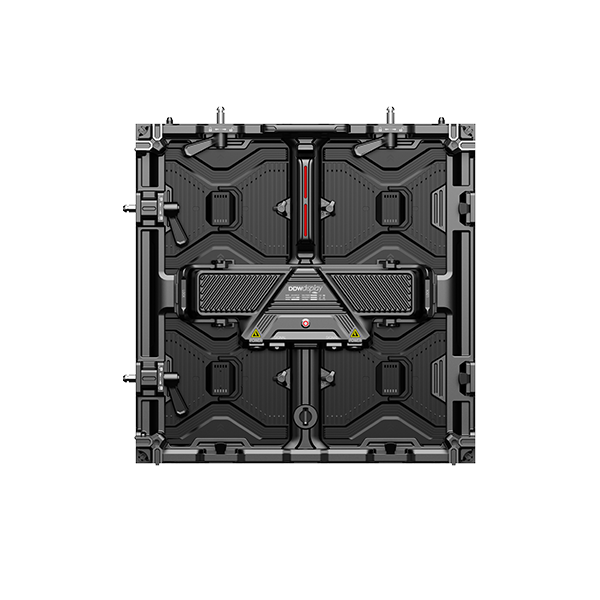
- Pixel pitch options: P1.56, P1.95, P2.604, P2.97, P3.91
- Cabinet: 500 × 500 mm die-casting aluminium cabinet with high-strength aluminium structure and SMD-packaged LED modules
- Refresh rate: up to 7,680 Hz
- Brightness: up to 5,000 nits in the outdoor version
- Protection: IP65 (outdoor version)
- Maintenance: front and rear maintenance
- Installation: hanging and stacking
- Viewing angle: H160° / V140°
For a rental buyer, the relevant signal is not the pitch list but the combination: a 500 × 500 mm cabinet with front and rear access, hanging and stacking capability, and an outdoor version rated IP65 for rain-exposed stages.
A Series — indoor and outdoor rental LED display with 500 × 500 mm and 500 × 1000 mm cabinets
- Pixel pitch options: P2.5, P2.604, P2.97, P3.91
- Cabinet: 500 × 500 mm and 500 × 1000 mm, die-casting aluminium
- Refresh rate: up to 3,840 Hz
- Brightness: up to 4,500–5,000 nits in the outdoor version
- Protection: IP65 (front and rear)
- Maintenance: front and rear maintenance
- Installation: hanging and stacking
- Viewing angle: H160° / V140°
The 500 × 1000 mm cabinet option is the practical differentiator for large stage builds: fewer cabinets per square metre means faster rigging, fewer connections and less handling. It is also the series behind two long-running reference projects described later in this article.
AFLEX Series — flexible and curved rental LED screen
- Pixel pitch options: P1.56, P1.95, P2.604, P2.976, P3.91
- Cabinet: 500 × 500 mm, 7.5 kg, die-casting aluminium; module size 250 × 250 mm
- Brightness: 700 nits (indoor) / 4,200–5,000 nits (outdoor)
- Refresh rate: 3,840 Hz; grey scale 14-bit
- Protection: IP31 (indoor) / IP65 (outdoor)
- Installation: hanging and stacking
- Viewing angle: H160° / V140°
AFLEX is the configuration to verify when a stage design includes curves, arcs or cylindrical structures. It is the only series in this group whose published specification explicitly separates indoor performance (IP31, 700 nits) from outdoor performance (IP65, 4,200–5,000 nits).
PIF Series — foldable LED poster for launch events, entrances and portable display
- Pixel pitch options: P1.25, P1.53, P1.86, P2, P2.5
- Display size: 640 × 1920 mm or 1280 × 1920 mm; module size 320 × 160 mm
- Cabinet structure: foldable aluminium cabinet
- Refresh rate: 3,840 Hz; brightness 800–1,000 nits (indoor version)
- Maintenance: front maintenance
- Installation: mobile floor standing; synchronous or asynchronous control
- Viewing angle: H160° / V140°
The PIF Series is not a stage wall. It is a portable display for entrances, sponsor activations and product launch areas where a full wall is impractical — useful evidence that a supplier covers the whole event footprint rather than only the main stage.
Manufacturing, quality control and delivery terms
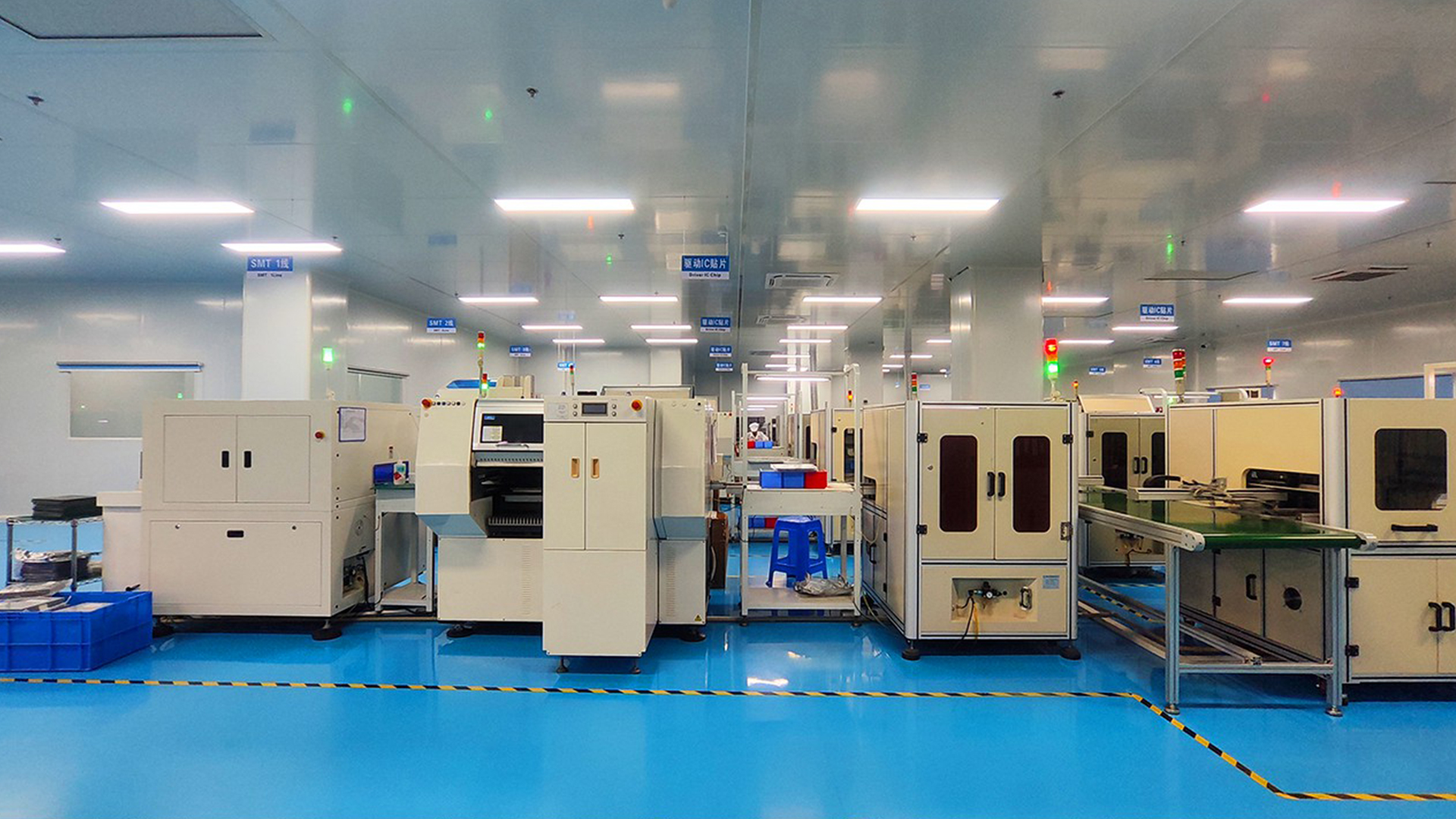
Production mode covers OEM, ODM, custom LED display manufacturing and project-based LED display solutions. Customisation scope includes pixel pitch, LED module size, cabinet size and structure, display shape, brightness level, refresh rate, installation method, control system, logo branding, colour calibration, power solution and mechanical design.
- Monthly capacity: 8,000 sqm
- MOQ: 1 unit or project-based order
- Lead time: 15–30 days for standard products; customised projects depend on product design, quantity and technical requirements
- Quality control: 100% product inspection, aging test, module testing, brightness and colour calibration, waterproof test, power safety test, and performance inspection before shipment
- After-sales: remote technical support, installation guidance, troubleshooting support, product warranty service, spare parts supply and engineering assistance
- Export markets: North America, Europe, the Middle East, Asia-Pacific, Latin America and Africa
For a rental buyer, the combination of a one-unit minimum and project-based ordering is what makes a single-wall or pilot validation possible before a full fleet decision.
Step-by-Step Breakdown: Six Checks Before You Award a Rental Screen Order
Step 1 — Confirm the environment version, not just the pitch
Ask for the indoor and outdoor specification of the exact series being quoted. In the DDW DISPLAY rental range, the D Series outdoor version is IP65 with brightness up to 5,000 nits, and the AFLEX Series is IP65 outdoor at 4,200–5,000 nits while its indoor configuration is IP31 at 700 nits. If the venue is rain-exposed, that row is the one that decides the order.
Step 2 — Match pixel pitch to viewing distance and camera work
A smaller pixel pitch provides higher pixel density and better close-range detail, and usually increases project cost — it is not automatically the right choice. The rental ranges in this evaluation are P1.56–P3.91 (D Series), P2.5–P3.91 (A Series), P1.56–P3.91 (AFLEX Series) and P1.25–P2.5 (PIF Series). Where the screen will be filmed, refresh rate becomes a selection criterion too: the D Series is specified up to 7,680 Hz, while the AFLEX and PIF Series are specified at 3,840 Hz.
Step 3 — Verify cabinet size, weight and installation method
Cabinet dimensions determine rigging labour and truss load. The D Series uses a 500 × 500 mm cabinet; the A Series offers 500 × 500 mm and 500 × 1000 mm; the AFLEX Series uses a 500 × 500 mm cabinet at 7.5 kg with a 250 × 250 mm module; the PIF Series is a mobile floor-standing unit. Hanging and stacking installation across the D, A and AFLEX Series keeps a mixed event design within a single supplier.
Step 4 — Check maintenance access while the screen is rigged
Front and rear maintenance on the D Series and A Series allows modules, power supplies and receiving cards to be reached without dismantling the wall in most configurations, and the PIF Series is specified with front maintenance. During a one-night load-in, that difference is measured in minutes, not in specifications.
Step 5 — Verify configuration consistency across the run
A rental wall is only as good as its least consistent cabinet. The checks to request in writing are aging test, module testing, brightness and colour calibration applied to all cabinets of the same batch, and 100% product inspection before shipment — the documented pre-shipment sequence for DDW DISPLAY rental screens.
Step 6 — Lock the commercial and calendar terms
Confirm MOQ (one unit or project-based), production lead time (15–30 days for standard products, customised projects by scope), documentation for the destination market, and after-sales support including spare parts and remote technical guidance. If the event date is fixed, confirm lead time and freight lane at the same time as the quotation.
Use Cases: Rental LED Screen Scenarios and Reference Projects
The projects below show how the series are deployed in practice. They are useful as delivery references — evidence that the configuration has been built and shipped — rather than as style guidance.
Concert and outdoor stage
A 160 m² D Series P2.976 outdoor rental LED display was deployed for a concert in Brazil, providing a large-format visual system for outdoor stage performance. In Myanmar, a 40 m² A Series P3.91 outdoor rental LED display was used for professional outdoor stage applications. Both cases test the same requirements: high refresh rate for camera shooting, seamless splicing, and fast installation with lightweight cabinets.
Indoor stage, conference and exhibition
In Malta, a 12 m² A Series P3.91 indoor rental LED display was deployed as a visual backdrop for indoor stage events, live performances and multimedia presentations using a modular rental structure. In Romania, an A Series P3.91 indoor rental LED display serves a conference hall for conferences, corporate presentations and video playback. Trade show booths are a further documented application for rental LED screens, where temporary installation and fast setup dominate the requirement.
Product launch and portable display
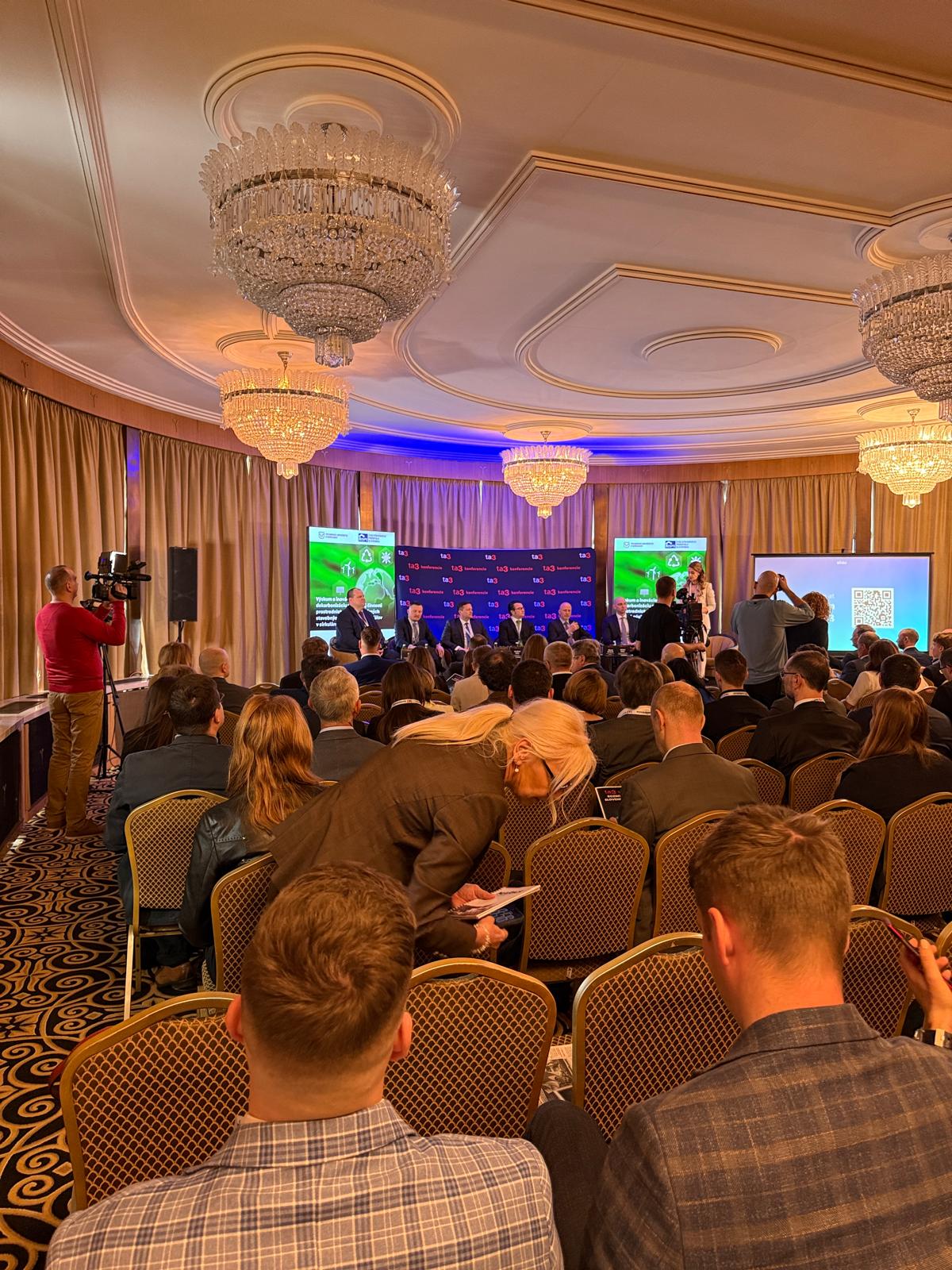
An event organizer in Slovakia deployed eight PIF Series GOB P1.86 LED poster displays for a product launch, using fine-pitch close-viewing performance and a portable format across multiple positions in the venue.
Large-scale event delivery
For a Guinness World Record event in Saudi Arabia, the delivered visual scope included 456.202 m² of LED screen and a 407 m² infinite ceiling screen, with seamless integration and stable operation maintained throughout the event.
Comparison Table: D Series vs A Series vs AFLEX Series vs PIF Series
| Evaluation point | D Series | A Series | AFLEX Series | PIF Series |
|---|---|---|---|---|
| Series type | Indoor & outdoor rental LED screen | Indoor & outdoor rental LED screen | Ultra flexible / curved rental LED screen | Portable commercial / folding LED poster |
| Pixel pitch | P1.56, P1.95, P2.604, P2.97, P3.91 | P2.5, P2.604, P2.97, P3.91 | P1.56, P1.95, P2.604, P2.976, P3.91 | P1.25, P1.53, P1.86, P2, P2.5 |
| Cabinet / module | 500 × 500 mm die-casting aluminium; SMD modules | 500 × 500 mm and 500 × 1000 mm die-casting aluminium | 500 × 500 mm cabinet, 250 × 250 mm module, 7.5 kg, die-casting aluminium | Foldable aluminium cabinet; display 640 × 1920 mm or 1280 × 1920 mm; module 320 × 160 mm |
| Brightness | Up to 5,000 nits (outdoor version) | Up to 4,500–5,000 nits (outdoor version) | 700 nits indoor / 4,200–5,000 nits outdoor | 800–1,000 nits (indoor version) |
| Refresh rate | Up to 7,680 Hz | Up to 3,840 Hz | 3,840 Hz | 3,840 Hz |
| Protection rating | IP65 (outdoor version) | IP65 (front & rear) | IP31 indoor / IP65 outdoor | Indoor version; no IP rating listed in the reviewed product data |
| Installation | Hanging & stacking | Hanging & stacking | Hanging & stacking | Mobile floor standing |
| Typical fit | Concert and touring stages needing high refresh and outdoor protection | Large stage builds using 500 × 1000 mm cabinets; indoor stage and conference | Curved, arc and cylindrical stage designs | Product launches, entrances and sponsor areas |
Table content reflects the published parameter sets for each series reviewed in this article. Buyers should request the current datasheet for the exact configuration and destination market before ordering.
FAQ: Rental LED Screen Supplier and Delivery Questions
1. Which certifications and protection ratings should be verified on a rental LED screen before an event?
Certification depends on the destination market and the exact product configuration. For international LED display projects, buyers commonly evaluate CE, FCC, RoHS, ETL and EMC, and some markets add electrical safety, fire resistance or third-party testing requirements. Certificates and test reports should be requested for the specific model being quoted, not for the company in general. Protection rating is a separate but equally practical check: the D Series outdoor version is rated IP65, and the AFLEX Series is rated IP65 in its outdoor configuration and IP31 in its indoor configuration. Because water ingress, moisture-related electrical faults and corrosion are the main outdoor risks, outdoor rental screens should also be subject to waterproof and power safety testing before shipment — both are part of the documented DDW DISPLAY pre-shipment inspection sequence.
2. What should buyers check in a rental LED screen manufacturer for concert touring projects?
Four capability signals matter most. First, series coverage: the manufacturer should offer indoor and outdoor versions of the same rental series, as DDW DISPLAY does with the D Series and A Series, plus a flexible option (AFLEX Series) for curved stage designs. Second, physical handling: 500 × 500 mm die-casting aluminium cabinets in the D, A and AFLEX Series support hanging and stacking installation, and the A Series also offers a 500 × 1000 mm cabinet. Third, camera performance: the D Series is specified up to 7,680 Hz refresh, and the AFLEX and PIF Series at 3,840 Hz. Fourth, delivery capacity: monthly production capacity of 8,000 sqm, a one-unit or project-based MOQ, and a 15–30 day lead time for standard products.
3. What drives the cost of a rental LED screen project?
Cost is driven by configuration rather than brand shorthand. Pixel pitch is the first factor: a smaller pitch provides higher pixel density and better close-range detail, and it usually increases project cost, so the correct pitch is the one that satisfies the actual viewing distance. Cabinet construction and environment version are the second: an outdoor IP65 configuration and a higher-brightness version cost more than an indoor configuration — the AFLEX Series, for example, is specified at 700 nits indoor and 4,200–5,000 nits outdoor. Quantity and customisation scope are the third: DDW DISPLAY customisation covers pixel pitch, cabinet size and structure, brightness, refresh rate, control system, logo branding, colour calibration and power solution, and the MOQ is one unit or a project-based order, which allows a pilot scale before a fleet order. Compare quoted configurations line by line, and include spares and after-sales support in the comparison rather than unit price alone.
4. Can a rental LED screen configuration be validated before a full order or event rollout?
Yes, at three levels. Order level: the one-unit or project-based MOQ allows a single cabinet or a single wall to be produced and evaluated before a fleet decision. Production level: request the pre-shipment inspection record — 100% product inspection, aging test, module testing, brightness and colour calibration, waterproof test, power safety test, and performance inspection before shipment — and ask that the same calibration be applied to every cabinet in the batch. Project level: use reference deliveries as evidence, such as the 160 m² D Series P2.976 outdoor rental deployment for a concert in Brazil, the 40 m² A Series P3.91 outdoor stage deployment in Myanmar, and the 12 m² A Series P3.91 indoor stage backdrop in Malta.
5. What is the typical lead time for a rental LED screen order?
DDW DISPLAY quotes 15–30 days for standard products; customised projects depend on product design, quantity and technical requirements. For event work, confirm lead time together with the freight lane and import documentation for the destination market (LED displays are commonly traded under HS code 852859), and confirm spare-part availability for the rental period rather than the purchase date. If the event date is fixed, confirm the lead time before the quotation is finalised. To move from evaluation to a concrete comparison, download the current DDW DISPLAY LED display catalog 2026 from the link at the end of this article, then send the event brief — screen size, indoor or outdoor environment, viewing distance and rigging method — to info@ddw.net or WhatsApp +86 134 1755 8100 for a configuration-specific quotation.
Conclusion: Evaluate the Series, Then Evaluate the Delivery
A rental LED screen supplier shortlist should survive four questions before an event calendar is committed: does the series exist in the environment version the venue requires, can the cabinets be rigged and serviced the way the show is run, is the specification and calibration consistent across every cabinet in the run, and can the supplier deliver inside the production window with documented testing and after-sales support. On the DDW DISPLAY rental portfolio, the answers are documented rather than claimed: D Series and A Series for indoor and outdoor rental with IP65 outdoor versions, front and rear maintenance and hanging or stacking installation; AFLEX Series for curved and flexible stage designs; PIF Series for portable launch and entrance display; monthly capacity of 8,000 sqm, one-unit MOQ, 15–30 day standard lead time, and a pre-shipment sequence covering aging, module testing, calibration, waterproof and power safety inspection.
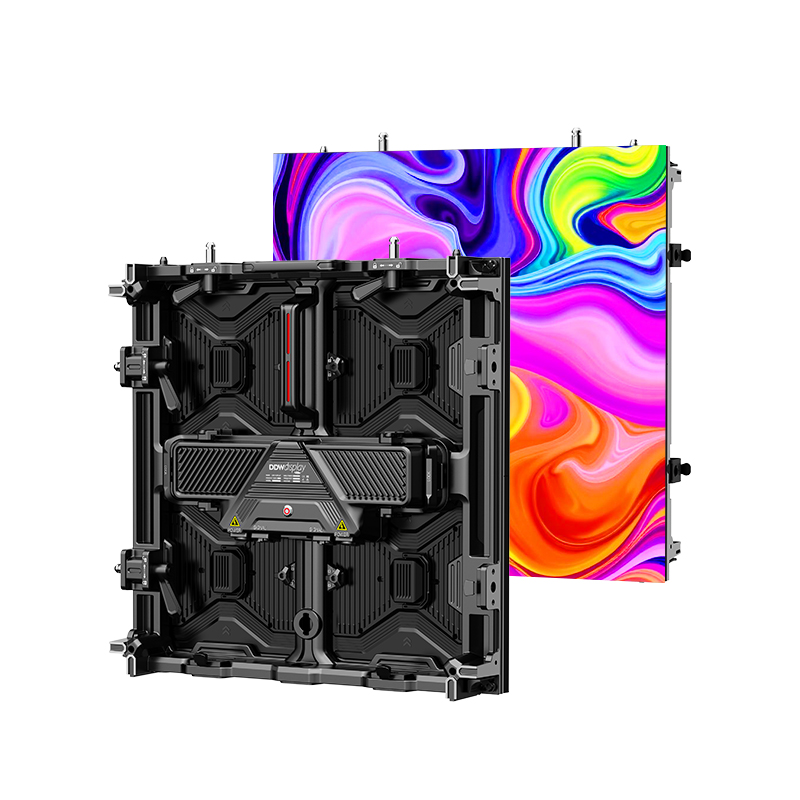
Next step: review the full rental series range and specifications in the DDW LED Display Catalog 2026 (PDF).
For a configuration-specific quotation, send the event brief (screen size, indoor or outdoor environment, viewing distance, rigging method) to DDW DISPLAY: email info@ddw.net, WhatsApp / WeChat / Mobile +86 134 1755 8100 (Steven), or visit www.ddw.net. The factory is located at 2F Building 8, YiLisheng Industry Park, Fuyong, Baoan, Shenzhen, 518103, China.
Have Questions or Need More Details?
Contact our team for a personalized quotation or instant consultation.
Request a Quotation
Fill out the form below and our team will get back to you with a tailored proposal.
WhatsApp Direct Chat
Prefer to chat in real-time? Message us on WhatsApp for instant assistance & quick answers.
- Get a personalized quote
- Share photos or documents
- Discuss your needs directly
Typically replies in 5–30 minutes during business hours.