OEM & ODM Rental LED Screen Manufacturer Guide: Evaluating Capability for Event Staging
OEM & ODM Rental LED Screen Manufacturer Guide: Evaluating Capability for Event Staging
When an event technology buyer searches for an OEM rental LED screen manufacturer, the product photo is only half of the answer. The real question is whether the factory can engineer, custom-build, test, and deliver a screen that survives repeated touring, fast rigging, camera-friendly output, and changing venue conditions. This guide explains how to evaluate a rental LED display OEM/ODM supplier at the capability level. It uses Shenzhen DDW Technology Co.,Ltd. (DDW DISPLAY), a Shenzhen-based LED display manufacturer founded in 2012, as a working example because its product line, factory data, and quality procedures are publicly documented.
The Procurement Problem: You Are Choosing a Manufacturing Partner, Not Just a Screen
Rental LED displays are not ordinary fixed-installation video walls. They are built to be assembled, dismantled, transported, and re-deployed many times. A stage deck in Mexico, a conference hall in Romania, and a hotel lobby in Indonesia can all require different pixel pitches, different cabinet formats, and different brightness levels. What separates a successful OEM project from a failed one is usually not the LED chip brand alone, but the manufacturer’s willingness and ability to align its production system with your specification, branding, timeline, and event environment.
Many buyers make the mistake of comparing only module specifications and prices before awarding a rental LED display contract. That approach misses vital manufacturing signals: Do they provide true OEM or ODM services? Can they adjust cabinet size or mechanical design? What percentage of their production is inspected before shipment? Can they deliver in 30 days when your event date is fixed? These questions belong in an evaluation process, not in a narrow product datasheet comparison.
Industry Background: Why Rental LED Display Demand Is Expanding
The global LED display market is projected to reach USD 20.73 billion in 2026 and grow to USD 26.98 billion by 2031, according to Mordor Intelligence. More specifically, the global rental LED display market was valued at approximately USD 5 billion in 2020 and is forecast to exceed USD 8 billion by 2027, based on an Allied Market Research estimate cited in industry analyses. Rental production companies, event organizers, and brand owners are expanding their visual capabilities, which increases demand for OEM and ODM partners who can produce rental-grade LED screens with customized branding and configuration.
For a professional rental screen, buyers generally need products that support high refresh rates for broadcast and camera use, lightweight die-casting aluminum cabinets, quick-locking mechanics, front or rear maintenance, and flexible hanging or stacking installation. Those are not afterthoughts. They are structural features that must be designed into the product before manufacturing begins, which is why a manufacturer’s product platform and customization capability matter as much as the final price.
What Is an OEM Rental LED Screen Manufacturer?
An OEM rental LED screen manufacturer produces LED display cabinets and complete LED video walls that are sold under the buyer’s brand. An ODM rental LED screen manufacturer goes further: it designs the display system according to the buyer’s needs and then manufactures it, allowing clients to launch tailored visual products without building their own factory and R&D team.
DDW DISPLAY states that it provides OEM and ODM production services for LED displays globally. The company describes its production mode as OEM / ODM / Custom LED Display Manufacturing / Project-Based LED Display Solutions. In practice, this means a rental company or event production brand can request a custom pixel pitch, a specific cabinet size, a different structure, or even full mechanical redesign work under an OEM or ODM agreement.
How to Evaluate an OEM/ODM Rental LED Screen Manufacturer
Based on the documented capabilities of DDW DISPLAY and common procurement requirements in the LED rental industry, a practical evaluation should cover six areas.
1. OEM/ODM Scope and Design Ownership
First, confirm whether the manufacturer can produce a display under your brand, not merely supply generic unbranded modules. OEM services are available for custom LED display manufacturing. ODM services are available for custom LED display design and manufacturing. In the corporate profile of DDW DISPLAY, the company states that it develops customized commercial display solutions and offers professional engineering support.
Also verify the size and depth of the engineering team. DDW DISPLAY reports 15 R&D engineers and a 10,000 square-meter manufacturing facility. A meaningful in-house engineering team indicates the manufacturer can handle mechanical design, electronic system integration, and pre-production sampling rather than acting as a simple assembly workshop.
2. Rental-Specific Product Platforms
Rental LED screens cannot be treated as fixed screens with flight cases. The product platforms should be designed for temporary installation and repeated use. DDW DISPLAY lists a rental-specific portfolio that includes the D Series, A Series, AXIS Series, and AXIS One Series, each with parameters tailored to different event distances and brightness conditions. Key features shared by many of these rental platforms are 500×500mm die-casting aluminum cabinets, hanging and stacking installation, front and rear maintenance, and refresh rates up to 7680Hz on several models.
When evaluating a supplier, ask directly which rental models exist, how many pixel pitch options are available, and whether the selected model can be supplied in both indoor and outdoor versions when needed.
3. Customization Options That Match Real Touring Needs
A genuine OEM/ODM partner should be able to adjust more than the logo on the front frame. DDW DISPLAY’s equipment customization list includes pixel pitch, LED module size, cabinet size, cabinet structure, display shape, brightness level, refresh rate, installation method, control system, logo branding, color calibration, power solution, and mechanical design.
For rental projects, the following custom points deserve particular attention:
- Cabinet size and weight: affects road cases, truck space, and rigging time.
- Brightness and refresh rate: determines indoor vs. outdoor usage and camera compatibility.
- Installation method: hanging or stacking determines which truss or floor system can be used.
- Mechanical design: curved-stage builds and unusual venue geometries often require a custom frame.
4. Factory Capacity and Production Control
Capacity matters when your event season has multiple simultaneous projects. According to DDW DISPLAY’s published company data, the manufacturer employs more than 100 staff, has an annual output of over 800,000 units, and exports to more than 120 countries and regions. Its monthly LED display production capacity is documented as 8,000 square meters.
This level of scale allows project-based orders instead of forcing buyers into high-volume mass production. DDW DISPLAY’s standard MOQ is defined as 1 unit or a project-based order, which is useful for rental companies that need a pilot screen, a custom first batch, or a per-event procurement model.
5. Quality Assurance and Certification Facts
Quality control is the most frequently underestimated part of OEM rental LED screen purchasing. A screen can look excellent in a photo but fail after humidity, road vibration, or repeated lock/release cycles. DDW DISPLAY states that every LED display undergoes comprehensive quality inspection before shipment. Their published quality-control workflow covers 100% product inspection, aging tests, module testing, brightness and color calibration, waterproof tests for outdoor versions, power safety tests, and performance inspection before shipment.
In addition, the company holds an ISO 9001:2015 quality management system certificate for the production and export of LED displays. Its compliance documentation also includes CE-EMC, CE-LVD, FCC SDoC, and EU RoHS certificates for LED displays, based on the applicable test standards and product model scope. Buyers should always request model-specific certificates rather than assuming one certificate covers every SKU.
6. Commercial, Logistics, and After-Sales Support
An OEM manufacturer should offer flexible trade terms and a usable after-sales structure. DDW DISPLAY supports EXW Shenzhen, FOB Shenzhen, CIF, and DDP delivery depending on destination and order requirements. Payment terms are commonly T/T with a 30% deposit and 70% balance before shipment, though other terms can be agreed in the order contract.
After-sales support is documented as remote technical support, installation guidance, troubleshooting support, product warranty service, spare parts supply, and professional engineering assistance. For a rental screen operator that moves the product between events, spare parts supply and rapid technical response are not optional extras.
Step-by-Step Procurement Workflow for a Custom Rental LED Display
The path from initial inquiry to an OEM rental LED screen delivery can be structured in eight practical steps.
- Define the deployment scenario. Determine whether the screen will be used for concerts, exhibitions, conferences, hotel lobbies, outdoor festivals, or a mixed rental pool.
- Select the pixel pitch by viewing distance. Fine-pitch models such as P1.9 or P2.6 are appropriate for close-to-medium views; P3.9 is often used for larger stage backdrops with a longer viewing distance.
- Choose the right rental product platform. For example, D Series and AXIS Series support high refresh rates up to 7680Hz; A Series is a flexible stage screen; AXIS One is a finer-pitch configuration.
- Confirm indoor/outdoor requirements. Outdoor versions require higher brightness and IP-rated waterproof construction; indoor versions can operate at lower brightness with higher contrast.
- Request OEM/ODM engineering review. Send your desired cabinet size, branding area, power plan, control system, and installation method to the manufacturer for feasibility feedback.
- Validate through prototype or pre-production run. Because DDW DISPLAY accepts 1-unit or project-based orders, a single custom cabinet can be used as an early validation unit.
- Arrange quality and pre-shipment inspection. Confirm that the manufacturer will perform aging tests, brightness and color calibration, display performance tests, and, for outdoor screens, waterproof tests before release.
- Plan logistics and spare parts. Agree on delivery terms, shipping schedule, packaging for repeated transport, and an initial kit of spare modules, power supplies, and receiving cards.
Field Evidence: Rental LED Display Deployments from the DDW DISPLAY Portfolio
OEM capability becomes easier to judge when a manufacturer can show actual deployed projects in different event and commercial environments. DDW DISPLAY’s published project references include several rental-screen examples that correspond to specific products and configurations.
Indoor Stage Performance with D Series P2.976 in Mexico
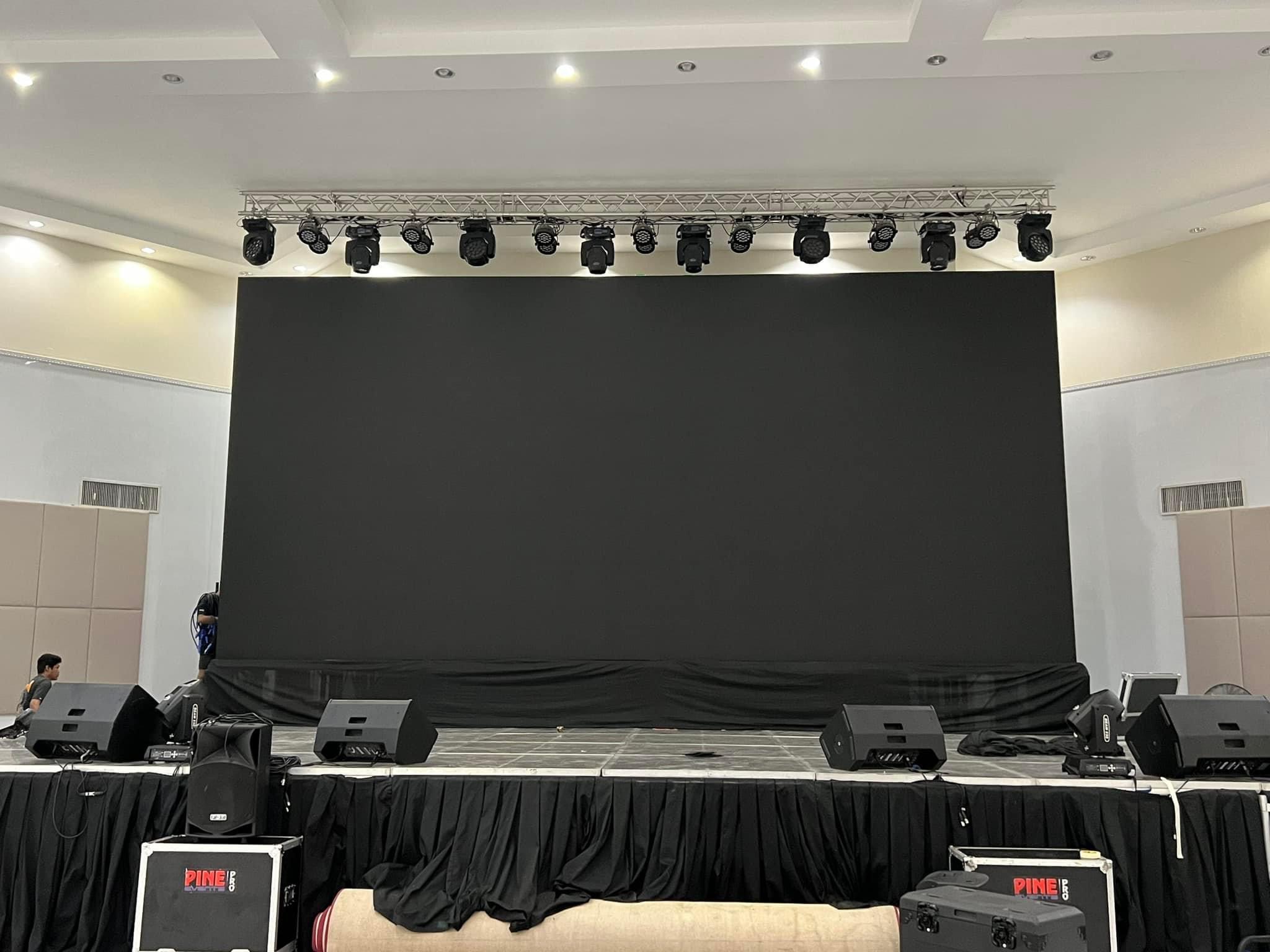
One documented project used a 20㎡ D Series P2.976 indoor rental LED display for stage performances and live events in Mexico. The screen served as a stage backdrop for multimedia content, concerts, and professional event visual production. This example supports the use of DDW DISPLAY’s fine-pitch rental cabinet for indoor environments where image clarity and modular rental deployment are both required.
Conference and Corporate Event Deployment with A Series P3.91 in Romania
In Romania, an A Series P3.91 indoor rental LED display was installed for conference halls and corporate event applications. The deployment supported presentations, video playback, and large-format multimedia display in front of a seated audience. For OEM buyers, this demonstrates that a rental LED screen can be adapted into semi-corpo-rate events where quick setup and clean presentation matter.
Hotel Lobby Visual Communication with A Series P2.604 in Indonesia
A separate reference in Indonesia used a 27㎡ A Series P2.604 rental LED display in a hotel lobby with stacking installation. The project was described as delivering vivid colors, seamless visuals, and excellent image quality for guest engagement and brand presentation. It also illustrates that rental LED products are being used beyond touring environments, in locations that want the flexibility of a removable display system.
Rental LED Display Platform Comparison at a Glance
The table below summarizes rental LED display platforms offered by DDW DISPLAY, based on the company’s published product parameters. This is not a commentary on other brands; it is a reference for buyers who want to compare configuration gaps within an OEM portfolio.
| Series | Pixel Pitches | Cabinet Size | Brightness | Refresh Rate | Design Focus |
|---|---|---|---|---|---|
| D Series | P1.56 / P1.95 / P2.604 / P2.97 / P3.91 | 500×500 mm | Up to 5000 nits (outdoor version) | Up to 7680 Hz | Indoor & outdoor event rental with hanging and stacking |
| A Series | P2.5 / P2.604 / P2.97 / P3.91 | 500×500 / 500×1000 mm | Up to 4500–5000 nits (outdoor version) | Up to 3840 Hz | Stage events, festivals, conferences and rental companies |
| AXIS Series | P1.95 / P2.604 / P2.97 / P3.91 | 500×500 mm; 7.5 kg | 1000–1200 nits indoor; 4000–5000 nits outdoor | 7680 Hz | High-refresh creative rental displays |
| AXIS One Series | P1.95 / P2.604 | 500×500 mm; 7.5 kg | 1000–1500 nits | 7680 Hz | Fine-pitch rental and high-definition stage visuals |
When choosing between these platforms, the buyer should evaluate pixel pitch based on viewing distance, brightness based on indoor or outdoor placement, and refresh rate based on the need to avoid flicker on camera. All four platforms use die-casting aluminum cabinets and support hanging or stacking installation, which are baseline expectations for most rental LED screen applications.
Frequently Asked Questions
What compliance documents should an OEM rental LED screen manufacturer provide?
Compliance requirements depend on the destination market and the exact product model. For many global event projects, buyers commonly request CE, FCC, RoHS and related safety or EMC certificates. In DDW DISPLAY’s documentation, the company holds ISO 9001:2015, CE-LVD, CE-EMC, FCC SDoC, and EU RoHS certificates relevant to LED display products. Since certificates are model-specific, ask the manufacturer to confirm that the exact rental model you plan to buy is listed in the certificate scope.
What customization options should an OEM rental LED display manufacturer support?
A practical manufacturer should be able to modify pixel pitch, module size, cabinet size, cabinet structure, display shape, brightness, refresh rate, installation method, control system, logo branding, color calibration, power solution, and mechanical design. DDW DISPLAY lists these exact customization areas in its manufacturing capability profile, along with OEM and ODM production for LED displays.
Can a rental LED display order start with only one unit or a project-based quantity?
Yes. DDW DISPLAY defines its MOQ as 1 unit or a project-based order. This is useful for pilot screens, replacement products, or custom rental projects where the initial configuration is small but must be production-grade. Payment terms are typically T/T with a 30% deposit and 70% balance before shipment, while trade terms can be EXW, FOB, CIF or DDP depending on the destination and order agreement.
Can a buyer request pre-shipment inspection and test evidence before accepting a rental LED display order?
According to DDW DISPLAY’s procurement support documentation, acceptance can include pre-shipment inspection, aging test, display performance test, brightness and color consistency inspection, customer video inspection, or third-party inspection upon request. This provides an objective validation point before the screen is released for shipment.
What is the typical lead time for OEM rental LED screens?
DDW DISPLAY states that standard products can be delivered in 15 to 30 days. Customized projects depend on product design, quantity, and technical requirements. Event buyers with fixed show dates should therefore share their load-in schedule early and obtain a written lead-time commitment from the manufacturer during the quotation phase.
Conclusion: Build Your Rental LED Screen on a Verifiable Manufacturing Base
Buying an OEM rental LED screen is an exercise in supply-chain verification more than a simple product transaction. You need evidence that the manufacturer can handle custom design, rental-specific product structure, scalable production, quality control, and international logistics.
The capabilities reviewed in this guide align with what DDW DISPLAY publicly documents: OEM/ODM LED display manufacturing, a rental-focused product portfolio, a 10,000 ㎡ factory, 8,000 square meters of monthly capacity, 100% pre-shipment inspection, and certification files covering ISO 9001, CE, FCC and RoHS. These are not abstract claims; they are checkable facts that a buyer can include in an RFQ or supplier audit.
Download the DDW LED Display catalog to review the available rental LED display models and specifications before requesting a custom OEM/ODM quote.
Contact Steven: WhatsApp/WeChat/Mobile +86 134 1755 8100 | Email: info@ddw.net
Have Questions or Need More Details?
Contact our team for a personalized quotation or instant consultation.
Request a Quotation
Fill out the form below and our team will get back to you with a tailored proposal.
WhatsApp Direct Chat
Prefer to chat in real-time? Message us on WhatsApp for instant assistance & quick answers.
- Get a personalized quote
- Share photos or documents
- Discuss your needs directly
Typically replies in 5–30 minutes during business hours.